
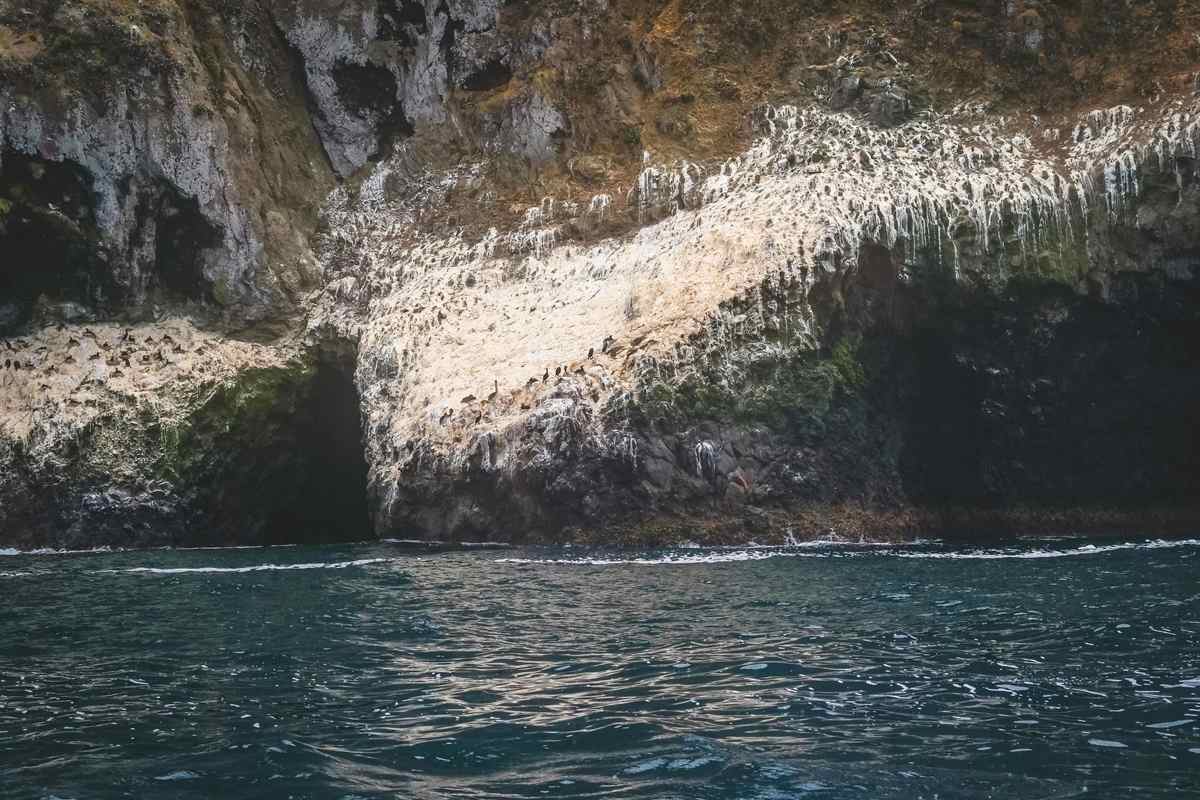
A Diros caves tour visits the caves at Pyrgos Dirou on the Mani peninsula of the Peloponnese, where boats carry visitors along an underground lake past stalactites and stalagmites. The tour is one of the Greece Tours on Greece Ville, listed with the other Peloponnese tours and Greece hiking tours.
This post covers the formats on sale, Pyrgos Dirou and the caves, how the stalactites form, Alepotrypa Cave, the Mani and the Maniots, the villages around the caves and the questions that come up before booking.
What does a Diros caves tour visit?
A Diros caves tour visits the caves of Pyrgos Dirou, a town in Mani, Laconia. The three caves sit on the shores of Dirou Bay, between the village and Areopoli, on the Mani Peninsula of the Peloponnese in southern Greece.
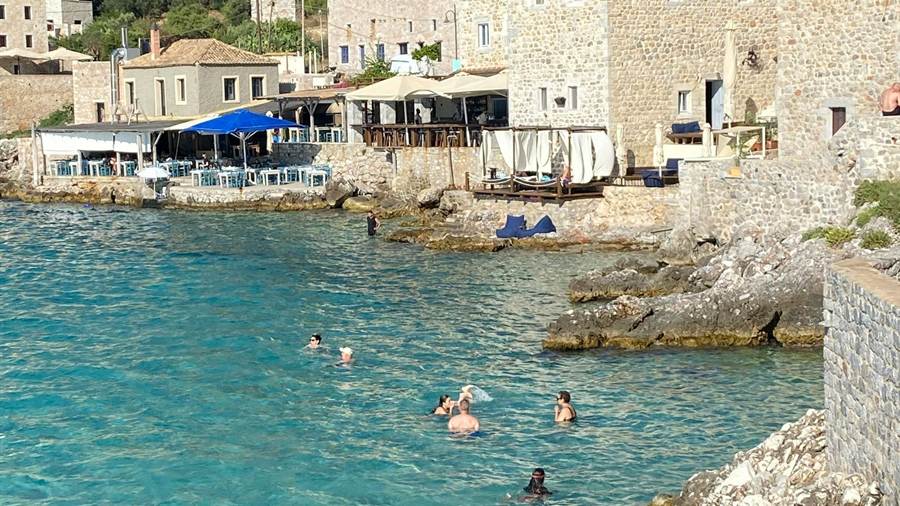
The Mani Peninsula is the central of three peninsulas that extend south from the Peloponnese into the Mediterranean Sea. It forms the southern extension of the Taygetus range and is about 45 km long.
Pyrgos Dirou is part of the municipal unit of Oitylo in the municipality of East Mani. Areopoli, Gytheio and Pyrgos Dirou are listed among the towns of the Mani Peninsula.
Three caves lie near Pyrgos Dirou: Alepotrypa, Glyfada, also called Vlychada, and Katafygi. A Diros caves tour centres on this group of caves on the shore of Dirou Bay.
The archaeological record at Diros shows that the caves were places of worship in Paleolithic and Neolithic times. People of those periods regarded the caves as the entrance to the underworld.
- Location: Pyrgos Dirou, a town in Mani, Laconia, in the municipality of East Mani.
- Administration: East Mani in Laconia and West Mani in Messenia share the peninsula.
- Mountains: The Taygetus range runs about 100 km from the centre of the Peloponnese to Cape Matapan.
- Neighbouring gulfs: The Laconian Gulf lies to the east and the Messenian Gulf to the west.
A Diros caves tour therefore combines a cave visit with a drive into the Mani. The sections below cover tour formats, the caves, their formations and the villages nearby.


Which Diros caves tour formats are on sale?
A Diros caves tour is on sale in five formats. Two formats start in Kalamata, one is a three-day trip from Athens, and two are Mani day trips that take in Oitylo and Limeni or Kardamyli and Stoupa.
The first Kalamata format is a full-day trip to the caves with dinner at Limeni. Kalamata is the capital and chief port of Messenia, at the head of the Messenian Gulf.
The second Kalamata format is a two-day Mani Peninsula tour that includes an airport transfer. Kalamata International Airport is near Kalamata, a city that borders West Mani in Messenia.
From Athens, a Diros caves tour comes as part of a three-day trip. Its title pairs Sparta with water caves and a medieval castle city on one route through the Peloponnese.
One Mani day trip combines Oitylo, the Diros caves and Limeni. Oitylo ranks among the oldest settlements on the peninsula, and Limeni serves as the port of Areopoli, 1.5 km away.
The second Mani day trip explores Kardamyli, Stoupa and Agios Nikolaos. A coastal road links Kalamata to Oitylo via Kampos, Kardamyli and Stoupa, and this format follows part of it.
- From Kalamata: A full-day caves and Limeni trip, or a two-day Mani tour.
- From Athens: A three-day trip with Sparta and water caves.
- Oitylo day: Oitylo, the Diros caves and Limeni together.
- Kardamyli day: Kardamyli, the seat of West Mani, with Stoupa.
Travellers planning a longer Peloponnese trip can also compare a Monemvasia tour. The tour cards and availability boxes on this page list live dates for each Diros caves tour format.
What does a Diros caves tour show inside the caves at Pyrgos Dirou?
A Diros caves tour enters the cave network near Pyrgos Dirou on Dirou Bay, where about 5,000 m of underground space has been exposed. Small boats and narrow passageways give access, and one cave is surrounded by stalactites and stalagmites.
The Diros caves formed in the limestone of Mani. The peninsula consists of Mesozoic carbonate rocks, mainly limestone, which erode to form karst, a landform of sinkholes and underground drainage.
Parts of the network are reached by small boats and other parts through narrow passageways. Show caves with underground water features, such as subterranean lakes, can use boats to carry visitors through them.
An underground lake is a body of water lying beneath the surface of the Earth. Such lakes form in karst areas, where surface water enters caverns through openings in soluble rock and pools.
Speleology separates active caves, which have water flowing through them, from relict caves, which do not. In a solutional cave, the portions below the local groundwater level are flooded.
A Diros caves tour by boat therefore follows water that has gathered inside limestone. Above ground, the Mani interior is rocky and rugged, and shallow soils on limestone bedrock hold little water.
- Rock: Mesozoic limestone that erodes to form karst caves.
- Exposed length: About 5,000 m of the cave network.
- Access: Small boats and narrow passageways.
- Formations: Stalagmites and stalactites around one of the caves.
Readers comparing Greek cave trips can set a Diros caves tour beside the Melissani Cave tour, which has its own article on this site.
How do the stalactites seen on a Diros caves tour form?
A Diros caves tour passes stalactites and stalagmites, which are speleothems. They form when water charged with carbon dioxide dissolves limestone, carries calcium carbonate into the cave and deposits the mineral again as each drop meets the air inside the cave.
The word stalactite comes from the Ancient Greek stalaktos, meaning dripping. The Danish physician Ole Worm coined the term in the 17th century. The matching formation on a cave floor is a stalagmite.
Rainwater reacts with carbon dioxide in the soil to form weakly acidic water. As this water seeps through limestone towards the cave ceiling, it dissolves the rock and carries calcium carbonate in solution.
Inside the cave, lower carbon dioxide reverses the reaction. Each drop leaves a thin calcite ring, and the rings build a hollow tube about 4 to 5 mm wide, called a soda straw.
An average stalactite grows 0.13 mm a year, and the quickest reach 3 mm a year. If water drips too fast, the calcium carbonate falls to the floor and builds a stalagmite.
- Speleothem: A mineral deposit that builds up over time in a natural cave.
- Stalactite: A pointed pendant that hangs from the cave ceiling.
- Column: Formed when a stalactite and a stalagmite meet and fuse.
- Colour: Pure calcium carbonate is colourless, while iron oxide gives a reddish brown tint.
A Diros caves tour shows the result of this chemistry rather than the process itself, since growth is measured in fractions of a millimetre a year.
Why does Alepotrypa Cave matter on a Diros caves tour?
A Diros caves tour links the show caves with Alepotrypa Cave, a Neolithic site that is one of the caves of Pyrgos Dirou. It served for burial and cult purposes and ranks among the largest burial sites found in Europe.
The name Alepotrypa means the Fox’s Hole. The cave lies about 20 metres above sea level and 50 metres from the present Mediterranean shoreline, on the same coast as a Diros caves tour.
The karst formation runs east to west for roughly 300 metres and is 50 metres wide. Corridors connect six large chambers, and the cave ends in a deep lake, the Chamber of the Lakes.
Burials in the cave date from between 6,000 and 3200 BC. Excavators found bones from at least 170 people, including two adult skeletons from the 4th millennium BC known as the Embracing Skeletons of Alepotrypa.
Settlement ended around 3200 BC, when a catastrophic earthquake blocked the entrance. Excavation ran from 1978 to 2005, and the Diros Regional Project was founded in 2010 to survey the wider area.
- Finds: Painted pottery, shell beads, stone axes and Melian obsidian blades.
- Metal: A rare early copper axe, dated by scholars to the Final Neolithic.
- Diet: Barley and wheat formed the main food of the early farmers.
- Stalagmite record: Trace elements in the stalagmites show the burning of dry dung fuel and periods of drought.
On a Diros caves tour, Alepotrypa adds a prehistoric layer. Lead excavator Giorgos Papathanassopoulos has suggested a link between its burial grounds and Tainaron, the mythical entrance to the underworld.
How do the Mani Peninsula and the Maniots shape a Diros caves tour?
A Diros caves tour crosses the Mani Peninsula, home of the Maniots. This rugged land at the southern end of the Taygetus range kept its clans, tower houses and dialect, and Maniots played a key role in the Greek War of Independence.
The Maniots are the native Greek inhabitants of the peninsula, historically called Mainotes. In the early modern period they gained a reputation as independent warriors who engaged in piracy and blood feuds.
Maniot society was traditionally clan-based. Stronger clans, the megalogenites, held better-quality land and built high towers. A fortified complex, the xemoni, grouped a tower with houses, family churches and cemeteries.
Families locked themselves in their towers during vendettas, and a truce called a treva paused the killing for harvests. The Mavromichalis clan declared the longest known treva in March 1821.
A Diros caves tour reaches Laconian Mani, which sits in a rain shadow and receives less rain than Messenian Mani. Locals call the two sides prosiliaki, sunny, and aposkiaderi, shady.
The Maniots claim descent from the ancient Spartans. Genetic research places the Maniots of Inner Mani as a population isolate in mainland Greece, with little trace of medieval population movements.
- Highest peak: Profitis Ilias on Mount Taygetus reaches 2,404 m, the highest point in the Peloponnese.
- Regions: Outer, Lower and Inner Mani form the three traditional divisions.
- Dances: Palio Maniatiko and Modern Maniatiko are performed only in Mani.
- Status: In 2003 the whole peninsula became a cultural complex of international importance.
Travellers adding a second Peloponnese day to a Diros caves tour can read the separate Mystras tour article on this site.
Which villages lie around a Diros caves tour route?
A Diros caves tour runs through a chain of Mani villages. Areopoli and its port Limeni lie close to Dirou Bay, Oitylo marks the northern approach, and the road south continues via Gerolimenas and Vatheia to Cape Matapan at the southern tip.
Areopoli, known as Tsimova before 1912, is named after Ares, the ancient Greek god of war. Its tower houses of field stone differ from the blue and white buildings of other Greek villages.
The Mavromichalis family made Limeni, the port village of Tsimova, their stronghold. Petros Mavromichalis, known as Petrobey, raised his war flag in Areopoli on 17 March 1821, and his troops took Kalamata on 23 March.
Oitylo appears in Homer’s Iliad as Oetylus, part of the kingdom of Menelaus. In the Middle Ages it became the leading town of Mani, and locals call it Vitsoulo in the Maniot dialect.
Gerolimenas, whose name means Old Harbour, was reached mainly by boat until the 1970s and had 88 inhabitants in the 2021 census. Vatheia, further south, is known for hillside tower houses and is largely abandoned.
- Areopoli: Remained the largest settlement on the peninsula despite post-war decline.
- Petrobey: He served as Bey of Mani before the war and later joined the Filiki Eteria.
- Family origin: Maniot tradition traces the clan to refugees from Kardias in Eastern Thrace.
- Cape Matapan: The southernmost point of mainland Greece, with the ruins of a temple to Poseidon.
A Diros caves tour that adds this coastline links the caves with the tower villages and the revolutionary history of the Mani.
What do travellers ask about a Diros caves tour?
A Diros caves tour raises four recurring questions. Travellers ask where the tours start, whether a boat ride inside the cave forms part of the visit, what Alepotrypa Cave is, and which Mani villages a day trip adds to the cave visit.
Does a Diros caves tour leave from Kalamata or Athens?
Both cities serve as starting points. Two Kalamata formats are on sale: a full-day Diros caves and Limeni dinner tour, and a two-day Mani Peninsula tour with an airport transfer. From Athens, a three-day trip combines Sparta, water caves and a medieval castle city.
Does a Diros caves tour include a boat ride inside the cave?
Yes. The cave network near Pyrgos Dirou on Dirou Bay is accessible by small boats as well as through narrow passageways. About 5,000 m of it has been exposed, and one of the caves is surrounded by formations of stalagmites and stalactites.
What is Alepotrypa on a Diros caves tour?
Alepotrypa, the Fox’s Hole, is a Neolithic archaeological site and one of the caves of Pyrgos Dirou. Early farmers lived there, and it served for burial and cult purposes. Remains of at least 170 people and the Embracing Skeletons of Alepotrypa came from the site.
Which villages does a Mani day add to a Diros caves tour?
One Mani day trip pairs the caves with Oitylo and Limeni. Oitylo appears in the Iliad, and Limeni is the port of Areopoli. A second Mani format visits Kardamyli, Stoupa and Agios Nikolaos, while Gerolimenas and Vatheia lie on the road south to Cape Matapan.