
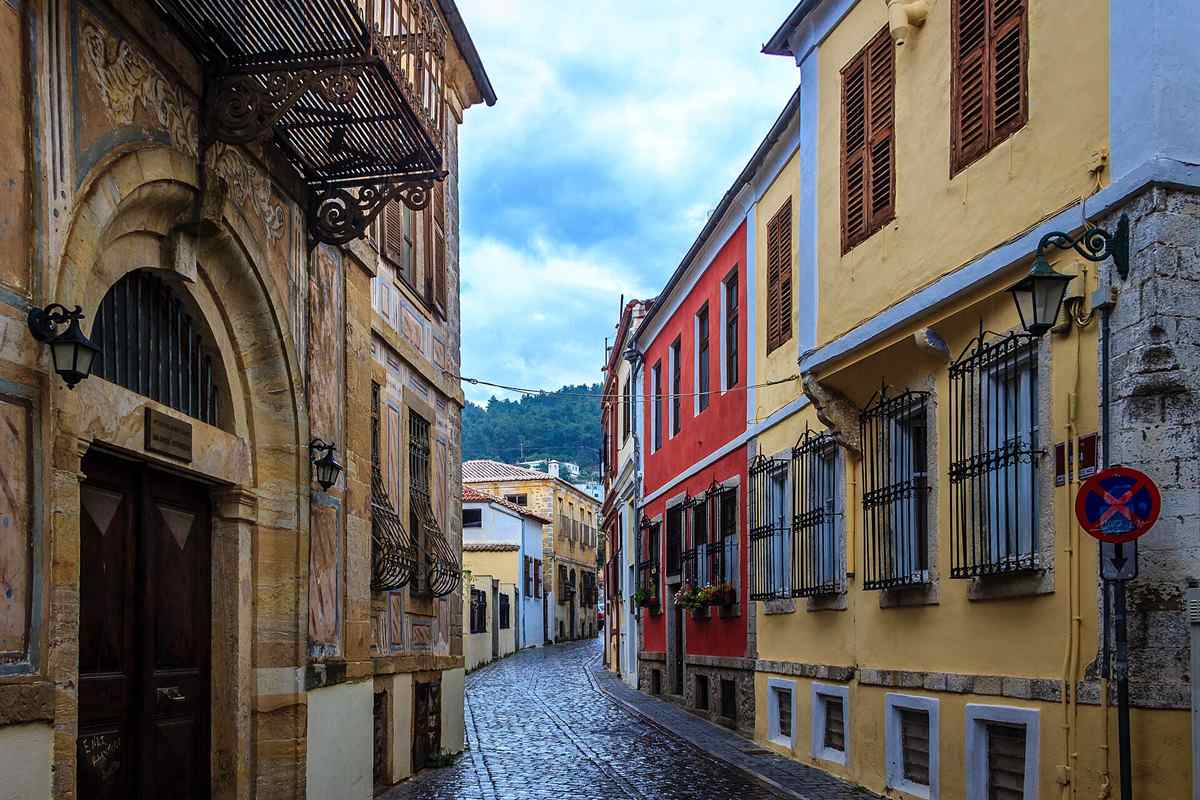
A Xanthi tour walks the old town of Xanthi in Thrace, with its mansions built on the tobacco trade, and reaches out to ancient Abdera, the Nestos river and the villages of the mountains to the north. The tour is one of the Greece Tours on Greece Ville, listed with the other Northern Greece tours.
This post covers what is on sale in the area, the old town and the tobacco trade, Abdera and Democritus, the Nestos river and the Pomak villages.
What does a Xanthi tour cover in north-east Greece?
A Xanthi tour covers a city in the region of East Macedonia and Thrace, the capital of its own regional unit. The city rises in tiers at the foot of the Rhodope Mountains, and the Kosynthos River splits it in two.
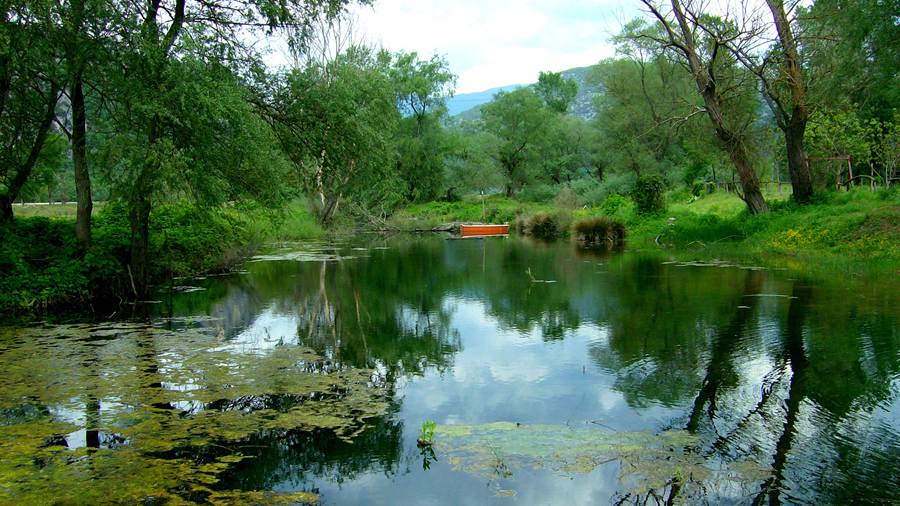
The western half of Xanthi holds both the old town and the modern town, side by side. The eastern half, across the Kosynthos River, is the side known for its natural surroundings.
Two accounts explain the name. In Greek myth, Xanthi was a daughter of Oceanus and Tethys. Local legend instead points to Xanthi, one of the Amazons said to have ruled the region.
Across Greece the city carries two nicknames. It is called the Lady and Noblewoman of Thrace, and also the city of a thousand colours, a label linked to its multicultural make-up.
A Xanthi tour in February meets the carnival, one of the best known in Greece. Over 40 cultural associations from across the country take part, with concerts, plays, dance nights and old customs re-enacted.
- Old name: Xanthi is sometimes linked with Xantheia, a city the geographer Strabo named in the 1st century BC.
- First record: A bishop named Georgios of Xantheia attended the Fourth Council of Constantinople in 879.
- Medieval rank: From the 13th to the 14th century Xanthi was the leading city of the region.
- Monasteries: Pammegiston Taxiarchon and Panagia Archangeliotisa both date from the Middle Ages.
The sections below take a Xanthi tour through the formats on sale, the old town, Abdera, the Nestos valley and the Pomak villages to the north.
Which formats are on sale for a Xanthi tour?
A Xanthi tour is not on sale as a named product: no listed tour names Xanthi. The nearest bookable options in the area are two day trips from Thessaloniki to Kavala and Philippi, about 50 km west of Xanthi.
The first format is a private day out from Thessaloniki. It joins a stop at Philippi with the seaside at Kavala, and only the booking party travels on it.
The second format is a day trip that also starts in Thessaloniki. Its route takes in Kavala and Philippi and adds a beach stop on the same stretch of coast.
Neither format lists a stop in Xanthi itself. A Xanthi tour therefore starts with transport, since the city lies 206 km from Thessaloniki, the start point of both listed trips.
Rail and road both reach the city. Xanthi railway station sits on the Thessaloniki to Alexandroupoli line, and the Egnatia Motorway passes just outside, linking Xanthi with Macedonia, Epirus and the rest of Thrace.
Xanthi has no airport of its own. Kavala Airport, 42 km away, is the main gateway for a Xanthi tour, on the same side of the region as the two day trips.
- Athens: Xanthi lies 704 km from Athens by road.
- Istanbul: The city sits 397 km from Istanbul and 236 km from Edirne.
- Second airport: Alexandroupolis Airport, 112 km from Xanthi, serves the city as a second option.
- Bus links: Xanthi Bus Station runs daily services to cities across Greece.
Both formats stop at Philippi, which has its own page under Philippi tour. The tour cards and availability boxes on this page list live dates for each format.
What does a Xanthi tour show of the old town and its tobacco trade?
A Xanthi tour of the old town, known as Palia Poli, walks through streets that mix Byzantine Greek churches, neoclassical merchant mansions of the 18th and 19th centuries and mosques from the Ottoman era. The tobacco trade brought the city its wealth.
By 1715 Xanthi and nearby Genisea had a name for tobacco of high quality. Foreign travellers crossed the region and wrote about local life, while sales of the leaf across Europe made the town prosperous.
Two earthquakes in March and April 1829 levelled the city. Rebuilding started at once, and the quakes proved decisive for the growth that came after, as the tobacco town took new shape.
In 1870 fire destroyed Genisea, and its agencies and services moved to Xanthi. The city then held about 10,000 people. A rail line arrived nearby in 1891, followed by new schools and associations.
Museums on a Xanthi tour include the Folklore and Historical Museum, the Museum of the History of the Greek Costume and the Manos Hadjidakis House, named for the composer from Xanthi.
Each year in early September the Old Town Festival fills these streets. Local tourism has grown around it, beside the older pillars of the economy: tobacco, commerce and farming.
- Ottoman district: Until 1912 Xanthi sat in the Sanjak of Gümülcine, part of the Adrianople Vilayet.
- Tobacco warehouse: On 4 March 1943 the Jews of Xanthi were arrested and held in a tobacco warehouse before deportation.
- Survivors: Of a Jewish community of 550 people, only six survived the Holocaust.
- Saturday bazaar: A bazaar takes place every Saturday at Emboriou Square.
A Xanthi tour of the old town ends where the modern city begins, on the same western bank of the Kosynthos.
Why does a Xanthi tour include Abdera and Democritus?
A Xanthi tour reaches Abdera, a municipality in the Xanthi regional unit and once a major Greek city on the Thracian coast. The ancient town lay 17 km east-northeast of the Nestos mouth, almost facing the island of Thasos.
The name is Phoenician and was shared with Abdera in Spain. Greek legend gives another account, in which Hercules founded a city where a figure named Abderus fell and was remembered.
A first colony from Klazomenai, traditionally dated to 654 BC, failed when Thracians drove the settlers out. Success came in 544 BC, when settlers from Teos, the poet Anacreon among them, fled a Persian invasion.
Abdera grew into the third richest member of the Delian League. Its wealth came from its role as a port for trade with inland Thrace and the Odrysian kingdom.
Democritus was born in Abdera, on the coast of Thrace, according to Aristotle. His father held enough property to receive Xerxes when the Persian king marched through Abdera.
A Xanthi tour that stops at Abdera recalls a philosopher whom his fellow citizens honoured with money and bronze statues. He wrote in the Ionic dialect, mixed with local features of Abdera speech.
- Xerxes: After the Battle of Salamis, Xerxes stopped at Abdera and gave its people a gold tiara and scimitar.
- Ruins: The ancient site covers seven small hills on Cape Balastra, between an eastern and a western harbour.
- Museum: The Archaeological Museum of Abdera counts among the landmarks of both Abdera and Xanthi.
- University: The Democritus University of Thrace has run its School of Engineering in Xanthi since 1974.
Protagoras, Anaxarchus and the historian Hecataeus were also citizens of Abdera, so a Xanthi tour of the coast passes the home town of four ancient thinkers.
What does a Xanthi tour see of the Nestos river and its valley?
A Xanthi tour west of the city meets the Nestos, a river of Bulgaria and Greece that rises in the Rila Mountains and reaches the Aegean Sea near Thasos. In Bulgaria the same river is called the Mesta.
The river runs 230 km in all. Of that length, 126 km flow through Bulgaria and the rest through Greece, while 66 per cent of its 5,184 square kilometre drainage area lies in Bulgaria.
On its way south the Nestos cuts deep canyons through mostly metamorphic rock. Near the coast it spreads over the plain of Chrysoupolis and forms a delta of freshwater lakes and ponds.
Inside Greece the river marks the line between the Kavala and Xanthi regional units, and between Greek Macedonia and Thrace. The banks are covered mainly by deciduous trees.
A Xanthi tour of the valley follows an old frontier. The geographer Ptolemy called the river Nestus and placed the boundary between ancient Macedonia and Thrace along it.
Canyons and remote mountains kept the Nestos closed to boats in antiquity, and no road ran along its bed. Only two passes crossed it, guarded by the cities of Nicopolis and Topeiros.
- Via Egnatia: The Roman road crossed the valley at the southern pass near Topeiros.
- Topeiros: The Emperor Trajan founded Topeiros on the estuary, where Abdera had stood before it.
- River god: Coins of the imperial period show the Nestos as a deity.
- Tribes: The Dii lived on the east bank north of the southern pass, with the Satrae to the south.
Where the Nestos meets the sea, the island of Thasos lies offshore. A Thassos boat trip adds the island to a Xanthi tour of the delta coast.
Who are the Pomaks met on a Xanthi tour of the villages to the north?
A Xanthi tour into the Rhodope foothills north of the city reaches villages of the Pomaks, Bulgarian-speaking Muslims who live in Bulgaria, north-western Turkey and north-eastern Greece. In Greece they live mainly in the Xanthi, Rhodope and Evros regional units.
Their estimated number in Western Thrace is 50,000. In Greece they declare their language to be the Pomak language, and the community there is commonly fluent in Greek as well.
Pomaks in Western Thrace speak the Smolyan dialect, also heard among Pomaks in the Bulgarian Rhodopes. In Greece these Rup dialects go by the name Pomak language, or Pomaktsou.
Pomak is taught at primary level, written in the Greek alphabet, in the Pomak areas of Greece, which lie mainly in the Rhodope Mountains. A Pomak-Greek dictionary appeared in 1996.
A Xanthi tour of the mountain villages touches a long history. The monk Pachomios Roussanos, who visited the mountain area of Xanthi, noted that around 1550 only six or nine villages had turned to Islam.
The Pomaks of Thrace, together with Turks and Roma, were exempted from the population exchange set by the Lausanne Treaty of 1923. The Muslim population of the region dates to the Ottoman period.
- Clock tower: A Pomak, Hadji Emin Aga, built the clock tower of Xanthi in 1870.
- Plan of 1972: A plan to demolish the tower in 1972 was cancelled after protests by local Muslims.
- Twin town: Xanthi is twinned with Smolyan, across the border in Bulgaria.
- Schooling request: The Community of the Pomaks of Xanthi has asked for equal treatment, including Greek schooling without compulsory Turkish.
A Xanthi tour that leaves the clock tower for the Rhodope villages ends in hills where Greek, Turkish and Pomak are all spoken.