

A Piraeus shore excursion is a day ashore for cruise passengers whose ship docks at Piraeus, the port of Athens. The tour starts at the cruise terminals and heads for the port town, central Athens or the coast. It is one of the Greece Tours on Greece Ville.
This post covers what a Piraeus shore excursion includes, where ships dock and how old the port is. It also covers the three harbours, the bronzes, Kastella hill, the waterfront, the trains and the Acropolis.
Later sections visit the hills, the Agora, Plaka, Syntagma, the museums, the Riviera, Sounion and the Corinth Canal. The markets, the port figures, the best months and common questions come last. The sections include Piraeus shore excursions and related Athens tours that can be booked online.
What is a Piraeus shore excursion?
A Piraeus shore excursion is a land tour for cruise guests while their ship waits at Piraeus. A port of call is any stop where a cruise ship ties up on its route. Guests can join or leave the voyage there. Piraeus lies in the Athens urban area.

Cruise ships sail round trips with stops at ports of call. Passengers can join shore excursions there. A Piraeus shore excursion is one such outing, and it starts in the port of Piraeus.
The idea is old. In 1833 a ship left Naples on a cruise whose stops included Athens. A Piraeus shore excursion starts at the harbour of Athens, a port city in Attica.
English speakers say the name as py-REE-uhs or pih-RAY-uhs. The city of Piraeus covers 10.865 square kilometres. It is the second largest municipality in the Athens urban area, after the municipality of Athens.
Mount Aigaleo bounds Piraeus to the northwest, and the Saronic Gulf lies to its south and west. The city is a limestone peninsula with natural harbours. A Piraeus shore excursion starts beside those harbours.
The regional unit of Piraeus was created in 2011 from part of the old Piraeus Prefecture. The city of Piraeus is its seat. The unit covers 50.4 square kilometres in the west-central part of the Athens urban area.
The Karaiskakis Stadium in Piraeus was the Neo Phaliron Velodrome at the 1896 Olympics. Paul Masson won three cycling gold medals there. The stadium is named after Georgios Karaiskakis, a hero of the Greek War of Independence.
- Municipalities: The regional unit has 5 municipalities: Keratsini-Drapetsona, Korydallos, Nikaia-Agios Ioannis Rentis, Perama and Piraeus.
- Stadium: The Karaiskakis Stadium holds 33,334 people.
- Population: Piraeus had 182,671 residents in 1991 and 163,688 in 2011.
The city is also a place of study. A university in Piraeus was founded in 1938 as a school for industrial studies. Its finance department is the oldest in Greece. A Piraeus shore excursion starts in a city with such roots.

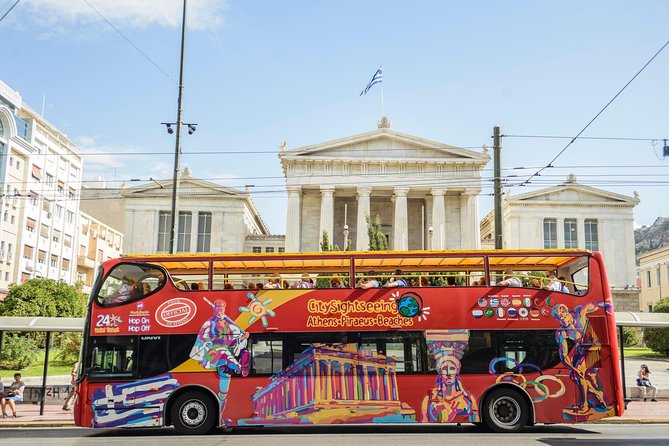


Where do cruise ships dock for a Piraeus shore excursion?
A Piraeus shore excursion starts at one of three cruise terminals in the Port of Piraeus. The terminals are called Miaoulis, Themistocles and Alkimos. The Piraeus Port Authority runs the port, and ships tie up at its quays beside these terminals.
In Greek, the Piraeus Port Authority is the Organismos Limenos Peiraios, or OLP for short. It was founded in 1930 to run a port whose traffic was slowly growing. A Piraeus shore excursion lands in the port that this authority runs.
In 2003 the port company sold shares to investors for the first time, in an IPO. The Greek state held 74.5 percent. In 2016 a Chinese state company bought 51 percent. It added a further 16 percent by 2021.
The port company has 25,000,000 shares. The Chinese owner holds 16,750,000 of them, which is 67.00 percent. A Greek asset company holds 7.14 percent. Other investors hold 6,465,560 shares, or 25.86 percent.
A Piraeus shore excursion starts in a port with a coastline of over 24 kilometres. The port covers over five million square metres. It handles cruise ships, ferries, containers, cars and ship repair. It also holds a customs free zone.
Terminal A, Miaoulis, stands less than 50 metres from the quays. It has 36 check-in counters. A Piraeus shore excursion starts after the ship ties up at one of the three terminals.
Terminal B, Themistocles, has 2 quays that are 11 metres deep. They are built for mega ships with over 4,500 passengers. Its arrivals hall covers 1,700 square metres. Terminal C, Alkimos, stands less than 20 metres from the quay and has 20 check-in counters.
- Terminal A: Miaoulis covers 8,000 square metres and holds 12,000 passengers.
- Terminal B: Themistocles stands on 6,000 square metres of ground.
- Terminal C: Alkimos covers 2,100 square metres and holds up to 3,000 passengers.
The cruise port covers 210 acres, and ships reach it at any state of the tide. The port authority carries passengers from the anchoring areas to the passenger terminal for free.
How old is the port on a Piraeus shore excursion?
A Piraeus shore excursion lands at a very old harbour of Athens. Themistocles walled it, and the architect Hippodamus of Miletus gave it a planned layout. Sulla burned it to the ground, and a decline of fifteen centuries followed.
Thucydides wrote about the wall that Themistocles built round Piraeus. It was so thick that two wagons carrying stones passed each other on it. It had no rubble or mortar, only great squared stones clamped with iron and lead.
Themistocles thought Piraeus was worth more than the upper city. He told Athens to go down to Piraeus if pressed by land. There it was to defy the world with its fleet.
The architect Hippodamus of Miletus was brought in to plan the harbour town. Experts think the old street grid points the same way as the streets of central Piraeus today.
The Long Walls linked Athens to its harbours. The wall to the harbour of Phaleron ran about 5 and a half kilometres. Xenophon says enemies tore the Long Walls down with great joy and flute music.
Sulla cut down trees, even sacred groves, up to 100 miles from Athens to build siege works. He burned Piraeus to the ground before he marched north to fight the army of King Mithridates.
In 395 AD the Goths under Alaric finished the destruction. In Ottoman times Piraeus was mostly empty, with only a monastery from 1590 and a customs house. A Piraeus shore excursion lands in a port that once fell almost empty.
- Failed starts: Settlers from Hydra came in 1792 and from Psara in 1825, but both attempts failed.
- Town plan: King Otto approved it, but it was so modern for its day that it stayed unfinished.
- Growth: Piraeus had 51,020 people at the end of the 19th century.
- Newcomers: Refugees from Asia Minor raised the population from 133,482 in 1920 to 251,659 in 1928.
The sea has risen two metres since ancient times. Ancient parts of the port now lie under water. Piraeus was the ancient port of Athens. A Piraeus shore excursion lands in that same harbour.
What are the three harbours on a Piraeus shore excursion?
A Piraeus shore excursion meets three natural harbours. The uneven coast of the Piraeus peninsula formed them. Kantharos is the great harbour on the west side. Zea is a small round harbour, and Mounichia is a little inlet below the hill.
On a Piraeus shore excursion, Kantharos is the great main harbour. In ancient times it served mainly for trade. Its east side held a market quarter with a line of stoas, which are covered walkways.
Ancient Athens kept its warships in shipsheds, which are long roofed sheds. Fourth-century inscriptions list 94 at Kantharos, 196 at Zea and 82 at Mounichia. Zea held more than the others, so it was the main war base.
At Zea, a Piraeus shore excursion reaches a round harbour. It lies between the Akte peninsula and the hill of Mounychia. The sheds fanned out around the shore like the spokes of a wheel.
Stone towers stood 96 metres apart at the mouth of Zea. A chain was raised between them to close the harbour. The hill shielded Mounichia from north, south and west winds.
Recent finds add to the story of a Piraeus shore excursion. Divers at the naval bases uncovered six shipsheds, each 7 to 8 metres high and 50 metres long. The sheds protected warships from shipworm.
Zea is also called Pasalimani, which means Pasha’s harbour in Turkish. The name Zea comes from the Greek word for spelt, a cereal. Today Mounichia is called Mikrolimano, which means small harbour.
- Olympics: The bay of Zea hosted the swimming events of the 1896 Olympic Games.
- Marina: The Zea marina has 670 berths and takes boats up to 150 metres long.
- Old names: Mikrolimano was called Fanari in Byzantine times and Tourkolimano after 1821.
At Mounichia, sacred state ships such as the Paralos and the Salaminia moored for the festival. In 1967 Mayor Aristeidis Skylitsis made the name Mikrolimano official. A Piraeus shore excursion reaches this harbour by its newest name.
Which ancient bronzes does a Piraeus shore excursion show?
A Piraeus shore excursion shows the Piraeus Bronzes. These ancient statues came from a warehouse near the main harbour. They include the Piraeus Athena, two statues of Artemis and the Piraeus Apollo. The Archaeological Museum of Piraeus keeps them.
A fire had burned the warehouse down, and the statues looked packed and ready to ship. The cache also held a large bronze tragic mask and two bronze shields. A small marble Artemis Kindyas lay with them.
The Piraeus Athena is 2.35 metres tall and stands with her weight on one leg. Her Corinthian helmet has griffins on the sides and owls on the cheek pieces. A snake coils around the base of the crest.
On a Piraeus shore excursion, the details of the Athena repay a close look. Across her chest runs a small aegis, a protective band. It carries a tiny Gorgon head and a border of snakes.
Her right hand is held out palm up. Scholars suggest it held a small Nike statue or an offering bowl. Her carefully worked back suggests a central pedestal, not a wall.
A Piraeus shore excursion also shows two bronze Artemis statues. The taller is 1.94 metres high, and the smaller is 1.55 metres. The taller one has copper lips, white marble teeth and marble eyes.
On a Piraeus shore excursion, the museum has a neighbour. The remains of the Greek theatre of Zea lie beside it. Its seating bowl is 66.5 metres across, with 13 wedges of seats and 14 stairways.
- Apollo: Once seen as a late archaic original, it is now called a later work in archaic style.
- Age: The cache spans about five centuries, so it was not one private order.
- Origin: One theory says the cache came from Delos, where Apollo and Artemis were born.
The first Piraeus museum opened in 1935 on land taken over from the theatre site. Reliefs in the neo-Attic style from a Roman shipwreck are among its key pieces. On a Piraeus shore excursion, a gravestone relief shows a girl with her parents.
What does Kastella hill show on a Piraeus shore excursion?
A Piraeus shore excursion climbs Kastella, the hill that the ancient Greeks called Mounichia. From the top, the sea can be watched from Sounion to Aegina. The hill also holds the church of the Prophet Elijah and the Veakeio open-air theatre.
On a Piraeus shore excursion, the hill has two names. Piraeus people call the east side Kastella and the west side, facing the city, Profitis Ilias. Kastella comes from Kastellia, which means small forts.
Each spring the Athenians held the festival of Mounichia for Artemis. Her temple stood on the hill. People offered cakes ringed with burning candles, and young girls dressed as bears.
A Piraeus shore excursion also recalls a great theatre on the west slope. It staged plays and hosted meetings of the Athenian assembly. Bendis, a Thracian goddess, had a separate temple near the temple of Artemis.
A Piraeus shore excursion passes the scene of a famous battle. About one thousand exiles led by Thrasybulus came to Piraeus by night. They gathered on the hill, because the long town wall needed a large force to defend.
Their foes formed up in the market below, at least fifty shields deep. The exiles stood only ten armoured soldiers deep. Their seer, a kind of prophet, said to wait until one of their own was hit. Then he leaped out first and was killed.
Critias and Hippomachus, two of the Thirty rulers, fell, along with Charmides and about seventy others. The winners did not strip the tunic from any fellow citizen. Men from both sides talked with each other.
- Seats: The Veakeio open-air theatre has 2,000 seats and opened on 20 June 1969.
- Names: First called Skylitsio after its mayor, it took the actor Aimilios Veakis’s name in 1976.
- Namesake: Veakis was born in Piraeus in 1884 and joined the National Liberation Front.
In 322 BC a Macedonian garrison settled on the hill. In 263 BC Antigonus Gonatas won it after a long siege. A Piraeus shore excursion climbs a hill that changed hands again and again.
What does the Piraeus waterfront show on a Piraeus shore excursion?
A Piraeus shore excursion shows the landmarks of a harbour city. The stories include a marble lion with Scandinavian writing and a large cathedral. They also cover a historic theatre, a tall tower and a maritime museum. Each adds to the story.
A Piraeus shore excursion can tell the story of the Piraeus Lion. This white marble statue once stood in Piraeus harbour and now stands in Venice. It was carved around 360 BC.
The lion has a hollow throat and the mark of a pipe down its back. This suggests it once worked as a fountain. A description from the 1670s says water flowed from its mouth into a cistern.
Scandinavians carved two long runic inscriptions on the lion in the 11th century. A Swedish diplomat, Johan David Åkerblad, identified them as runes at the end of the 18th century.
The first Hagia Triada church was started in 1839. Allied bombs destroyed it on 11 January 1944. The present cathedral opened in 1964 and was finished in 1979. It is one more landmark on a Piraeus shore excursion.
The architect Ioannis Lazarimos designed the Piraeus Municipal Theatre. It opened on 9 April 1895. In 1883 the city chose to build it, and Piraeus had only about 27,000 people.
Work on the Piraeus Tower began in 1972, and the frame was ready in 1974. Glass and metal cladding came only in 1983. The Hellenic Maritime Museum was founded on 7 April 1949. Both add to a Piraeus shore excursion.
- Cathedral: The church holds up to 3,100 people, and its dome has 40 windows.
- Tower: The Piraeus Tower is 84 metres high and has 24 floors.
- Carvers: One idea is that Varangians, soldiers of the Byzantine emperor, cut the runes.
The museum shows more than 2,500 objects. Outside stand the conning tower of a historic submarine and anchors from ships of the Battle of Navarino. These sites give a Piraeus shore excursion much to see.
Which trains link a Piraeus shore excursion to central Athens?
A Piraeus shore excursion can use four rail links between the port and central Athens. They are Metro Line 1, Metro Line 3, the tram and the suburban railway. Line 1 is the oldest and began as the Athens and Piraeus railway.
A Piraeus shore excursion can recall the opening of the Athens and Piraeus railway. Queen Olga and Prime Minister Thrasyvoulos Zaimis rode the first train. The six-car train covered the run from Thiseio to Piraeus in about 19 minutes.
At first the line ran eight trains each way every day, and nine on Sundays. Greeks called it “the Electric,” or Ilektrikos. A company began a tunnel from Thiseio towards Omonia in 1889.
Piraeus is one of four Line 1 stations with two tracks and three platforms. Allied bombing on 11 January 1944 destroyed part of the station. It also wrecked a large share of the engine sheds beside it.
A Piraeus shore excursion can use the suburban railway too. At Nerantziotissa station, passengers change from Line 1 to it for the airport. The old suburban station at Piraeus closed after its last train on 7 August 2005. It reopened in 2007.
A Piraeus shore excursion can use Line 3, which grew towards the port in stages. In 2012 a contract was signed to extend it from Agia Marina to Piraeus. The stretch is 7.6 kilometres long and has six stations.
Line 3 trains reached Nikaia, Korydallos and Agia Varvara on 7 July 2020. Dimotiko Theatro station means “Municipal Theatre” and meets the tram at the Dimarcheio stop. A planned Evaggelistria station beyond it was dropped after local objections.
- Line 3: This longest Metro line runs 47.3 kilometres.
- Old trams: The old tram network grew to 21 lines and closed in 1960.
- Suburban: Proastiakos, the Greek name of the railway, means “suburban.”
The tram loop through Piraeus opened to the public on 15 December 2021. In 2007 the suburban line reached Piraeus. Together, these links put a Piraeus shore excursion within reach of Athens.
What does a Piraeus shore excursion see on the Acropolis?
A Piraeus shore excursion to the Acropolis sees four main buildings. They are the Propylaea, the Erechtheion, the Temple of Athena Nike and the Parthenon. Restoration work keeps them standing. Each holds details that are easy to miss.
A Piraeus shore excursion meets the Propylaea first. The south porch of this building has no room behind it. The plan changed, possibly to respect the border of the Athena Nike sanctuary.
A Piraeus shore excursion can note that the Erechtheion’s building accounts for 409 to 404 BC survive. They name Philokles and Archilochos as the site overseers. In the late 6th or 7th century it became a church with three aisles.
A priestess chosen by lot, a democratic method, oversaw the cult of Athena Nike. The temple has short columns. Each is 7 times as high as it is wide. The standard for Ionic columns is 9 or 10 times.
A Piraeus shore excursion can look at the Parthenon frieze. It was made of 114 blocks that averaged 1.22 metres in length. The band stood 1 metre high. Horsemen make up 46% of it.
Horsemen ride in two lines of ten ranks, the number of the Attic tribes. John Boardman noted that the horsemen, chariot passengers, grooms and marshals add up to 192. Herodotos gives the same number for the Athenian dead at Marathon.
The Acropolis Restoration Service (YSMA) uses titanium reinforcements. Near the limit, the metal is meant to fail before the ancient stone does. The buildings are dry masonry, laid without mortar. Workers can therefore take down one damaged part at a time.
- Crypt: An earlier limestone temple of Athena Nike survives in an underground crypt.
- Holes: The south metopes have more than 120 holes for bronze weapons, wheels and harness.
- Find: In March 2011 archaeologists announced five metopes built into the south wall.
A leaning Parthenon column, hurt by the blast of 1687, was lifted out in one piece. A plan approved in 2019 puts back up to 360 ancient stones. Such work protects what a Piraeus shore excursion sees.
Which hills face the Acropolis on a Piraeus shore excursion?
A Piraeus shore excursion meets four hills that face the Acropolis. They are the Areopagus, the Pnyx, Philopappos Hill and the Hill of the Nymphs. Each hill holds a different story: a court, an assembly place, a tomb and an observatory.
A Piraeus shore excursion starts at the Areopagus, the rock of the old court. Murder trials seem to have been held there as early as the 7th century BC. Solon reshaped the council in 594 BC.
After Sulla captured Athens in 86 BC, the council became one of the strongest bodies in the city. Cicero said people spoke of the council ruling Athens and left out the words of the Areopagus.
The Areopagus also raises a doubt about Paul. It is unclear whether he spoke to the council on the hill. Scholars think the council met in the Agora or the Royal Stoa by then.
A Piraeus shore excursion then reaches the Pnyx, the assembly place of Athens. By one estimate, its slope first held between 6,000 and 13,000 people. Lycourgos is credited with the third rebuilding, but hard years stopped it before it was finished.
A Piraeus shore excursion next passes Philopappos Hill. In 294 BC the Macedonian ruler Demetrios Poliorketes built a fortress there, above the road to Piraeus. The name Philopappos means Fond of Grandfather.
The observatory stands on the Hill of the Nymphs, facing the Acropolis. Its foundation stone was laid on 26 June 1842, the day of a solar eclipse. A Danish frigate anchored at Piraeus fired a cannon salute.
- Areopagus: The rock is 115 m high.
- Pnyx steps: Two stairways, 3.90 m wide, led up to the second version of the Pnyx.
- Monument: The Philopappos Monument on the hill is 12 m tall.
The architect Dimitris Pikionis designed the paths here, and he was born in Piraeus in 1887. He never fixed the paths in detail, and small teams of craftsmen adapted the design on site. A Piraeus shore excursion walks the result.
What does the Ancient Agora show on a Piraeus shore excursion?
A Piraeus shore excursion shows the Ancient Agora, the old market and meeting place of Athens. The Temple of Hephaestus still has its roof, and the rebuilt Stoa of Attalos holds a museum. A round hall and council houses lie nearby.
The Temple of Hephaestus got its roof and statues in the Peace of Nicias, 421 to 415 BC. Before it, the hill held a small sanctuary that the Persians burned in 480 BC.
A Piraeus shore excursion sees a temple that was kept up. Workers cleared plants around it between 1972 and 1975, and its roof was repaired in 1978. By 329 BC a festival of Hephaestus came every fifth year.
King Attalos II of Pergamon gave the stoa to Athens as thanks for his schooling there. In 1948 Homer Thompson proposed rebuilding it as a museum. Enough of the north end survived to give the original height.
The rebuilding used up to 150 workmen, including 50 master masons, 20 carpenters and five steelworkers. A Piraeus shore excursion sees the stoa that was formally dedicated on 3 September 1956. Its museum shows a kleroterion, a stone machine that picked jurors.
The roof of the Odeon of Agrippa fell in around AD 150, because its auditorium spanned 25 m. The Odeon was rebuilt as a lecture hall for 500 people, with pillars carved as giants and tritons.
A Piraeus shore excursion crosses the Panathenaic Way, which was at least 10 m wide in classical times. The average Athenian street was only 3.5 to 4.5 m wide. In the first century CE, reused blocks paved the part near the Acropolis, and wheel ruts still show.
- Tholos: The round hall was about 60 feet across and built around 470 BC.
- Tholos roof: Six columns held up the cone-shaped roof, which burned around 400 BC.
- Bouleuterion: The new council house had twelve levels of semicircular benches.
In 1851 and 1852 diggers sought the Bouleuterion, Metroon and Tholos in Vrysaki but found none. T. Leslie Shear later led the American dig, and John D. Rockefeller Jr. paid for much of it.
What does Plaka show on a Piraeus shore excursion?
A Piraeus shore excursion shows Plaka, the old quarter of Athens. Its sights include Anafiotika, the Monument of Lysicrates, the Tower of the Winds and the Roman Agora. Hadrian’s Library and the church of Kapnikarea add more layers of history.
Builders from Anafi first lived on small state plots on Akadimias Street, but prices soared. So they settled illegally under the Acropolis. The first two houses of Anafiotika went up in a single night, built by shared work.
The islanders rebuilt two churches from the 17th century, Saint Symeon and Saint George of the Rocks. A Piraeus shore excursion sees houses of between 8 and 36 square metres.
A Piraeus shore excursion reaches the Monument of Lysicrates. It stands on a stone base 4 m high and 3 m wide. Its roof is one dome of blue-grey Hymettus marble, carved with scale patterns.
In 1669 Capuchin monks bought the monument and used it as their library. Locals called it the Lantern of Demosthenes, though Jacob Spon’s reading of its inscription had shown its purpose.
Vitruvius says a bronze Triton topped the Tower of the Winds. The Triton held a rod that worked as a weather vane. The Greeks cut daylight into twelve equal hours all year.
On the reliefs, Zephyrus carries a cloak full of flowers, and Notus an upturned jar for rain. In the 15th century the traveller Cyriacus of Ancona called the tower the temple of Aeolos.
- Hadrian’s Library: After the Herulae destroyed it in AD 267, its walls joined the Late Roman defence wall.
- Church: In the 5th century a church with four apses rose in the courtyard.
- Megale Panaghia: This church stood on the site for centuries until it burned down in 1885.
A Piraeus shore excursion also passes the church of Kapnikarea. It was built around 1050 over an ancient temple of a goddess. King Ludwig of Bavaria saved it when a new city plan threatened it.
What happens at Syntagma Square on a Piraeus shore excursion?
A Piraeus shore excursion to Syntagma Square meets the story of the 1843 uprising. Soldiers demanded a constitution there, and the square took its name from it. The old royal palace now holds Parliament, and Evzones stand guard nearby.
A Piraeus shore excursion reaches the place of an uprising. Army veterans of the War of Independence led it on 3 September 1843. They demanded a constitution and the removal of Bavarian officials.
On the night of 2 September 1843, the plotters learned that the police knew their names. Colonel Kallergis then led his men toward the king’s palace, acting on his own.
The soldiers shouted “Long live the Constitution!” under the king’s windows. The uprising was bloodless. A Piraeus shore excursion stands on that spot. France and the United Kingdom accepted it, and only Russia condemned it.
Friedrich von Gaertner chose Boubounistra Hill for the palace. The hill was central, easy to defend and cool. The foundation stone went down on 6 February 1836, at the highest eastern point of the city.
King Ludwig of Bavaria paid for the palace as a personal loan to his son Otto. A Piraeus shore excursion passes it. Its north to south axis lines up with the columns of the Temple of Olympian Zeus.
The Architectural Museum of the Munich Polytechnic keeps 247 of Gaertner’s designs for the palace. The Eleftherios Venizelos Hall holds a frieze 1.22 metres high and 78 metres long. It shows scenes from the Greek Revolution.
- Rifle: Evzones on guard carry an M1 Garand rifle with a bayonet.
- Uniform: Civilian staff sew and mend the uniforms by hand in workshops in the guard’s camp.
- Firebomb: A firebomb lit a guardhouse in 2001, but the Evzone beside it stayed until ordered to move.
A Piraeus shore excursion ends beside the National Garden. In 2004 the Greek state gave it to the city of Athens for 90 years. The Danish architect Theophil Hansen built the Zappeion. His Austrian Parliament Building has an outside in the same style.
What do Olympian Zeus and the marble stadium add to a Piraeus shore excursion?
A Piraeus shore excursion adds a giant Roman-era temple, a monumental gate and a stadium of white marble. Hadrian’s Arch and the Temple of Olympian Zeus stand side by side. The Panathenaic Stadium follows, rebuilt in marble by Herodes Atticus.
A Piraeus shore excursion passes a temple with a long story. Athenian democracy left the unfinished temple alone. The Greeks apparently thought building on such a scale was hubris, a pride that offends the gods.
The writer Pausanias described the sacred ground around the temple. He wrote that a gap in the floor was said to have drained the flood of Deucalion. Every year, wheat meal mixed with honey was thrown into it.
A Piraeus shore excursion then reaches Hadrian’s Arch. A note in the margin of a manuscript of Aristides mentions a double inscription. It says Hadrian wrote it at the border between old and new Athens.
Scholars first thought the arch stood on the old city wall. Then a gate of the wall of Themistocles turned up about 140 metres east of the arch. So the arch did not stand on the wall.
A Piraeus shore excursion then reaches the Panathenaic Stadium. An inscription of 329 BC names a donor, Eudemus of Plataea. He gave 1000 yoke of oxen for the stadium and a theatre.
Herodes Atticus promised the new stadium at the Panathenaic festival of 139/40. Philostratus says it was finished four years later. The marble refit of 1895 cost 920,000 drachmas. The first estimate was 585,000 drachmas.
- Throne: The British Museum holds a marble stadium throne with an owl carved as its front leg.
- Sports: The stadium hosted athletics, gymnastics, weightlifting and wrestling at the 1896 Games.
- Medals: The stadium appeared on the front of the Olympic medals from 2004 through the Tokyo Games.
A Piraeus shore excursion ends with a stadium that fell into ruin. Crusader knights held feats of arms there during Latin rule of Athens. European travellers wrote that young Athenian women held rites in the ruined passage to find a husband.
Which museums suit a Piraeus shore excursion?
A Piraeus shore excursion suits four museums in Athens. The National Archaeological Museum holds the Antikythera mechanism and the Mask of Agamemnon. The Benaki Museum, the Byzantine and Christian Museum and the Museum of Cycladic Art add more.
A Piraeus shore excursion can visit the National Archaeological Museum first. Land for it came from Eleni Tositsa. The brothers Demetrios and Nikolaos Vernardakis of Saint Petersburg gave a large sum to finish it.
The Antikythera mechanism sat unnoticed for two years. In 1902 the cousins Spyridon and Valerios Stais found a gear wheel in a lump of rock. Scans in 2005 showed 35 meshing bronze gears.
A Piraeus shore excursion meets a machine far ahead of its time. It was able to predict eclipses and track the four-year cycle of the ancient athletic games. No machine so complex appeared in western Europe until the 14th century.
The Mask of Agamemnon lies in the same museum. The historian Cathy Gere calls it the “Mona Lisa of prehistory”. Of the eight men in Grave Circle A, only five had masks.
A Piraeus shore excursion also meets the Artemision Bronze. Its eyes were inset, possibly with bone, and its eyebrows with silver. It was found in 1926 and dug up further in 1928.
The Stathatos Mansion is now part of the Museum of Cycladic Art. Ernst Ziller built it in 1895 for Othon and Athina Stathatos. The Athens committee that bid for the 1996 Olympic Games had its headquarters there.
- Egypt: The Egyptian rooms show a 3000 year old loaf of bread with a bite-sized chunk missing.
- Benaki: The museum reopened in 2000 after a $20 million renovation of its earthquake-damaged home.
- Cup: In 2005 a solid gold cup from the Benaki Museum left Greece for the first time.
A Piraeus shore excursion ends at the Byzantine and Christian Museum. It fills Villa Ilissia, the winter palace of the Duchess of Plaisance. She was born in Philadelphia in 1785 and settled in Athens in 1837.
Which viewpoints can a Piraeus shore excursion climb?
A Piraeus shore excursion can climb Mount Lycabettus. Strefi Hill and the Tourkovounia are other hills around the city. The summit of Lycabettus stands 227 metres above the city streets. After the Tourkovounia, it is the second-highest point of the Attica basin.
The Lycabettus Funicular climbs the hill on a track 210 metres long. Its steepest slope is 28 degrees, and its two cars carry 34 passengers each. A Piraeus shore excursion can ride it to the top.
The line runs on a single track with a passing loop, at a top speed of 7.2 km/h. At peak times it can carry about 400 people per hour.
A Piraeus shore excursion meets an old puzzle in the name Lycabettus. One idea says it is Pelasgian, from a word meaning “mastoid hill”. Around 1870 to 1880 the hill had no chapel of St George and no planted pines.
B. B. King, Joan Baez and Bob Dylan have played at the Lycabettus theatre. Its first play was Kleist’s Penthesilea, on Sunday 7 August 1939.
A Piraeus shore excursion can also look at Strefi Hill. It lies northwest of Lycabettus, on the border of Neapoli and Exarcheia. The Strefis family ran a stone quarry on the hill until the 1920s.
The name Tourkovounia means “Turkish mountains”. It comes from a large Turkish cemetery of Ottoman times or from the camp of Omar Pasha’s troops. The range reaches 337 metres.
- Strefi Hill: It has a small open-air theatre, a basketball court, a playground and a cafeteria.
- Tourkovounia: Tallest and widest range in central Attica, it splits the Athens basin in two.
- Ardettos: Athens’ 6,000 jurors swore their oath on this hill, south-east of the city walls.
A Piraeus shore excursion can end on Ardettos, where Herodes Atticus built a small temple of Tyche. Its remains survive. Rocks of the Athens Unit form hills in the west and centre of the Athens Basin. Geologists call it an Upper Cretaceous mix of rock types.
Can a Piraeus shore excursion follow the Athens Riviera?
A Piraeus shore excursion can follow the Athens Riviera along Poseidonos Avenue, the coast road. The avenue starts in Piraeus and passes Palaio Faliro, Kallithea, Alimos, Elliniko and Glyfada. It ends at Voula, where it becomes Konstantinou Karamanli Avenue.
In mid-2017 a 3 km stretch of the avenue began to go underground. It runs from the Kifisou junction to the Syngrou junction. The two new branches opened on 1 June 2019 and 23 June 2019.
A Piraeus shore excursion passes the shore of ancient Phalerum. It lay 5 km southwest of the Acropolis, on a bay of the Saronic Gulf. Diggers found traces of Athens’s first port about 350 m from today’s coast.
The National Library of Greece moved into a new building of 22,000 square metres in 2018. A Piraeus shore excursion can see it in the Stavros Niarchos Foundation Cultural Center. The Delta site by Phaleron Bay covers 240,000 square metres.
Digs from 2012 on the Delta site found a large number of graves from the Phaleron cemetery. They include two mass graves of the Phaleron Captives. The Greek National Opera, now in the same centre, was formally founded in 1939.
A Piraeus shore excursion on this road reaches Glyfada. Ancient Aixone, now Glyfada, was famous for a fish, the Aixonian red mullet. In 1920 it had 173 permanent residents.
A Piraeus shore excursion can pause at Lake Vouliagmeni. The lake sits in an oval hollow 260 metres long and 145 metres wide. Its water comes from 50 to 100 metres down. A freshwater spring 17 metres down also feeds it.
- Cave: The explored part under the lake is 3123 metres long, with 14 tunnels.
- Stalagmite: A large stalagmite stands underwater in the cave.
- Life: Two shellfish, Abra ovata and Cerastoderma glaucum, live in the lake.
- Protection: The lake is listed as Natura 2000 site GR3000006.
The Treaty of Varkiza, near Athens, was signed on 12 February 1945. Under it, EAM-ELAS handed in weapons, including 48,973 rifles and pistols and 419 machine guns.
What does Cape Sounion add to a Piraeus shore excursion?
A Piraeus shore excursion can add Cape Sounion. Near it lie the Lavrion silver mines, the theatre of Thorikos and the Temple of Athena Sounias. The Laurion mining district runs 15 km from north to south and covers 120 square kilometres.
A Piraeus shore excursion that adds Sounion passes close to old mines. The deepest ancient shaft is 119 metres deep. Shafts of 50 to 60 metres were the common size.
Galleries were only 50 to 60 cm wide and 60 to 90 cm high. The ore carriers were thought to be children. A wooden wall sealed with clay split each shaft in two.
Ore with more than 30 percent lead went straight to the furnace. The lead was cast into bars of 15 kg. It sealed iron and bronze dowels, or pegs, in the fortifications of Piraeus.
Aeschylus wrote that a source of silver, a treasure from the earth, helped Greece beat Xerxes. The ancient mines are estimated to have given 3,500 tonnes of silver and 1,400,000 tonnes of lead.
Themistocles proposed that the mine money go to the richest Athenians. They had to build 200 triremes in two yearly payments. A Piraeus shore excursion can trace that silver back to Sounion.
A Piraeus shore excursion can add Thorikos. Its Velatouri hill is about 144 metres high and has two peaks. Tomb III is the only true tholos, a beehive-shaped tomb. Its ring wall is 32.50 metres across.
- Theatre: The 5th-century BC orchestra became oval, and a small temple of Dionysus rose to its west.
- Athena temple: Scholars date it to 470 BC, to the Peloponnesian War, or to two phases.
- Next door: A small Doric temple had two east columns and an Eleusinian marble statue base.
The Sounion National Park holds two knapweeds found only in this area. They are Centaurea laureotica and Centaurea attica. Dense remains of the Lavrion mines and workshops, still visible today, cover about 5000 hectares.
Can a Piraeus shore excursion reach the Corinth Canal?
A Piraeus shore excursion can reach the Corinth Canal by road. The A8 motorway runs west from Eleusis through Megara to Corinth. The canal cuts the isthmus near the city of Corinth. Its story starts with an ancient ship road.
A Piraeus shore excursion can reach a canal with a long past. Ships crossed the isthmus on land, along a trackway called the Diolkos. The playwright Aristophanes wrote “as fast as a Corinthian”, a sign of the trackway’s speed.
In 411 BC the Spartans carted a squadron of warships over the Diolkos on the way to Chios. In 868 AD the Byzantine admiral Niketas Oryphas had one hundred warships dragged across the isthmus.
A trireme warship weighed 25 tonnes and was 35 m long and 5 m wide. Hauling one was hard but possible. A German archaeologist, Habbo Gerhard Lolling, is thought to have first identified the trackway in 1883.
Long before any Piraeus shore excursion, Rome’s rulers dreamed of a canal. The philosopher Apollonius of Tyana prophesied illness for anyone who proposed to dig one. Under the emperor Tiberius, boats were rolled across the isthmus on logs by AD 32.
Nero’s crews dug trenches 40 to 50 m wide from both sides of the isthmus. The older Diolkos trackway climbed the ridge at an average slope of 1.43 percent.
Béla Gerster, the chief engineer of the canal, was born in 1850 in Kassa, now Košice in Slovakia. He trained in Vienna and took part in two Panama Canal route expeditions in 1876-1878.
- Funding: István Türr led a drive for more money when the first canal company failed.
- Plaque: A memorial plaque to Türr and Gerster in Greek, Hungarian and English stands at the canal.
- Traffic: Planners expected just under 4 million net tons a year, but 1906 saw half a million.
Nero’s successor Galba dropped the canal project because it cost too much. Spartans, Romans and a Hungarian general all left a mark on the isthmus. A Piraeus shore excursion reaches its latest chapter, the canal.
Which sites near the port can a Piraeus shore excursion reach?
A Piraeus shore excursion can reach Salamis, Eleusis, Daphni Monastery and Kaisariani Monastery. Salamis is an island with a sea battle. Eleusis was the home of the secret Mysteries. Daphni and Kaisariani are two old monasteries with long histories.
From at least the 13th century to the 19th century, Salamis was called Koulouri for its round shape. The Salamis Tablet, the oldest known counting board, was found on the island in 1899.
At Kynosoura, an ancient mound is thought to be the grave of warriors from the Battle of Salamis. In 2017 archaeologists announced they had found the partly sunken anchorage of the Greek warships at Ambelaki.
A Piraeus shore excursion can add Eleusis. The town stood on the road from Athens to the Isthmus of Corinth, in a fertile plain. It lost a war to Athens but kept the Mysteries.
Iktinos, Coroebus and Metagenes of Athens all worked on the Telesterion, the great hall of Eleusis. At its centre stood the Anaktoron, a building made from Mycenaean ruins where sacred objects were stored.
The high point of the Mysteries was “an ear of grain cut in silence”. Around 300 BC the state took over the rites, which two families, the Eumolpidae and the Kerykes, controlled.
The name Daphni means laurel grove. The monastery stands where a sanctuary of Apollo stood, and one of the sanctuary’s four Ionic columns remains. The mosaic of Christ Pantokrator in the dome is ringed by sixteen prophets.
- Messages: Themistocles left messages at springs asking the Ionian Greek crews of the Persian fleet to change sides.
- Queen Artemisia: Watching her ram a ship, Xerxes said, “My men have become women, and my women men”.
- Gothic arches: Cistercian monks added twin pointed arches at Daphni after crusaders sacked it in 1205.
In antiquity the site of Kaisariani Monastery is thought to have honoured Aphrodite. In 1458 Sultan Mehmed II went to the monastery and was given the key to Athens. A Piraeus shore excursion can add this stop.
Which markets and tavernas suit a Piraeus shore excursion?
A Piraeus shore excursion suits four food and shopping stops. They are the central market of Athens, the flea market of Monastiraki, old Piraeus market streets and Mikrolimano. Each has a long past of fires, refugees and trade.
Work on the Central Municipal Market of Athens began slowly in 1878. A fire on 8-9 August 1884 burned the huts of the older market near Hadrian’s Library. It sped up work on Athinas Street.
Ioannis Varvakis paid for the market in Athens, which bears his name. As a child he got his nickname from a bird of prey on Psara with eyes like his.
A Piraeus shore excursion visits a city with its own market past. The Central Municipal Market of Piraeus closed in 1969 and was torn down. Refugees from Asia Minor left their mark on Piraeus cooking.
In the old Piraeus market, places called ouzadika served snacks in small plates. Musicians called rebetes played and sang at the next tables. After the demolition, a food market grew around Lycurgos, Demosthenous, Tsamadou and D. Gounari streets.
A Piraeus shore excursion can stop at Monastiraki. Its Church of the Pantanassa is the 10th-century main church of a vanished monastery. The area has been the trade centre of Athens since ancient times.
In the late 19th century, fishermen sat on wooden platforms at Mikrolimano, beside fishing boats and taverns. After 1922 refugees from Asia Minor built huts there, and in 1930 the state built small houses.
- Tavern: The earliest known Greek restaurant, found in the Athens Agora, served oysters, mussels and large fish.
- Gyros: In Thessaloniki, gyros means only the meat on the spit, and the wrap is called a sandwich.
- Souvlaki: A Byzantine poem mentions hot meat shops in Constantinople selling spit-roasted slices like souvlaki.
A wine shop beside the first restaurant sold wines from Attica, Chios, Mende, Corinth, Samos and Lesbos. After World War II, lamb gyros was present in Athens. A Piraeus shore excursion can follow that food story.
How busy is the cruise port on a Piraeus shore excursion?
A Piraeus shore excursion starts in the third busiest sea passenger port in the EU. In 2023 Piraeus handled 9.6 million sea passengers. Only Messina and Reggio di Calabria in Italy had more. Cruise traffic at the port is growing fast.
Cruise traffic almost stopped in 2020. Piraeus counted only 16,640 cruise passengers that year. Cruising restarted in late spring of 2021, sooner than at any other Mediterranean port. By the end of 2021 the port had served 379 cruise ships.
A Piraeus shore excursion today starts at a port that is growing again after the pandemic. In 2022 cruise passengers rose by 190% to 880,416. Cruise calls rose by 79% to 677, more than before the pandemic.
In 2023 cruise calls rose by 12.3% to 760. The number of cruise passengers grew by 68.6% compared with 2022. Homeport passengers start or end their cruise at the port. In 2023 they more than doubled, from 378,899 to 797,234.
In 2023, 571 of the 760 calls were homeport calls. In 2019, 410,512 passengers began or ended a cruise at Piraeus. The port company set a goal of 580,000 extra homeport passengers, with 100,000 of them from China.
A Piraeus shore excursion lands passengers in a port with a long lease deal behind it. In 2008 a Chinese state-owned shipping group bid for a 35-year concession to run the container port. In 2009 Greece leased container docks 2 and 3 to a company of that group.
- Containers: The port handled 433,582 TEU in 2008, and a TEU is one standard 20-foot container.
- Growth: Piraeus handled 5.65 million TEU in 2019.
- Ranking: In 2023 a world ranking placed Piraeus 37th among container ports, with 5.1 million TEU.
Piraeus lies south of the 38th parallel. Big liner ships reach it without a large detour from the Far East sea routes. A project planned two new berths for cruise ships longer than 280 metres. The concession also lists a cruise terminal in the old Pentagonal Warehouse.
Which months suit a Piraeus shore excursion?
A Piraeus shore excursion suits spring and autumn best. At the port station, April highs average 21.2 °C and October highs average 24.6 °C. July is much hotter, with highs of 35.0 °C and lows of 27.3 °C.
A Piraeus shore excursion in winter meets cooler air. At the same station, January highs average 15.4 °C and January lows average 10.4 °C. The lowest reading there is 0.7 °C, in February. The highest is 41.8 °C, in July.
Spring and autumn stay mild at the Kallipoli station in Piraeus. April highs average 20.9 °C there, and October highs average 24.3 °C. The 1981-2010 averages for Piraeus show nights of 24.8 °C in July and 25.0 °C in August.
A Piraeus shore excursion in late July meets the peak of heat discomfort. A study of Athens summers from 1966 to 1995 found a heat peak. It lasted 20 days and centred on the end of July. The daily peak came at 14:00.
The start and end of the uncomfortable season change a lot from year to year. The study also found a tendency for the season to grow longer. June brings only 5.08 mm of rain and July 5.56 mm, against 41.95 mm in January.
A Piraeus shore excursion in summer meets the etesians. These north winds blow from the middle of late spring to the middle of September. They come from a gap in air pressure. A high sits over central and southern Europe, and a low sits over the Middle East.
- Busy months: Each month from late spring to October holds 10-12% of Mediterranean cruise passenger movements.
- Six months: Those six months hold 75% of the yearly passenger movements.
- Winter: December, January and February hold only 7% of the yearly passenger movements.
Rain also separates the months. The port station gets 63.1 mm in November and 67.2 mm in December. June gets 2.6 mm and July 3.0 mm. Sensors in the Saronikos Gulf found a 12.4 °C sea difference between March and September.
What do cruise passengers ask about a Piraeus shore excursion?
A Piraeus shore excursion raises six common questions. They cover the time zone, the money, and the distance to the Acropolis and Syntagma. They also cover whether Piraeus is its own city. The last questions cover Rafina, Lavrio and the Greek letters on signs.
Which time zone applies on a Piraeus shore excursion?
Greece uses Eastern European Time, which is UTC+2. In summer the clocks move one hour ahead, to UTC+3. In winter Cyprus, Bulgaria, Romania and Finland keep the same clock as Greece. A Piraeus shore excursion in winter therefore runs on the same time as those four countries.
Which money does a Piraeus shore excursion use?
The euro is the money in Greece. Georgios Stamatopoulos designed all eight Greek euro coins. The 1-cent coin shows an Athenian trireme, and the 5-cent coin shows a modern tanker. The 2-euro coin shows Zeus, in the form of a bull, carrying off Europa.
How far are the Acropolis and Syntagma on a Piraeus shore excursion?
The first railway from Piraeus to Thiseio opened in 1869 and was 8.5 km long. Thiseio is a district near the Acropolis. Monastiraki station lies right beneath the Acropolis and next to the Ancient Agora. Syntagma station lies under Syntagma Square and is the busiest station in the Athens transport system.
Is Piraeus its own city on a Piraeus shore excursion?
In 507 BC Cleisthenes made Piraeus a deme, a local district, of Athens. In the Middle Ages the Venetians called Piraeus the port of Sithines, which means the port of Athens. The patron saint of Piraeus is Saint Spyridon, and his feast day is 12 December.
What about Rafina and Lavrio on a Piraeus shore excursion?
Rafina is a harbour town on the east side of Attica. Lavrio is a town in the south-east of Attica, and it is part of the Athens metropolitan area. The mines at Lavrio closed for good around 1980. Near Rafina, a prehistoric settlement called Askitario dates from 3200 BC.
How are Greek signs written on a Piraeus shore excursion?
The word Agios, meaning Saint, can appear as Hagios, Agios, Aghios or Ayios in Latin letters. The standard ELOT 743 for writing Greek in Latin letters was approved in 1982 and revised in 2001. In modern Greek, the letter beta sounds like the English V.