
Day trips from Corfu start in Corfu town and cross the straits to Albania, Paxos, Antipaxos and the mainland coast of Epirus, or stay on the island for its old town, its north and its seas. The page is part of the Greece Tours on Greece Ville.
This page covers what day trips from Corfu are, Albania, Paxos and Antipaxos, Parga, the Acheron river and Ioannina, then Corfu town, the north, the boat and sailing trips and the food. Common questions come last. Each section links to the Greece Ville posts on single tours.
What are day trips from Corfu?
Day trips from Corfu are outings that start in Corfu town and cross the narrow channel to the Greek mainland or Albania, or sail south to Paxos and Antipaxos, with each outing leaving the island and returning to the same base.
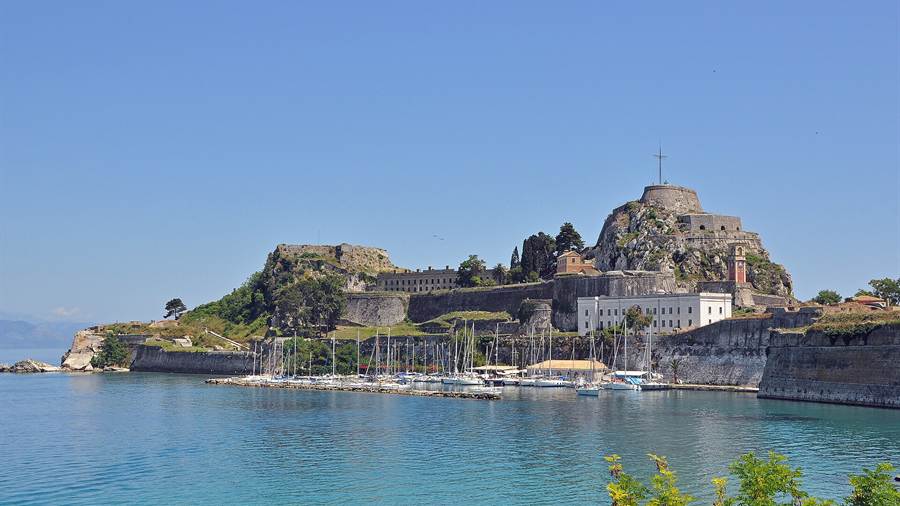
Corfu is the northernmost island on the west coast of Greece, and its capital, also called Corfu, serves as the capital of the Ionian Islands region. The old town gives every outing one starting point.
Across the water to the east and south-east lies Thesprotia, a regional unit of the mainland whose capital and largest town is Igoumenitsa. It has three municipalities, and much of its land is mountainous.
Albania lies to the north-east of the island. Its southern coast faces Corfu across the strait, so the Albanian shore counts as the nearest foreign destination among the day trips from Corfu.
To the south, Paxos and Antipaxos form a small island group in the Ionian Sea. The sea route there is the only one among these day trips from Corfu that leaves the mainland coast behind.
This page sorts the outings by direction. Albania comes first, then Paxos, Parga, the Acheron valley, the Thesprotia coast and Ioannina, while the island of Corfu itself is covered further down the page.
- Base: Corfu town is the capital of the Corfu regional unit and of the Ionian Islands region.
- East: Thesprotia has Igoumenitsa as its capital and largest town.
- North-east: The Albanian coast lies across the Straits of Corfu.
- South: Paxos and Antipaxos are the nearest islands to Corfu.
Day trips from Corfu therefore fall into three groups: Albania, the nearby islands and the Epirus mainland. The sections below take each group in turn, beginning with the crossing to Albania.


Which day trips from Corfu cross to Albania, Saranda and Butrint?
Day trips from Corfu cross to Albania by taking the strait to Saranda and then driving south to Butrint, an ancient Greek, Roman and Byzantine site that lies inside a national park beside a lagoon, close to the Greek border.
The Corfu to Albania day trip post covers the crossing, the town of Saranda, Butrint and the other stops on the Albanian shore, so this section adds background on the ancient site.
South of Saranda the Albanian Riviera follows the Ionian Sea, and the Ceraunian Mountains separate that coast from the interior. The flat ground holds the sites that day trips from Corfu visit.
Modern excavation at Butrint began in 1928, when an expedition from Italy started work under the archaeologist Luigi Maria Ugolini. The aim of that mission was geopolitical rather than scientific.
Venice bought the area including Corfu from the Angevins in 1386, but its merchants cared mainly for the island, and Butrint declined again. By 1572 wars with the Ottomans had left the acropolis ruinous and abandoned.
In 1797 the Treaty of Campo Formio placed Butrint under French sovereignty, and in October 1798 Ali Pasha Tepelena conquered it. Albania gained independence in 1912, when the old city stood empty among marshes.
- Species: The national park holds over 400 species of animals.
- Birds: At least 246 species of birds are known to occur within the park.
- Mammals: The park shelters 39 species of mammals, and 14 of them are classed as globally endangered.
- Fish: The same park records 105 species of fish in its lagoons and coastal waters.
Day trips from Corfu to Albania therefore join a short sea crossing to a long span of history, from Greek settlers and Roman colonists to Venetian rule and the Ottoman period.
What do day trips from Corfu cover on Paxos and Antipaxos?
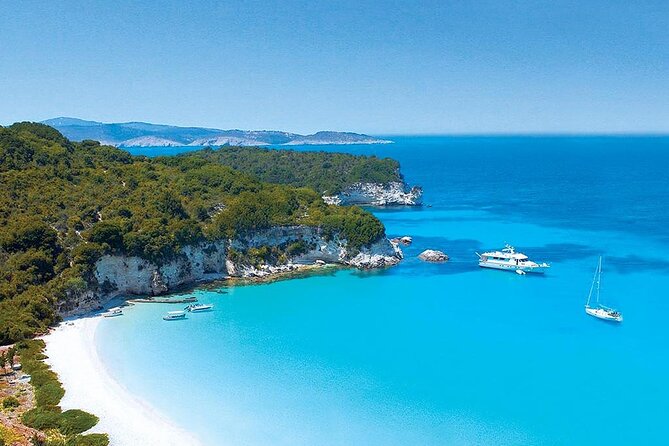
Day trips from Corfu reach Paxos and Antipaxos by sea, two small islands south of Corfu where olive groves cover the hills and where local history runs from Roman rule through the Venetians to the French and British.
The Paxos Antipaxos cruise post covers the boat trip itself, the route south from Corfu and the geology of the two islands, so this section adds background from myth and history.
In Greek myth, Poseidon created Paxos by striking Corfu with his trident to give himself and his wife peace and quiet. Tradition therefore treats the smaller island as a piece broken from the larger one.
The Venetians gained control of Paxos at the end of the 14th century. During the Napoleonic Wars the Ionian Islands were occupied by the French and by a Russo-Turkish alliance before British forces took the island.
Magazia, a village between Lakka in the north and Gaios in the south, stands within the belt of olive groves that stretches along the hilly island. The interior holds scattered hamlets away from the coast.
Antipaxos can be reached by sea taxi from the port of Gaios. Its beaches are among the reasons that day trips from Corfu pair the two islands in a single outing.
- Myth: Tradition credits Poseidon with shaping Paxos by striking Corfu with his trident.
- Venice: The Venetians took control of Paxos at the end of the 14th century.
- Napoleonic era: The French and a Russo-Turkish alliance occupied the Ionian Islands.
- Interior: Scattered hamlets lie in the hilly land between the three coastal communities.
Day trips from Corfu to Paxos and Antipaxos therefore combine island scenery with a layered past, from Greek myth to the British period that ended when the islands passed to Greece.
How do day trips from Corfu reach Parga on the mainland coast?
Day trips from Corfu reach Parga by sea, a mainland resort town on the Ionian shore of Epirus in the regional unit of Preveza, where a Venetian castle, small bays and beaches gather around the harbour and the old town.
The Parga boat trip post covers sea outings from the harbour of Parga, so this section adds the setting and the political history of the town that day trips from Corfu reach by sea.
The present municipality of Parga was formed in the 2011 local government reform, when the former municipalities of Fanari and Parga merged. Its seat is the village of Kanallaki, not the coastal town.
In the 1390s the town came under the Albanian ruler Gjin Bua Shpata of Arta. The townspeople considered the rule of his governor Vonko tyrannical, overthrew him and asked the Venetians for protection.
Relations with the neighbouring Ottoman side were tense. In 1558 the spahi of the village of Agia and the locals organised an attack on the coastal port, and Venetian reports say the village harassed Parga daily.
Provisions for the castle reached it through two bays, at Valtos and at Pogonia. After Parga was sold to the Ottomans, Ali Pasha added a hammam and harem quarters to the fortress.
- Seat: The village of Kanallaki is the seat of the municipality.
- Merger: The municipality joined the former Fanari and Parga units in 2011.
- Bays: Valtos and Pogonia supplied the castle with provisions.
- Additions: Ali Pasha built a hammam and harem quarters inside the castle.
Day trips from Corfu to Parga therefore reach a town whose castle and harbour passed between Albanian lords, Venice and the Ottomans before the modern Greek state took the coast.
What do day trips from Corfu include at the Acheron river and the Necromanteion?
Day trips from Corfu include the Acheron river and the Necromanteion on the mainland opposite the island, a river of Greek myth and an ancient site that tradition linked with the entrance to the realm of the dead.
The Acheron river tour post covers the river, the formats on sale and the Necromanteion in detail, so this section adds literary and archaeological points that the other post leaves out.
The river is 52 km long. Day trips from Corfu reach its lower course near Parga, and writers treated it as a river of Hades and sometimes as a lake or swamp.
The Acheron appears in English drama too. Marlowe has Doctor Faustus call on its gods, and Shakespeare lets Hecate arrange a meeting at the pit of Acheron in Macbeth.
Sigmund Freud placed a line from Virgil about moving Acheron as the motto of The Interpretation of Dreams, using the river as an image of the mind beneath conscious thought.
The Necromanteion was a ziggurat-like temple. In the ritual described by the sources, celebrants descended through winding corridors and left offerings as they passed through a series of iron gates.
- Antarctica: Acheron Lake there is named after the mythical river.
- Mars: The Acheron Fossae form large troughs north of Olympus Mons.
- New Zealand: A stream called the Dry Acheron flows in Canterbury.
- Navy: English naval vessels have carried the name HMS Acheron.
Day trips from Corfu to the Acheron valley therefore reach a place whose name travelled far beyond Epirus, from Greek myth to English plays, a famous book on dreams and features on other worlds.
Which day trips from Corfu follow the Thesprotia coast to Syvota?
Day trips from Corfu follow the Thesprotia coast to Syvota, a beach resort on the mainland shore of Epirus, in a regional unit whose economy rests on farming and tourism and whose port at Igoumenitsa links the mainland with the islands.
Thesprotia is traditionally one of the poorest and remotest regional units of Greece. Agriculture is historically the main economic activity, and tourism has grown beside it along the coast.
The region draws visitors to its beaches, particularly the resort of Syvota. The remains of ancient cities add a second attraction, which links the coast with the wider history of Epirus.
From the 8th or 9th century until the 15th century the region was called Vagenetia, a name that comes from the Slavic tribe of the Baiounitai. Ottoman rule lasted here until 1913.
The Epic Cycle names Thesprotia as a place where Odysseus sailed and married a local queen, Callidice. Day trips from Corfu thus cross a coast that Greek epic already knew.
- Port: Igoumenitsa serves ferry routes to Corfu and to Paxos, including Antipaxos.
- Road: The EO6 runs from Igoumenitsa to Ioannina.
- Provincial roads: Thesprotia has 12 numbered provincial roads, introduced in 1956.
- Highway: The Egnatia Odos reaches the Ionian coast at Igoumenitsa.
Day trips from Corfu along the Thesprotia coast therefore join a coastal strip to the main port of Epirus, and the same roads lead inland to Ioannina.
Why do day trips from Corfu continue inland to Ioannina?
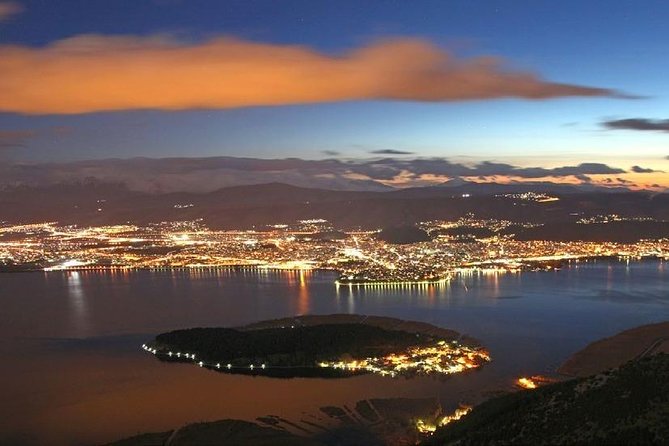
Day trips from Corfu continue inland to Ioannina, the lakeside capital of Epirus, because the city lies on the western shore of Lake Pamvotis, on the road east from the port of Igoumenitsa, and holds a fortified old town with a long history.
The Ioannina tour post covers the city, its castle quarter, the lake island and the nearby sights, so this section adds notes on the route and on the history of the fortress.
Ioannina lies 410 km north-west of Athens, 260 km south-west of Thessaloniki and 80 km east of the port of Igoumenitsa. That last link is the one that connects the city with the Ionian coast.
The Serbian ruler Stefan Dushan captured the town in 1346. Esau de’ Buondelmonti took it from the Serbs in 1385, and further rebuilding of the fortress followed under Thomas Preljubovic.
Ioannina has green areas and parks, including Litharitsia Park. The University of Ioannina has its seat in the city, so day trips from Corfu reach a working university town as well as a sight.
The lake island once held a priestly school. The monastery of Saint Eleousa on the island ran it from 1872 until 1922, long after the monastic buildings had reached their peak in the 16th century.
- Athens: The city lies 410 km north-west of Athens.
- Thessaloniki: The city lies 260 km south-west of Thessaloniki.
- Coast: The port of Igoumenitsa lies 80 km to the west.
- Lake: Lake Pamvotis borders the city on its eastern side.
Day trips from Corfu to Ioannina therefore finish the mainland circuit with an inland city, a medieval fortress and a lake island, all reached by road from the Thesprotia coast.
What do day trips from Corfu include in Corfu town and at the Achilleion?
Day trips from Corfu that stay on the island include the old town and the Achilleion, a palace in the village of Gastouri, about ten kilometres south of the city, which Empress Elisabeth of Austria had built as a refuge.
The Austrian consul Alexander von Warsberg suggested the palace. Empress Elisabeth lost her only son, Crown Prince Rudolf, in the Mayerling incident of 1889, and a year later she had it built.
The empress chose the site after a visit in 1888. She received only her daughters, Marie Valerie and Gisela, and their husbands there. The sculpture Dying Achilles, made in Berlin in 1884, stands in the gardens.
Her bond with the island started earlier. In 1863 she stayed at Mon Repos and fell in love with the island. Colonel George Whitmore designed that villa and the Palace of St Michael and St George.
The Corfu tour post covers the town and the island by road, including the hill villages, the olive groves, the museums and the music. Day trips from Corfu on land draw on the same sights.
- Patron: Empress Elisabeth of Austria commissioned the palace after the loss of her son.
- Adviser: The consul Alexander von Warsberg made the suggestion.
- Villa: Mon Repos lies south of the city in the forest of Palaiopolis.
- Chronicler: Anna Komnene called Corfu a very strongly fortified city in the early 11th century.
Day trips from Corfu to the palace and the old town need no crossing of the straits, because both lie on the island itself, within reach of the capital.
What do day trips from Corfu show in the north and on Mount Pantokrator?
Day trips from Corfu to the north climb Mount Pantokrator, where the summit looks over the whole island and, on clear days, across to Italy, and reach Kassiopi, a fishing village below a ruined castle with Byzantine walls.
The summit holds a café and a monastery. On particularly clear days Italy shows from the top, around 130 km away. Winding roads climb to it from the coast.
Old Perithia lies at the foot of the mountain. Its people helped build the first monastery with local wood and limestone, and the village is said to sit below Pantokrator, the Almighty.
Kassiopi overlooks the Corfu Channel. The castle walls are mainly Byzantine, though traces suggest an older line, and the Venetians fortified them further. The walls survived Ottoman sieges in the 16th century.
The church of Kassiopi has two altars, one for Catholic and one for Orthodox worship. Turks burned it in 1537, and it was restored between 1590 and 1591. Day trips from Corfu pass it.
The Corfu jeep safari post covers the north, the centre and the south of the island by off-road vehicle, with stops at the mountain, Kassiopi, Old Perithia and the coast road.
- Summit: Mount Pantokrator is the highest mountain on the island.
- Name: Pantokrator means the Almighty in Greek.
- Castle: Kassiopi Castle is of considerable archaeological importance.
- Resort: Sidari is a resort village in the municipal unit of Esperies.
Day trips from Corfu in the north combine a mountain view with a harbour village, so one route covers the highest ground and a stretch of the sea coast.
Which islets and coasts do day trips from Corfu reach by boat?
Day trips from Corfu by boat pass the islet of Vido at the mouth of the port, the chapel islet of Pontikonisi and the strait where shipping serves Saranda and Igoumenitsa, between the island and the mainland coast of Albania and Greece.
Vido once held three forts. The French added Napoleon’s Redoute and Signal Redoute and joined them to the older works with tunnels. The British replaced them with three new forts by Lieutenant W. Worsley.
The British built them in secret and drew their maps wrongly to deceive enemies. Remnants of Fort Wellington can still be seen close to the harbour, in the southwest of the islet.
Pontikonisi, a name that means Mouse Island, is a Greek islet near Corfu. A Byzantine chapel of Christ Pantokrator stands on it, dating from the 11th or 12th century.
The Corfu Channel is a passage from the Adriatic Sea to the Ionian Sea. It carries local and tourist traffic between the mainland and the island. Day trips from Corfu by boat use it.
The Corfu boat trip post covers the harbours, the small islands, the coves, the sea caves and the sea life along the coast of the island, and the months that suit the water.
- Wildlife: Peacocks, pheasants and rabbits live on Vido.
- Family: The Durrells lived on Corfu as children and swam out to Pontikonisi.
- Ashes: A portion of the ashes of Gerald Durrell and his sister Margaret lies scattered on the islet.
- Ports: Saranda lies in Albania and Igoumenitsa on the Greek mainland.
Day trips from Corfu by boat therefore pass a fortress islet, a chapel islet and a shipping lane within one stretch of coast.
What do day trips from Corfu offer under sail in the Ionian Sea?
Day trips from Corfu under sail cross waters where the Ionian Sea meets the Adriatic Sea, with Corfu and the Diapontian Islands marking the border between them, and with the main Ionian islands strung along the Greek west coast.
The International Hydrographic Organization draws the northern limit of the Ionian Sea from the mouth of the Butrinto River in Albania to Cape Karagol on Corfu, then along the north coast of the island.
The main islands of the Ionian Sea are Corfu, Kefalonia, Zakynthos, Lefkada and Ithaca, all in the east of the sea and all Greek. Day trips from Corfu under sail start at the northern end.
Greek colonists crossed the Ionian Sea from at least the 8th century BC to found colonies in Italy. Ferry routes between Patras and Igoumenitsa, and Brindisi and Ancona, still cross its east and north.
The Corfu sailing tour post covers the winds, the rainfall, the seamanship and the sieges and wartime history of the waters around the island, with the rules that decide which boat gives way.
- Border: The Diapontian Islands lie about 40 km from the Italian coast.
- Epic: Tradition holds that the hero Odysseus, king of Ithaca, made the sea famous.
- Name: The word Ionian comes from the Greek Ionion, and its origin is unknown.
- Rule: Since 1861 Italy has held control of the western part of the Ionian Sea.
Day trips from Corfu under sail therefore start in a sea with a long record of crossings, from colonists in the 8th century BC to the ferries of today.
What do day trips from Corfu offer in the evening at sea?
Day trips from Corfu in the evening sail past the Old Fortress, which stands on a promontory with the Gulf of Kerkyra in the north and Garitsa Bay in the south, with two peaks that gave the town its western name, Corfu.
The western and higher peak was fortified by the Byzantines around the 12th century AD. The Venetians called it Castel a Terra, the castle near the land, and also Castel Nuovo, the new castle.
The eastern peak was called Castel a Mare, the castle by the sea, and Castel Vecchio, the old castle. Day trips from Corfu at dusk see both peaks from the water.
In the early 15th century the Venetians started replacing the old Byzantine fortifications. The name Corfu itself comes from the Byzantine Greek word Koryphō, which means the city of the peaks.
North of the Kato Plateia lie the Palaia Anaktora, the Old Palaces. The complex has a Roman architectural style and housed the British governors of the island and later the Kings of Greece.
The Corfu sunset cruise post covers the red sky, the fortresses, the seabirds, the stars, the shipwrecks, the local drinks and the months that suit an evening at sea.
- Gulf: The Gulf of Kerkyra lies north of the promontory.
- Bay: Garitsa Bay lies to the south of the promontory.
- Powder: Castel Vecchio held the powder magazine for a time.
- Palaces: The Old Palaces stand north of the Kato Plateia.
Day trips from Corfu in the evening give the town a view from the sea, where the two peaks of the fortress stand out against the sky.
Which food and cruise port stops belong to day trips from Corfu?
Day trips from Corfu that start at the cruise port can add a meal, because the Ionian kitchen carries more Italian influence than any other part of Greece after the long Venetian rule, with Corfu dishes such as pastitsio, polenta and savoro.
The Cuisine of the Ionian Islands has more influences from Italian cuisine than any other part of Greece, owing to the long Venetian rule. Corfu adds baked pasta, polenta, a local salami and a yellow cheese.
The fruit trees of Corfu include the kumquat, the loquat and the prickly pear. Olive trees dominate the landscape, and together with cypress trees they form the typical look of the island.
The kumquat fruit has a pulpy, sweet skin and an inner pulp that is slightly acidic, and people eat it whole. The tree is native to southern China, yet it thrives on Corfu.
The road from the New Port, called Neo Limani, passes through the fish market on the way to the city. Cruise ships sail round-trip voyages to ports of call, and passengers go ashore on shore excursions.
The Corfu food tour post covers the dishes, cheeses, sweets and drinks of the island. The Corfu shore excursion post covers a call at the port, with the town and its history.
- Pasta: Pastitsio is a baked pasta dish.
- Salami: Salado is the local salami of Corfu.
- Cheese: Corfu is also the name of a yellow cheese.
- Soup: Bourou-bourou is a pasta soup.
Day trips from Corfu that begin at the port link a short walk through the market quarter with a table of Venetian-era dishes.
What do travellers ask about day trips from Corfu?
Day trips from Corfu run on the island and across the water, and the answers below cover the palace, the mountain, the strait, the dishes and the sea. Each topic has a post of its own on this page.
Which palace do day trips from Corfu visit near the city?
Day trips from Corfu visit the Achilleion, in the village of Gastouri about ten kilometres south of the city. Empress Elisabeth of Austria had it built as a refuge after the loss of her son in 1889. It now operates as a museum.
What is the highest viewpoint on day trips from Corfu?
The highest viewpoint on day trips from Corfu is Mount Pantokrator, in the north east. On particularly clear days Italy shows from the summit, around 130 km away. A café and a monastery stand at the top, and winding roads climb to it.
Do day trips from Corfu cross the strait to the mainland?
Day trips from Corfu include crossings of the Straits of Corfu, which separate the island from the coasts of Albania and Greece. The strait varies in width from 3 to 23 km, and it links the Adriatic Sea to the Ionian Sea.
What food do day trips from Corfu bring to the table?
Day trips from Corfu bring dishes shaped by Venetian rule, which left the Ionian kitchen with more Italian influence than any other part of Greece. Corfu dishes include baked pasta, polenta, savoro, meatballs called polpettes and a pasta soup called bourou-bourou.