
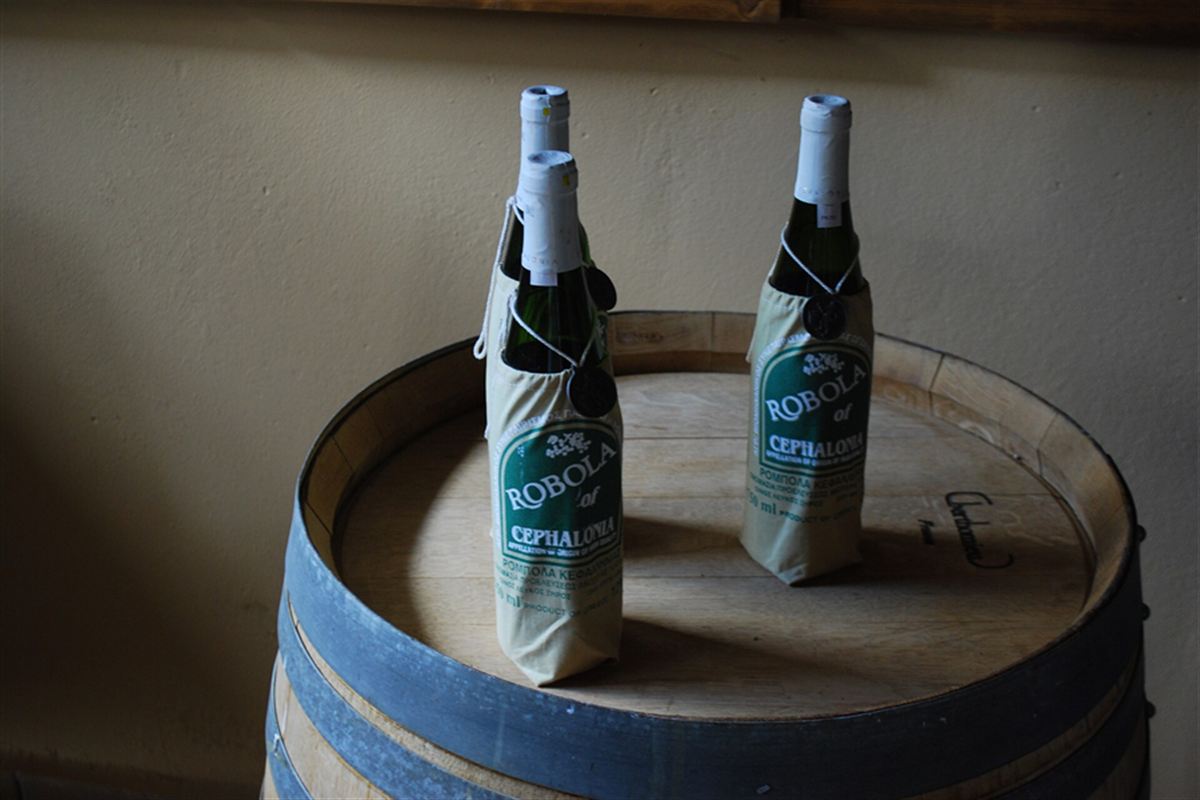
A Kefalonia wine tour is a visit to the vineyards and wineries of Kefalonia, home of the white Robola grape that grows on the limestone slopes of the Omala valley below Mount Ainos. The tour is one of the Greece Tours on Greece Ville, listed with the other Ionian Islands tours and Greece food tours.
This post covers the grapes, the vineyard areas, how a tasting runs and the food served with the wines, then the formats on sale. Common questions come last.
What is a Kefalonia wine tour?
A Kefalonia wine tour is a visit to the island’s vineyards and cellars built around tasting, buying and learning about local wine. White Robola and dark Mavrodaphne lead the glasses, and the route also takes in a village or a coast.
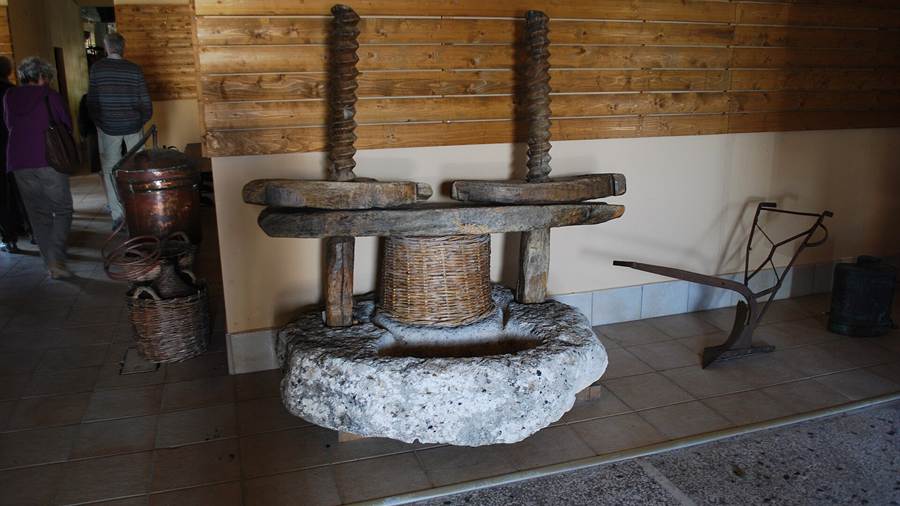
Wine tourism means travel whose purpose is or includes the tasting, consumption or purchase of wine at or near the source. A Kefalonia wine tour fits that definition on a single Ionian island.
The same activity can include visiting wineries, wine tasting, vineyard tours and taking part in the wine harvest. A Kefalonia wine tour mixes these elements in different proportions, by format.
Wine tasting is the sensory examination and evaluation of wine, and the practice is as old as winemaking itself. A Kefalonia wine tour places that practice in the island where the grapes grow.
The island has a long winemaking tradition. Under Venetian rule, Cephalonia and Zante exported raisins, olive oil and wine, so wine was already a trade product on these shores centuries ago.
Greece as a whole is among the oldest wine regions in the world. Greek wine has been dated to 6,500 years ago, so a Kefalonia wine tour joins a very long story.
- Purpose: The visit centres on tasting, buying and learning about wine at or near the source.
- Setting: The vineyards sit on an Ionian island with a winemaking tradition that Venetian merchants knew.
- Grapes: Robola, Mavrodaphne and Muscat form the core of the later sections.
- Extras: Formats add a village, a cave or a beach to the cellar stops.
The Kefalonia island tour post covers the wider island, its towns and its landscapes beyond the vineyards.



What is Robola on a Kefalonia wine tour?
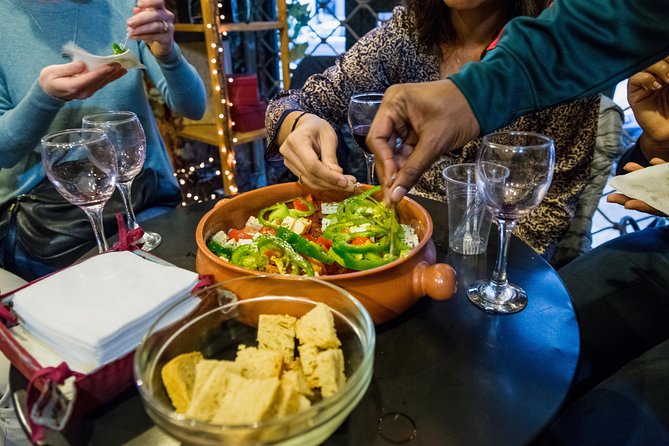
A Kefalonia wine tour centres on Robola, the white grape of the island. Greek wine references place it in mountainous vineyards and describe a smoky, mineral character that suits seafood, which makes it the natural first glass of the day.
Greek wine references say Robola is grown above all in the mountainous vineyards of Cephalonia. On a Kefalonia wine tour, the glass and the hillside therefore belong together.
The same references give the wine a smoky, mineral character and say it complements seafood. Island menus built around fish make the pairing easy to try after a Kefalonia wine tour.
The name looks like the Friuli grape Ribolla Gialla, which led to confusion. Ribolla Gialla is best known in the Friuli Venezia Giulia region of north-east Italy.
The first written record of Ribolla is a notarial contract of 1289 on vineyard land in Friuli. That origin sits far from the Ionian Sea, and the grape is now thought to come from the Collio and Gorizia hills.
In Slovenia, the grape carries the name Rebula, and that country holds the larger share of its vineyards. The Italian and Slovenian vines are separate from the white wine of Kefalonia.
- Colour: Robola is a white grape, poured at the start of a tasting.
- Home: Its mountainous vineyards lie on the Ionian island of Cephalonia.
- Character: Greek references describe a smoky and mineral profile.
- Food: The wine is paired with seafood in those same references.
The Greek wine grapes post sets Robola beside the other grapes of the mainland and the islands, for readers who want the national picture.
What does the Omala valley add to a Kefalonia wine tour?
The Kefalonia wine tour reaches the south-central part of the island at Omala, a former community with a small population. Hillsides, sun and drainage matter more to vines than any single village name, and the area suits all three.
Omala lies in the south-central part of Kefalonia. Since the 2019 local government reform it forms a municipal unit of the municipality of Argostoli, and its land area is 46.699 square kilometres.
The 2021 census counted 748 inhabitants in Omala. Valsamata, the former seat, is the only significant town with 676 people, and Epanochori and Michata are the next largest settlements.
Three factors shape the quality of a vine: climate, slope and soil. A Kefalonia wine tour in Omala shows how those factors work on a real hillside.
Grapevines need roughly 1300 to 1500 hours of sun during the growing season. Hillsides are preferred over flat ground because slopes catch the sun at a better angle and drain more easily.
Drainage is cited as the key soil trait for vine growth. The Mediterranean climate adds dry summers and wet winters, and wheat, grapes and olives are its traditional crops.
- Place: Omala sits in the south-central part of the island.
- Size: The former community covers 46.699 square kilometres.
- Towns: Valsamata, Epanochori and Michata are the largest settlements.
- Vines: Slope, sun and drainage decide how well a vineyard performs.
A Kefalonia wine tour that stops at Omala therefore combines a small rural community with a clear lesson in why vines are planted on hillsides.
How do Mavrodaphne and Muscat shape a Kefalonia wine tour?
A Kefalonia wine tour adds Mavrodaphne and Muscat to the Robola glass in the middle of the tasting. Mavrodaphne is a dark grape of the Peloponnese and the Ionian Islands, while Muscat is a very large family of aromatic grapes found across Greece.
Mavrodaphne means black laurel. Greek references place the grape in the Peloponnese and the Ionian Islands, and one source names Kefalonia as an important growing area for it.
The traditional wine is a sweet fortified style, and the references call it rich and Port-like. A Kefalonia wine tour can present it as the dessert end of the tasting.
The grape is blended with Black Corinth currants to make a prized fortified dessert wine in the solera style. Modern producers also bottle dry reds and use the grape in red blends.
The Muscat family includes more than 200 grape varieties. Its wines and grapes have a pronounced floral aroma, which makes Muscat easy to pick out in a Kefalonia wine tour tasting.
The first documented mention of Muscat grapes comes from the years 1230 to 1240. The grape is found throughout Greece, and Spina on Crete is noted for dry Muscat wines.
- Mavrodaphne: A dark grape of the Peloponnese and the Ionian Islands.
- Style: The classic wine is sweet and fortified, with dry versions now made too.
- Muscat: A family of more than 200 varieties with a floral aroma.
- Reach: Muscat grows throughout Greece, from Crete to the Ionian coast.
Both grapes give the Kefalonia wine tour a sweet and aromatic side, which balances the dry white Robola poured earlier in the day.
How do Mount Ainos and the soil affect a Kefalonia wine tour?
The Kefalonia wine tour sits beneath Mount Ainos, the highest peak of the island at 1,628 metres. Limestone and dolomite bedrock, fir forest and a national park frame the vineyards and set the character of the soil.
Mount Ainos rises to 1,628 metres and has a bedrock of dolomite and limestone of Cretaceous age. A Kefalonia wine tour travels over this rock on every road to the vineyards.
Limestone is a carbonate rock that is slightly soluble in rainwater. Where it is exposed, the ground erodes into karst landscapes, and cave systems form in limestone bedrock.
Mount Ainos National Park was established in 1962 and now covers more than 3,000 hectares. It is the smallest of the national parks of Greece.
Pine forests grow between 700 and 1,200 metres on the mountain. Greek fir, known as Cephalonian fir, occurs at elevations of 900 to 1,700 metres in the mountains of Greece.
On clear days, the view from the summit takes in the north-west Peloponnese, Aetolia, Zakynthos, Lefkada and Ithaca. No ski resorts exist on the range, and one highway crosses it.
- Height: The mountain is the tallest on the island at 1,628 metres.
- Rock: Dolomite and limestone of Cretaceous age form the bedrock.
- Park: A national park since 1962 protects the fir forest.
- Views: Zakynthos, Lefkada and Ithaca appear on clear days.
The Melissani cave tour post covers the underground lake near Sami, a stop that shares a day with the wine route.
Which other local grapes appear on a Kefalonia wine tour?
A Kefalonia wine tour also meets the story of other vines. The Black Corinth grape, the source of the Zante currant, was the crop of the Ionian trade, and raisins and wine were among the oldest exports of Cephalonia.
Zante currants are raisins of the small, sweet, seedless grape called Black Corinth. The name comes partly from the Ionian island of Zakynthos, once the major producer and exporter.
The first written record of the grape was made by Pliny the Elder in 75 AD. By the 17th century, the trade had shifted towards the Ionian islands, particularly Zakynthos.
Raisin exports led the trade of the Ionian Islands under Venetian rule. By the early 18th century, Zante, Cephalonia and part of Ithaca formed a major centre of the currant trade.
Venice prohibited the free export of raisins from the islands because of fierce competition with the United Kingdom. A heavy export tax on foreign ships added to the pressure on traders.
On Cephalonia, wine and raisins are the oldest products exported, and both stayed important until the 20th century. A Kefalonia wine tour sits on top of that farming past.
- Grape: Black Corinth is small, sweet and seedless.
- Name: Zante currant refers to the island of Zakynthos.
- Trade: Raisins led the exports of the islands under Venice.
- Past: Wine and raisins were exported from Cephalonia until the 20th century.
The Ionian Islands tours post covers the neighbouring islands that shared this trade and the routes that link them.
Which Kefalonia wine tour formats are on sale?
A Kefalonia wine tour is on sale in a wide range of formats: classic tastings, multi-stop island days, e-bike and walking routes, a mountain hike, shore excursions, private days and a dinner with wine, each paired with a sight.
Listings for the island include a straight Kefalonia wine tour and a multi-winery tasting day. Another listing pours three labels, which suits a short introduction to the local grapes for first-time visitors.
A Kefalonia wine tour can also be taken on e-bikes or as a walking tour with tastings. Both formats move at a slower pace than a coach and stay close to the vineyards.
Listings pair wine with sights. Melissani Lake, Myrtos Beach, Assos and Fiskardo appear beside tastings, and cave visits at Melissani and Drogarati also carry tasting options.
Other listings add a castle, monasteries and olive oil to the cellar stops. One format climbs Mount Ainos with a monastery visit and a tasting, and a private day links Melissani with Assos.
Shore excursions from Argostoli and a full-day trip from Zakynthos reach Kefalonia from outside the island. A fine dining experience with wine completes the range of formats and gives the day an evening option.
- Tastings: Single-winery, multi-winery and three-label formats are listed.
- Active: E-bike, walking and mountain hike formats are listed.
- Sights: Melissani, Myrtos, Assos and Fiskardo pair with wine.
- Access: Shore excursions and a trip from Zakynthos are listed.
The tour cards and availability boxes on this page list live dates for every Kefalonia wine tour format that is open for booking.
What do travellers ask about Kefalonia wine tour?
The Kefalonia wine tour questions below cover the main grape, the sweet wines, the sights that share a day and the active formats. Each answer draws on the sections above and on the formats listed on the page.
Which grape defines a Kefalonia wine tour?
Robola defines a Kefalonia wine tour on the island. Greek wine references place the white grape in the mountainous vineyards of Cephalonia and describe a smoky, mineral character that complements seafood. Mavrodaphne and Muscat follow as the sweet and aromatic glasses.
Does a Kefalonia wine tour include sweet wines?
A Kefalonia wine tour can include sweet wines. Mavrodaphne is a dark grape of the Peloponnese and the Ionian Islands, traditionally made as a sweet fortified wine, and the Muscat family has a pronounced floral aroma that suits dessert glasses.
Can a Kefalonia wine tour include sights as well as cellars?
A Kefalonia wine tour can include sights as well as cellars. Listings pair wine with Melissani Lake, Myrtos Beach, Assos and Fiskardo, with cave visits at Melissani and Drogarati, and with a monastery visit on the slopes of Mount Ainos.
Is there an active version of a Kefalonia wine tour?
An active Kefalonia wine tour exists in three forms. Listings include an e-bike route, a walking tour with tastings and a hike on Mount Ainos that ends with a wine tasting. All three formats keep the group close to the vineyards and the mountain, and none needs a coach for the whole day.
Featured photo: Jean Housen, CC BY-SA 3.0, via Wikimedia Commons.