
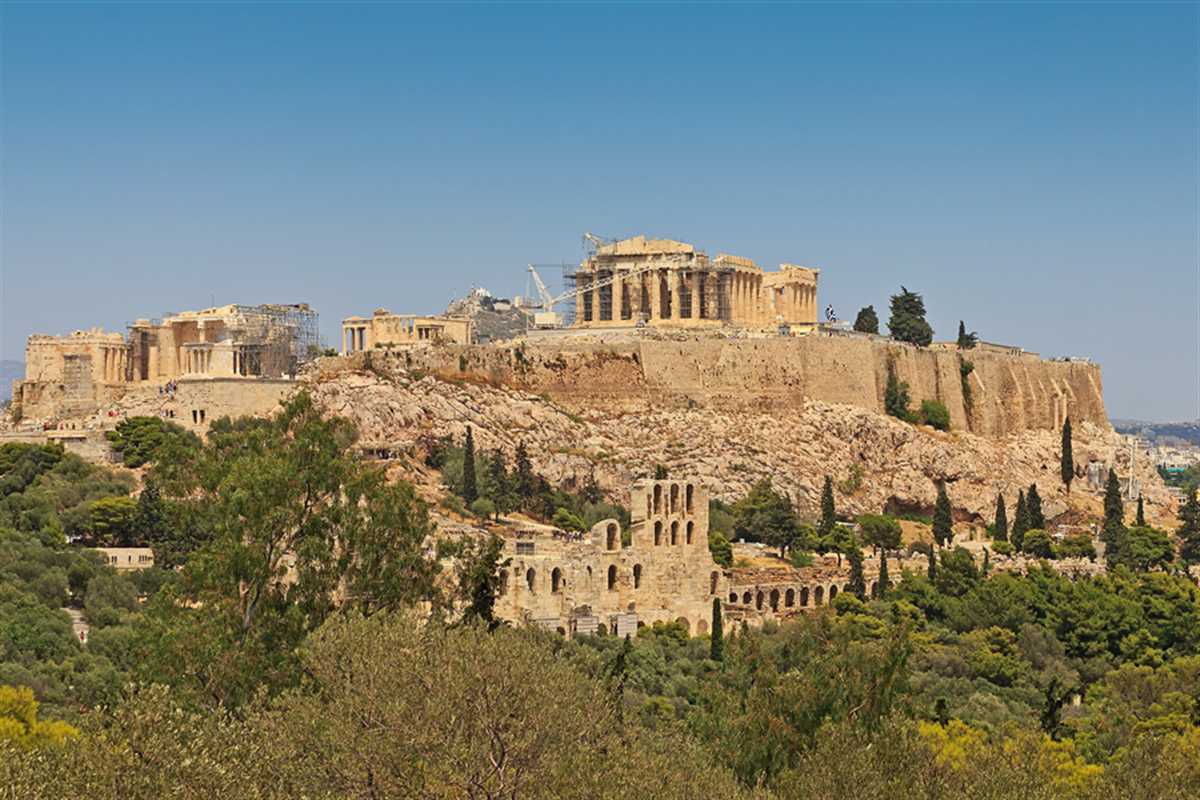
What to wear in Greece depends on the climate, the season and the setting, from linen and cotton in the heat and footwear for ancient sites and gorges to layers for Meteora and the Pindus and wear for beach and boat. The post is one of the Greece Tours on Greece Ville, listed with the other Greece walking tours and Greek island tours.
This post covers the climate, folk dress, fabrics, sun protection, footwear, mountain layers, swimwear, boat trips, restaurants, spring, autumn and winter, the windy Cyclades and a light packing list. Common questions come last.
What to wear in Greece?
What to wear in Greece depends on four things: the Mediterranean climate, the strength of the sun, the mountain terrain and the ground underfoot. Light cloth suits the hot coast, shade suits the sun, grippy shoes suit stone and layers suit high ground.
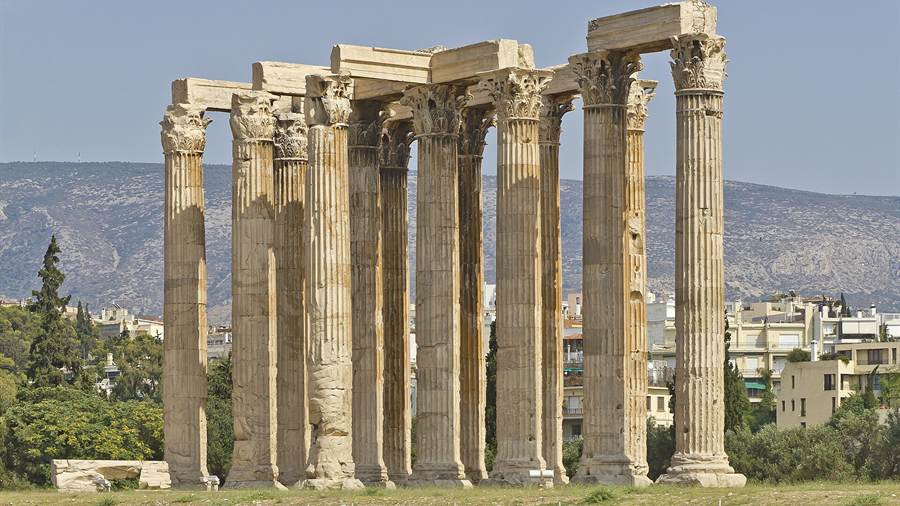
The question starts with the land. The climate in Greece is predominantly Mediterranean, yet a wide range of micro-climates sits inside that label, so what to wear in Greece changes between the coast and the peaks.
A Mediterranean climate has dry summers and wet winters. Summer conditions are hot and winter conditions are mild. That pattern explains why thin, airy clothing fills the summer bag while a rain layer belongs to the cool months.
The Greek mainland is extremely mountainous. A traveller who leaves a sea-level town for a plateau, a gorge or a monastery on a rock pillar meets different air and needs different clothes within one day.
The sections below follow that logic. They cover the climate, Greek folk dress, fabrics, sun protection, shoes for ancient sites and for trails, and the layers that suit the mountains of Meteora and the Pindus.
- Climate: Dry summers and wet winters set the base for every packing choice.
- Terrain: A mountainous country means that altitude changes the air within one journey.
- Sun: Hats, sunglasses and light cloth answer the strong summer light.
- Ground: Marble, rock paths and gorge floors each ask for a different sole.
Climate, cloth, sun and ground form the four parts of one answer. Each of the next sections takes one part in turn, so that what to wear in Greece reads as a clear checklist.
How does the Greek climate shape what to wear in Greece?
The Greek climate shapes what to wear in Greece through dry and sunny summers, wet winters and strong winds. Light layers suit the coasts in the hot season, a rain layer suits the cool season, and mountain ground asks for more.
The warm Mediterranean type is the main one in the country. It occurs on the North Aegean islands, Evia, the Ionian Islands, the western coast and the low-lying parts of Crete, so what to wear in Greece on those coasts follows a hot, dry summer.
In summer the weather is mostly sunny and dry. Any rain falls as showers or thunderstorms from towering clouds. The air is hot by day and pleasantly warm at night, so a thin extra layer for the evening is enough.
Heatwaves on the coast are mild, since the sea is relatively cool and sends a breeze that moderates the temperature. A hot semi-arid climate covers Piraeus and much of the Athens Riviera, and the Gulf of Corinth shares it.
Winters are wet, and the rain is persistent, particularly on the western side of this climate zone. Snow that falls on the low ground does not last long, especially on slopes that face south.
- Coasts: The warm Mediterranean type brings sunny, dry summers to the sea edge.
- Wind: The Cyclades and the seas around them record very windy days in summer.
- Athens area: Piraeus and the Athens Riviera sit in a hot semi-arid climate.
- Winter: Persistent rain on the western side calls for a waterproof outer layer.
The climate therefore sets a simple rule for the coast: thin cloth by day, a light layer for the evening, and a shell against wind or rain. That rule is the core of what to wear in Greece.
How do Greek folk dress and the fustanella of the Evzones belong to what to wear in Greece?
Greek folk dress belongs to what to wear in Greece as history, not as a rule for visitors. The fustanella, a pleated kilt-like garment, became the national dress, and the Evzones of the Presidential Guard still wear a short version in Athens.
The fustanella is a pleated, skirt-like garment worn by men in the Balkans. Its name comes from the Italian word fustagno, which means fustian, the cloth from which the earliest examples were made.
In the 1820s it became a principal visual symbol of Philhellenism, and revolutionary fighters wore it during the Greek War of Independence, long before any idea of what to wear in Greece as a visitor. After independence the new army adopted it with embroidered waistcoats and jackets.
In 1835 it was proclaimed the official court costume, and it eventually became the Greek national dress. The folk story of what to wear in Greece therefore ends with a garment of pleats and fine cloth.
The Evzones guard the Tomb of the Unknown Soldier and the Presidential Mansion in Athens. Their short fustanella has been worn by such units since 1868, and the uniform grew from the clothes of the klephts.
- Fustanella: A pleated kilt-like garment named after fustian, the first fabric used for it.
- Court costume: The year 1835 made it official, and it later became the national dress.
- Evzones: The Presidential Guard wears the short version at the Athens guard posts.
- Tsarouchi: The leather shoe with the upturned toe and the woollen pompon completes the uniform.
Folk dress is a living ceremony in the capital. Visitors see it at the guard posts, while what to wear in Greece for their own trip follows the climate and the ground instead.
Which fabrics such as linen and cotton suit what to wear in Greece in the heat?
Linen and cotton suit what to wear in Greece in the heat because both are plant fibres that breathe and wick moisture. Linen is strong, absorbent and quick to dry, cotton is soft and durable, and both beat heavy wool in hot weather.
Linen is a textile made from the bast fibres of the flax plant. It is very strong and absorbent, and it dries faster than cotton. Because of these properties, linen clothing is comfortable in hot weather.
Linen also has a known drawback, because it tends to wrinkle. A traveller who packs linen for what to wear in Greece accepts creases as part of the cloth, which is a trade for its cooling feel.
Cotton is a soft, fluffy fibre that grows in a boll around the seeds of the cotton plant. It is spun into yarn and made into a soft, breathable and durable textile.
Cotton is the widest used natural fibre cloth in clothing today. Greek history links the two cloths already, since a document of 1335 lists fustanum, a cloth made of cotton, in the same region as the early fustanella.
- Linen: Strong, absorbent and quick to dry, with a tendency to wrinkle.
- Cotton: Soft, breathable and durable, and the widest used natural fibre cloth.
- Wool: Wool insulates and absorbs moisture, so it belongs to the cool-season layers.
- Synthetics: Polyester fibre fills the same role as down in insulating layers.
For the hot months the choice is clear: plant fibres next to the skin. Wool and synthetics keep their place in the cool-season bag of what to wear in Greece.
How do the sun, the UV index, hats and sunglasses shape what to wear in Greece?
The sun shapes what to wear in Greece through the UV index, a linear scale of sunburn-producing radiation. Public health bodies advise a hat and sunglasses at index 3 or higher, so a brimmed hat and UV-blocking lenses form the base.
The UV index is an international standard measure of the strength of sunburn-producing ultraviolet radiation at a place and time. It is used in daily and hourly forecasts for the general public, and it informs what to wear in Greece under strong light.
The scale is linear, so radiation at index 12 is twice as intense as radiation at index 6. Public health organisations recommend protection, including a hat and sunglasses, when the index is 3 or higher.
A sun hat is headgear designed to shade the head, face, neck and shoulders. Its semi-rigid brim is about 4 to 7 inches, or 10 to 18 centimetres, wide, and it protects against sunburn on the face and neck.
Sunglasses must block ultraviolet radiation to work. The American Optometric Association recommends that kind of lens, and dark glasses that do not block UV can harm more than bare eyes, because they open the pupil.
- Index 3: Protection is advised at this level and above.
- Linear scale: Index 12 carries twice the intensity of index 6.
- Hat: A brim of 10 to 18 centimetres shades face and neck.
- Lenses: Only lenses that block UV protect the eyes.
Shade for the head and UV-blocking lenses for the eyes are the two sun items that count. They pack flat, and they anchor the sun part of what to wear in Greece.
Which footwear suits ancient sites with uneven paving and polished marble in what to wear in Greece?
Footwear for ancient sites in what to wear in Greece needs a grippy sole, because rock, marble and uneven ground meet underfoot. Hiking sources state that shoes with traction reduce the chance of slipping, and that shoes with ankle support also prevent injury.
The Acropolis stands on a flat-topped rock that rises 150 metres above sea level and covers about 3 hectares. Visitors climb a natural hill, so the footwear part of what to wear in Greece starts before the first temple.
Its temples are built of Pentelic marble from the quarries of Mount Pentelicus. Marble paving and steps call for a sole with a clear pattern, because a pattern is what gives traction on stone.
The ground itself is unstable in places. The limestone under the site is prone to erosion and rock slides, and retaining walls, drainage and rock bolts protect the monuments from those processes.
The Erechtheion was designed around extremely uneven ground, which shows how the surface changes from one temple to the next. The Acropolis tour post covers a visit to the rock and its temples.
- Sole: A patterned, rubber-lugged sole grips marble and rock.
- Support: Ankle support helps on steps, slopes and uneven stone.
- Surface: Pentelic marble forms the monuments of the Acropolis.
- Slope: The rock rises 150 metres above sea level, so every route climbs.
Light trainers with a patterned sole or low walking shoes meet these needs. That is the footwear rule inside what to wear in Greece for ancient sites.
Which footwear suits trails and gorges in what to wear in Greece?
Footwear for trails and gorges in what to wear in Greece is a protective hiking boot or a trail shoe with deep lugs. The choice depends on rough terrain, wet stone and distance, and a boot protects feet and ankles on long walks.
Hiking boots are footwear designed to protect the feet and ankles during outdoor walking. They give ankle support and are fairly stiff. Boots that protect the hiker’s feet and heel are recommended over thin-soled trainers, which makes the boot a first choice in what to wear in Greece for gorges.
Their history explains the sole. After a deadly climbing accident on Punta Rasica in 1935, Vitale Bramani introduced a vulcanised rubber sole two years later that he called Carrarmato, an Italian word meaning tank tread.
Trail shoes are another route. They carry lugs, which are raised rubber shapes on the outsole, and deeper lugs of 5 millimetres and above grip better on wet and muddy ground, while shorter lugs of 2 to 4 millimetres suit firmer ground.
The Samaria Gorge is a long walk that is strenuous at the peak of summer. The Samaria Gorge tour post covers the route from the plateau to the sea.
- Boot: Stiff, protective and supportive for long distances over rough ground.
- Deep lugs: Lugs of 5 millimetres and above grip wet and muddy terrain.
- Short lugs: Lugs of 2 to 4 millimetres suit firmer ground and comfort.
- Trail shoe: Midsole padding reduces impact for walkers as well as runners.
A boot or a lugged trail shoe broken in on easy ground is the safest pair for gorge floors. New shoes worn for the first time are a risk on long routes in what to wear in Greece.
Which layers suit the mountains of Meteora and the Pindus in what to wear in Greece?
Layers suit the mountains of Meteora and the Pindus in what to wear in Greece because the mountain climate changes with elevation and aspect. A wicking inner layer, an insulating middle layer and a wind and water shell cover the changes.
Layered clothing consists of three layers, a system that fits what to wear in Greece on mountain ground. The inner layer keeps the skin dry by drawing sweat outwards. The mid layer insulates, and wool does that job while still absorbing moisture.
The outer layer protects the others from wind and water. A soft shell combines partial water resistance with partial wind-breaking, but soft shells are not waterproof and can rip more easily than hard shells.
The Pindus runs along the mainland and gives Greece its mountain weather. In Pindus National Park the climate is montane and varies with elevation and aspect, and mean monthly temperatures run from 0.9 to 21.4 degrees Celsius.
That spread of temperature is the reason for layers. Rainfall in the park ranges from 1,000 to 1,800 millimetres a year, so a shell belongs in the pack, and what to wear in Greece on the high ground starts with wet weather.
- Inner layer: Keeps the skin dry by moving sweat away.
- Middle layer: Wool or synthetic fill adds insulation.
- Shell: A hard shell blocks wind and water better than a soft shell.
- Park range: Pindus National Park spans an elevation range from 1,076 to 2,177 metres.
Three thin layers weigh less than one thick coat and adapt to a day that starts cold and ends warm. That is the high ground side of what to wear in Greece.
What suits the beach in Greece (swimwear, cover-ups, sea shoes against sea urchins) when deciding what to wear in Greece?
What to wear in Greece at the beach comes down to a quick-drying swimsuit, a light cover-up and sturdy sea shoes. The swimsuit handles the water, the wrap covers the walk to the café, and shoes protect feet on rock.
Swimsuits that contain nylon dry more quickly than suits made of common organic fibres. Before the 1930s swimsuits were made of wool, which grew heavy with water. Modern swimwear therefore suits a day that moves between the sea and the shore.
A hip wrap works as beach wear and as a cover-up over swimwear. The wrap is made of thin, light fabric such as rayon, and long thin straps hold it in place. It packs flat and turns swimwear into a street outfit for what to wear in Greece.
Sea urchins move slowly on tube feet and hide in crevices or under objects. Their spines serve for defence. A swimmer who steps onto rock without shoes enters the very places where urchins shelter, so sea shoes protect the feet.
Water shoes are made of mesh with a hard sole that prevents cuts and abrasions on wet, rocky ground. Tiny holes in the sole drain water fast, which dries the shoe and keeps it light.
- Swimwear: two nylon suits let one dry while the other is worn.
- Cover-up: a light wrap or loose shirt covers the shoulders between sea and street.
- Sea shoes: a mesh pair with a hard sole serves rocky entries and pebble coves.
- Bag: a dry bag keeps wet swimwear apart from dry clothes.
The beach kit stays small and quick-drying. The same light pieces carry over to the boat deck covered next, where wind and sun change the rules of what to wear in Greece at sea.
What suits a boat trip, with wind on deck and sun on the water, in terms of what to wear in Greece?
What to wear in Greece on a boat trip means a windproof layer, a long-sleeved shirt and flat shoes that grip a wet deck. Wind cools the deck while the sun shines on the water, so layers come on and off.
A windbreaker is a thin fabric jacket designed to resist wind chill and light rain. It is lightweight and made of synthetic material. Elastic at the waist and arms and a zipper let the wearer adjust it, a core piece of what to wear in Greece at sea.
Windbreakers are worn in the warmer seasons when wind or light rain are expected. They also serve as one layer in a layering plan for colder seasons. A hood on the jacket folds away once the wind drops.
Sunburn is a radiation burn from overexposure to ultraviolet light. Sunscreen and sun protective clothing are widely accepted measures against it. Long sleeves and collars are common styles of sun protective clothing, and both suit a deck.
Sandals are open footwear with a sole held by straps over the instep and around the ankle. They keep feet cool and dry in warm weather. On a wet deck a strapped pair or a flat shoe holds better than a loose slipper.
- Outer layer: a thin windbreaker with a zipper and elastic cuffs.
- Sleeves: a loose long-sleeved shirt with a collar covers arms and neck.
- Shoes: strapped sandals or flat deck shoes with a grip on the sole.
- Pockets: a zipped pocket keeps keys and a phone dry.
The Santorini catamaran cruise post covers a day on the water around Santorini. The advice on what to wear in Greece above applies to that deck.
What do restaurants and evenings in Athens and on the islands ask in dress, so that what to wear in Greece suits the table?
What to wear in Greece for an evening out follows the smart casual idea: clean, light and neat clothes, without a formal suit. A taverna is a small Greek restaurant, so a tidy outfit and comfortable shoes fit the table and the street.
Smart casual is an ambiguously defined dress code. It mixes casual wear with smart, well-dressed parts. Its meaning shifts with context, location and weather, and in warmer climates it sometimes drops the jacket altogether.
A fashion director advises fresher colours and lighter, softer materials for the style. Linen, cashmere, fine wool and cotton suit it when they are freshly laundered. Clean and relaxed clothes read as smart, the aim of what to wear in Greece after dark.
A taverna is a small Greek restaurant that serves Greek cuisine, and it is an integral part of Greek culture. The word comes from the Latin taberna, meaning shop. The setting is informal, so what to wear in Greece at a taverna stays relaxed.
Plaka is the old neighbourhood of Athens on the northern and eastern slopes of the Acropolis. It has labyrinthine streets and neoclassical architecture. An evening walk there asks for shoes that cope with narrow lanes.
- Top: a light cotton or linen shirt or a plain blouse.
- Bottom: clean trousers, a skirt or a dress in a light fabric.
- Shoes: flat sandals or closed shoes with a firm sole for stone lanes.
- Layer: a light jacket or cardigan for the breeze after dark.
Evening dress in Athens and on the islands stays simple. One neat outfit that packs flat answers every table, and it fits the wider plan for what to wear in Greece.
What suits spring and autumn in Greece, and which layers decide what to wear in Greece between the seasons?
What to wear in Greece in spring and autumn is a layer system: a base layer, an insulating mid layer and a shell. The wearer sheds layers as the temperature changes, which suits days that begin cool and end warm.
Layered clothing consists of three layers. The inner layer moves sweat outward, and so the skin stays dry. The mid layer adds insulation. The outer layer protects the other two from wind or water.
The wearer can shed layers according to changes in temperature. That flexibility matters for what to wear in Greece, which ranks among the mountainous countries of Europe and has a wide range of micro-climates and local variations.
Wool suits the mid layer because it insulates and absorbs moisture. A shell layer needs only to stop wind in the shoulder seasons. A soft shell combines partial wind-breaking with partial water resistance, but it is not waterproof.
Sites on high ground ask for the full set, while a coastal town needs only one layer. The Meteora day trip from Athens post covers a day out from the capital to Meteora.
- Base layer: a thin cotton or synthetic top that dries fast.
- Mid layer: a wool jumper or a fleece for early and late hours.
- Shell: a windbreaker for gusts and a light shower.
- Bag: a small day pack holds the layers that come off.
Spring and autumn reward the traveller who adds and removes small pieces. A trip planned around layers settles the question of what to wear in Greece for every hour of the day.
What suits winter in Greece, with rain and cold wind, when choosing what to wear in Greece?
What to wear in Greece in winter starts with a waterproof, breathable shell over a warm wool mid layer. Rain and cold wind reach the coast and the mountains, so a hood, closed shoes and layers matter more than style.
A raincoat is a waterproof or water-resistant garment worn on the upper body to shield the wearer from rain. It gives hands-free protection, unlike an umbrella, which suits narrow streets and windy squares.
The Scottish chemist Charles Macintosh patented a rubber cloth in 1824, and the Mackintosh raincoat used fabric impregnated with rubber. Earlier rainwear used wool, which keeps the wearer warm even when soaked.
The northern areas of Greece have a transitional climate between the continental, the Mediterranean and the humid subtropical. That range explains why a coat for Thessaloniki asks for more warmth than one for a southern island.
Shoes matter on wet stone. A closed shoe with a grip on the sole keeps feet drier than a sandal. A hat or hood completes the kit when rain and wind arrive together in what to wear in Greece for the cold months.
- Shell: a waterproof, breathable jacket with a hood.
- Warmth: a wool jumper that keeps its heat when damp.
- Feet: closed shoes with a firm grip for wet marble and cobbles.
- Extras: a scarf and a light hat for cold wind.
Winter dress rests on dry layers under a waterproof shell. Each piece in the kit for what to wear in Greece in winter has one job: keep wind and rain off the wearer.
What suits the windy Cyclades under the meltemi, and how does the wind change what to wear in Greece?
What to wear in Greece on the windy Cyclades means close-fitting clothes, a hat with a strap and a light windbreaker. The meltemi, the Aegean wind of the summer months, flaps loose cloth, so fitted layers and secure hats work best.
The etesians, called meltemia in Greek, take their name from an ancient Greek word for periodic winds. They blow periodically over the Aegean Sea, so the Cyclades meet them again and again in the warm season.
A windbreaker with elastic at the waist and arms stays close to the body in a gust. A zipper lets the wearer open it when the air is still. Synthetic fabric dries fast after a splash, which helps what to wear in Greece on windy days.
A sun hat shades the head, face, neck and shoulders from direct sunlight. In wind it needs a chin strap or a close brim. A loose straw hat leaves the head at the first strong gust.
Long skirts and wide trousers catch the wind. Fitted shorts, knee-length trousers and shirts that button keep the outfit calm. This is the practical core of what to wear in Greece on an exposed island.
- Jacket: a thin windbreaker with elastic cuffs and a zipper.
- Hat: a brimmed hat with a chin strap.
- Cut: fitted trousers or shorts instead of long, wide skirts.
- Bag: a zipped bag so that towels and papers stay put.
The Cyclades ask for clothes that stay still in the wind. A fitted layer and a strapped hat settle the question of what to wear in Greece on these islands.
How do a light packing list and laundry habits help on a Greek trip, and what to wear in Greece does the bag hold?
What to wear in Greece is easier to pack when the list is short, light and quick-drying: linen, cotton and nylon pieces that mix and match. Washing items in the sink or at a launderette replaces a heavy suitcase.
Linen is strong and absorbent, and it dries faster than cotton. Linen clothing is comfortable to wear in hot weather. It wrinkles easily, which is part of how the fabric looks and needs no apology on a trip.
Cotton is a soft, breathable and durable textile. Cotton is the natural fibre cloth that clothing uses widely today. Cotton shirts and trousers form the plain base of a short packing list.
Wool is highly odour-resistant, and nylon swimwear dries quickly. Mixing these fibres lets a traveller wear a piece twice before washing. The result is a bag with fewer items and a lighter load.
Laundry means washing, drying and ironing clothes. A stand-alone self-service laundry is called a launderette in British English. Before washing machines, wet clothes were hung on poles or clothes lines to air dry.
- Tops: two linen or cotton shirts and one light layer.
- Bottoms: one pair of trousers and one pair of shorts or a skirt.
- Swim: two nylon swimsuits and a wrap.
- Wash: a small bag of detergent for sink washing, or a launderette visit.
A short list, a regular wash and clothes that dry in the open air keep the load light. That routine settles the question of what to wear in Greece across a long trip.
What do travellers ask about what to wear in Greece?
What to wear in Greece draws the same four questions: whether swimwear suits the town, whether sandals work, how rain changes the bag and which colours stay cool. The answers below rest on the properties of fabrics and garments.
Is a swimsuit right for the town when planning what to wear in Greece?
Swimwear belongs at the shore, and the style of a swimsuit depends on community standards of modesty, fashion and personal preference. A wrap or loose shirt over swimwear turns the beach outfit into a street outfit for the walk to a café or shop.
Do sandals suit what to wear in Greece, given their history?
Sandals suit warm weather because they keep feet cool and dry. In Ancient Greece the sandalia were sandals worn principally by women, with a sole of wood, cork or leather. Modern strapped sandals suit towns and flat paths, while rocky ground and wet marble ask for closed shoes.
Does rain change what to wear in Greece, and which jacket is right?
A windbreaker resists wind chill and light rain. A raincoat is waterproof and shields the wearer from heavier rain. Soft shells combine partial water resistance with wind-breaking but are not waterproof, so a trip in the cold months calls for a true waterproof shell.
Which colours stay cool in what to wear in Greece?
Sun protective clothing in heavier-weight and darker-coloured fabrics has a significant disadvantage: heat retention. Light colours and light, breathable fabrics such as linen and cotton therefore suit hot days, while a loose cut lets air move around the body.
Featured photo: A.Savin, CC BY-SA 3.0, via Wikimedia Commons.