
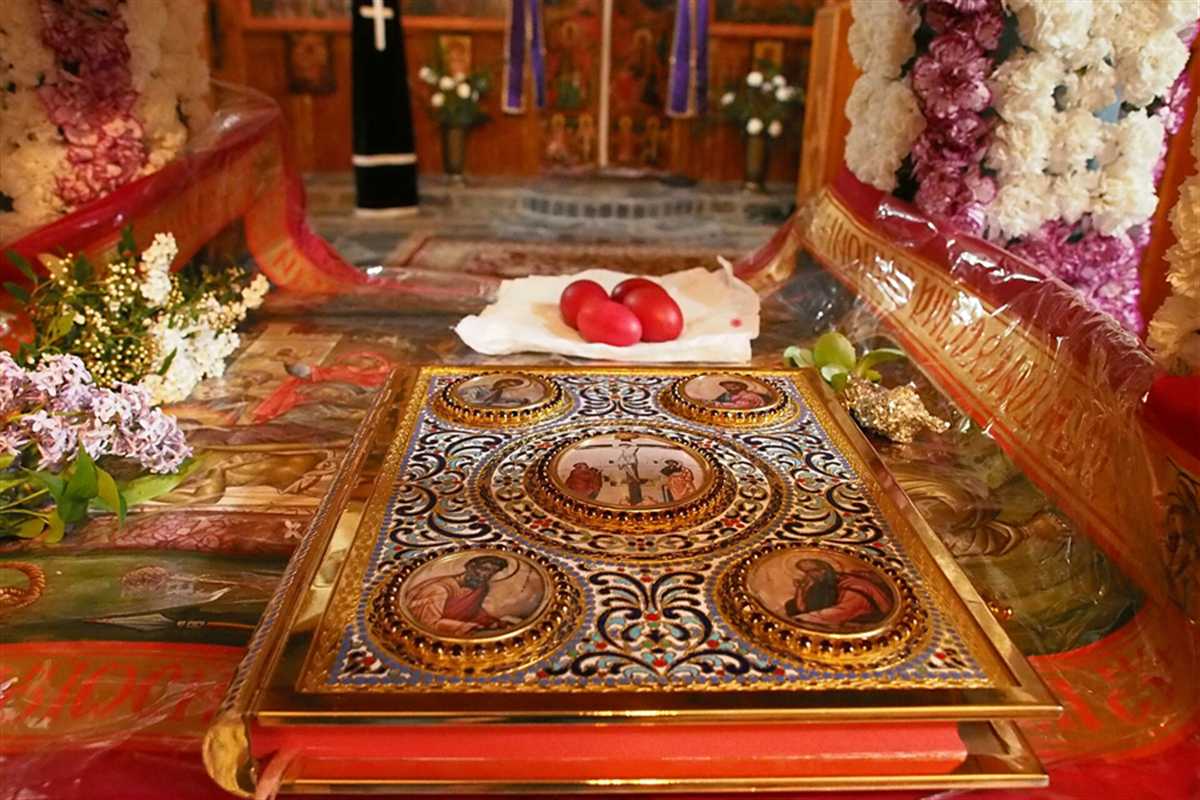
Greek Easter is the Orthodox feast of Pascha, with Holy Week, the Epitaphios procession, the Holy Light, magiritsa, roast lamb and red eggs, kept in its own way on Corfu, Chios, Patmos, Hydra and Arachova. The post is one of the Greece Tours on Greece Ville, listed with the other Greek island tours and Peloponnese tours.
This post covers what the feast is, dating, Lent, Holy Week from Palm Sunday to the Resurrection, the foods, tsougrisma, Bright Week, local customs on the islands and the mainland and the Byzantine roots. Common questions come last.
What is Greek Easter?
Greek Easter is the Orthodox celebration of Pascha, the feast of the resurrection of Jesus, and the high point of the Greek church year. It rests on Great Lent, on Holy Week and on the vigil of Holy Saturday.
The name Pascha comes from an Aramaic word that is cognate to the Hebrew Pesach, the Passover. The word first named the Jewish festival, before Greek Easter took the word over, and Paul the Apostle applied it to Christ as early as 50 AD.
The Gospels place both the crucifixion and the resurrection in the week of Passover. The first Christians therefore timed the feast by Passover, and direct evidence of a full festival of Pascha begins in the mid-2nd century.
The Orthodox year builds Greek Easter in three stages, set out in the Triodion. The pre-Lenten period comes first, the Great Forty Days follow, and Holy Week closes the cycle before the night of the Resurrection.
- Pascha: Latin and Greek both call the Christian feast by this word, which comes from the Passover.
- Lent: The fast before the feast is called Great Lent, and its forty days are counted from Clean Monday.
- Holy Week: In Greek the last week is Hagia kai Megale Hebdomas, the Holy and Great Week.
- Vigil: Greek Easter belongs to Eastern Christianity, which ranks the ceremonies of the Easter Vigil as the greatest of the liturgical year.
The sections below follow the Orthodox calendar, from the rule that fixes the date, through Lent and Holy Week, to the Resurrection service and the foods that end the fast of Greek Easter.
How does the Orthodox rule for dating Pascha differ from the Western rule in Greek Easter?
Greek Easter follows the Julian computus, a table rule that places the Paschal full moon later than the Gregorian rule used in the West. Both rules fix the feast on the first Sunday after the Paschal full moon, on or after 21 March.
The First Council of Nicaea in 325 asked the eastern churches to keep the feast together with Rome and Alexandria. It gave no explicit rules for the date, and the system of the church of Alexandria later became the norm.
The Dionysian reckoning, described in full by Bede in 725, stayed in use in western Europe until the Gregorian reform. It remains in use in the vast majority of Eastern Orthodox churches, so it sets the date of Greek Easter.
The Julian method repeats a 19-year cycle without correction. That approximation built up an error of one day every 310 years, and the drift of 21 March from the equinox led to the Gregorian reform of 1582.
- Paschal full moon: This is not an astronomical full moon but the fourteenth day of a lunar month fixed by tables.
- Window: The paschal lunar month begins between 8 March and 5 April, so its fourteenth day falls between 21 March and 18 April.
- Drift: The Julian Paschal full moon drifts from the true full moon by more than three days every millennium.
- Exception: The Finnish Orthodox Church alone among the Eastern Orthodox churches follows the Gregorian rule.
Greek Easter and the related holidays are moveable feasts, so the Orthodox rule moves the whole spring cycle, from Clean Monday to the Resurrection, with the Paschal full moon.
What are Lent and Clean Monday in the lead-up to Greek Easter?
Greek Easter is preceded by Great Lent, a fast of forty days that opens on Clean Monday after a three-week pre-Lenten season. The fast begins on the Sunday night with the Forgiveness Vespers and sets a tone of cleansing and renewal.
The Triodion, the liturgical book of this season, opens a three-week pre-Lenten period before the forty days begin. Each week runs from Monday to Sunday and takes its name from the Gospel theme of its Sunday.
Lent for Greek Easter starts on the Sunday night at Forgiveness Vespers, which ends in the Ceremony of Mutual Forgiveness. All present bow before one another and ask forgiveness, so that the fast opens with a clean conscience.
The first week is called Clean Week. Tradition asks for confession in this week and for a thorough cleaning of the house, and the reading of Isaiah 1:1 to 20 tells the faithful to wash and be clean.
The forty days run from Clean Monday to the Friday of the sixth week, and Sundays are counted while Holy Week is not. The number echoes the forty days Moses spent on the mountain.
- Foods: The foods given up in the Lent of Greek Easter are meat, fish, eggs, dairy products, wine and oil.
- First Sunday: The Feast of Orthodoxy marks the restoration of the veneration of icons after the Iconoclast controversy.
- Third Sunday: The Veneration of the Cross falls at the midpoint of the forty days.
- Cheesefare Week: The dairy products of the household are used up in the week before Clean Monday.
Every later custom of Greek Easter, from red eggs to the soup that ends the fast, answers to this season of Lent.
How is Holy Week arranged in Greek Easter?
Greek Easter calls its last week Hagia kai Megale Hebdomas, the Holy and Great Week, and names each day Great Monday, Great Tuesday and so on. Each day carries its own services, and the Orthodox liturgical day starts at sunset.
Vespers is normally the first service of a liturgical day. In the Holy Week of Greek Easter the Sunday evening Vespers still belongs to Palm Sunday, and its hymns refer to the Entry of the Lord into Jerusalem.
The Orthros services of the first three days are held the night before in parishes and are called the Bridegroom Prayer. An icon of Jesus in the purple robe of mockery stands in the centre of the church.
Near the end of the Tuesday evening service, the Hymn of Kassiani is sung. Kassia wrote it in the 9th century about the woman who washed the feet of Christ.
On Wednesday evening Greek Orthodox churches hold the service of Holy Unction. In Greek practice it is tied to the Ottoman period, when parish priests were not permitted to hear confession.
- Thursday morning: The Liturgy of the Last Supper combines Vespers with the Liturgy of Saint Basil the Great.
- Cooked meal: Strict observers eat one cooked meal in the week, on Thursday, with wine and oil but no meat or dairy.
- Friday: In Greek Easter the Divine Liturgy is not celebrated on Great Friday, except when it falls on the Annunciation of 25 March.
- Royal Hours: On Friday morning this celebration of the Little Hours adds hymns and readings.
The week moves from the Bridegroom services to the Last Supper, the Passion and the burial, and Greek Easter gives each stage its day and its service.
What are Lazarus Saturday and Palm Sunday in Greek Easter?
Greek Easter reaches Holy Week through Lazarus Saturday and Palm Sunday, two days of joy between the penitence of Lent and the mourning of the Passion. They recall the raising of Lazarus and the Entry of the Lord into Jerusalem.
Lazarus Saturday and Palm Sunday stand outside both Lent and the Holy Week of Greek Easter. The forty days of Great Lent end on the Friday before, and the two days form a transition that lightens the fast.
The commemoration is old. The homilies of John Chrysostom and Augustine of Hippo attest it, and Andrew of Crete and John Damascene wrote special hymns and canons for the feast in the 7th and 8th centuries.
On Friday night the canon of Andrew of Crete on the Raising of Lazarus is sung. It is a rare full canon with all nine canticles, and the week before is named Flowery Week.
In the Greek church it is customary on Lazarus Saturday to plait elaborate crosses from palm leaves for use on Palm Sunday. Palm Sunday itself is one of the Twelve Great Feasts of the Orthodox year.
- Hermits: Tradition says that hermits left their retreats in the wilderness on Lazarus Saturday to return to the monastery.
- Baptism hymn: The baptismal hymn replaces the Trisagion, since the day was one of baptisms.
- Blessing: The blessing of palms takes place at Matins on Sunday morning, with palms and lit candles in every hand.
- Lenten chant: None of the normal Lenten material is chanted on Palm Sunday in Greek Easter.
These two days open Holy Week with palm crosses and hymns of triumph, a joy that Greek Easter turns to mourning on Thursday and Friday.
What happens on Holy Thursday in Greek Easter, with the red eggs and the Twelve Gospels?
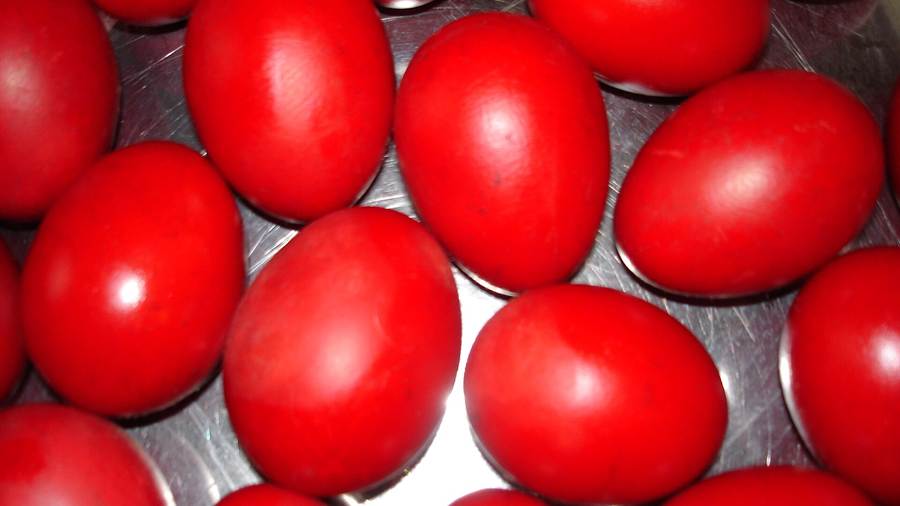
Greek Easter dyes its red eggs on Holy Thursday and reads the Twelve Gospels of the Passion that evening. Women traditionally colour the eggs with onion skins and vinegar, and the church holds the Matins of the Twelve Gospels.
In Greece, women traditionally dye the eggs for Greek Easter on Thursday, the day of Communion. The ceremonial eggs are known as kokkina avga, and the same women bake tsoureki for the feast.
The red stands for the blood of Christ shed at the crucifixion. The hard shell stands for the sealed tomb, and the cracking of the shell for the resurrection from the dead.
The Matins of Great Friday is celebrated on Thursday evening. Twelve readings from all four Gospels recount in order the events from the Last Supper through the crucifixion and the burial.
In Greek tradition a procession follows the fifth Gospel. A large cross with the body of Christ is carried through the church while the lights are put out, the bells toll slowly and the faithful prostrate themselves.
- Vestments: After the Liturgy the hangings and vestments change to black or another dark colour to mark the start of the Passion.
- Cross: The cross with the figure of Christ stays in the centre of the church until the Epitaphios is brought out.
- Washing of the Feet: In cathedrals and monasteries the bishop or abbot celebrates this rite at the Liturgy of the Last Supper.
- Trinity: Shell, yolk and albumen are three parts of one egg, a Trinitarian symbol of Greek Easter.
Holy Thursday links a household task to a church service, so the red eggs in the kitchen and the Gospels in the nave belong to one day of Greek Easter.
What is the Epitaphios procession on Good Friday in Greek Easter?
Greek Easter holds the Epitaphios procession on the evening of Good Friday, during the Matins of Holy Saturday. The faithful carry a bier with the embroidered cloth of the burial of Christ around the church while the bells toll.
The Epitaphios is a large embroidered cloth that shows the dead body of Christ. It can show his mother, John, Joseph of Arimathea and Mary Magdalene, and the oldest surviving embroidered example dates from about 1200.
In the Matins service, the Lamentations, also called enkomia or praises, are sung before the cloth. Their verses sit between the verses of Psalm 118, and all hold lighted candles.
Near the end of the service, during the Great Doxology, the procession leaves the church to the toll of the funeral bell. It recalls the burial procession of Christ, and the Trisagion is sung in a funeral melody.
At Greek Easter, Greek churches carry the entire bier with its carved canopy. In larger towns a local marching band leads the procession with funeral marches, and in a number of cities military detachments escort it.
- Return: After the Greek Easter procession, in Greek churches the Epitaphios goes into the sanctuary and rests on the Holy Table until Ascension Thursday.
- Doorway: The clergy hold the cloth above the door, so that all who enter pass under it and symbolically enter the grave with Christ.
- Villages: In a number of Greek villages the cloth is also paraded among the graves of the cemetery.
- Benaki Museum: An embroidered Epitaphios of 1682, from Ankyra, is held in Athens.
The procession is the public centre of Good Friday, and it carries Greek Easter out of the nave and into the streets, squares and cemeteries.
How do parishes decorate the Epitaphios with flowers in Greek Easter?
Greek Easter parishes dress the Epitaphios bier, called the kouvouklion, as the Tomb of Christ. The wooden canopy is elaborately carved, flowers cover the frame, and petals, rosewater and candles complete the tomb before the faithful come forward.
For Greek Easter on Friday afternoon, in the Vespers of the Deposition from the Cross, the figure of Christ is taken down and wrapped in a white cloth. The Epitaphios is placed on the Holy Table.
The priest and deacon, with acolytes carrying candles and incense, bring the Epitaphios from the Holy Table to the centre of the church. They place it on a table prepared for it and lay the Gospel Book on top.
The tomb is sprinkled with flower petals and rosewater, decorated with candles and censed as a mark of respect. At the Matins of Lamentations the priest sprinkles the tomb again with rose petals and rose water.
The bells toll, and in traditionally Orthodox countries the flags are lowered to half-mast. The faithful then venerate the Epitaphios through the afternoon and evening while the choir chants hymns.
- Kouvouklion: This bier of carved wood represents the Tomb of Christ and is covered by flowers in its entirety.
- Border: A wide cloth border, with burgundy the leading colour, frames the image and is edged in gold fringe.
- Troparion: In Greek Easter a common form has the troparion of Holy Saturday stitched in gold letters around the edges.
- Veneration: In one form the faithful crawl under the table, as though entering death with Christ.
Decoration gives each parish its own mark on Greek Easter, since every church builds and dresses its tomb with its own flowers, carving and lamps.
What is the Resurrection service of Holy Saturday and the Holy Light in Greek Easter?
Greek Easter reaches its peak in the Resurrection service of Holy Saturday night, when the church goes dark and the Holy Light is passed on. The light comes from Jerusalem, and the opening of the church doors announces the Resurrection.
Earlier on Holy Saturday of Greek Easter, a Vespers joined to the Liturgy of Saint Basil is served as the First Resurrection. It is the longest Divine Liturgy of the year and recalls the Harrowing of Hell.
Before the Gospel, the hangings and vestments change from dark Lenten colours to white. In Greek practice the priest strews the entire church with fresh bay leaves for the victory of Christ over death.
The Holy Fire is a ceremony held each year at the Church of the Holy Sepulchre in Jerusalem on Great Saturday. The Greek Orthodox Patriarch of Jerusalem presides and comes out with two lit candles.
The tradition of a lamp lit over the tomb of Christ on the eve of Easter dates back to the Patristic period, before the consecration of the Church of the Holy Sepulchre in 335.
- Midnight Office: The Greek Easter Paschal Vigil opens with this office, and then all the lighting in the church is put out.
- Procession: A procession circles the outside of the church and recreates the journey of the Myrrhbearers to the tomb.
- Doors: The opening of the closed doors stands for the rolling away of the stone, and all enter singing the Troparion of Pascha.
- Canon: The Paschal Orthros then begins with a litany and the chanting of the Paschal Canon.
Light, silence and open doors give the Resurrection service of Greek Easter its form, from the dark church of Holy Saturday to the first hymn of Pascha.
What is the greeting Christos Anesti and the custom of the candle in Greek Easter?
Greek Easter is greeted with Christos Anesti, which means Christ is risen, and the reply states that he is truly risen. The greeting and the lit candle belong together, since the church answers the announcement of the Resurrection with light and with a kiss.
The greeting is thought to be a shortened piece of Matthew 28:5 to 6, in which the angel tells the women that Jesus has risen. There is no consensus on the source of the response.
The Latin Church keeps a similar ancient greeting, Christus surrexit. It echoes the words of the angel to the women who came to the tomb to anoint the body of Jesus.
In the Paschal Vigil, the lights are put out and silence follows. The priest then lights a single candle from the eternal flame on the altar, and the light spreads from person to person until all hold a candle.
The faithful share the paschal kiss, and the priest reads the Hieratikon, the Catechetical Homily of John Chrysostom. A breakfast follows the Divine Liturgy, and it can last until dawn.
- Eternal flame: The flame on the altar is never extinguished, and it is the source of the single candle.
- Kiss: At the First Resurrection the faithful do not yet exchange the paschal kiss, since the news has not reached the living.
- Acts: In Greek Easter the Acts of the Apostles are read, which John Chrysostom called the best proof of the Resurrection.
- Agape Vespers: On the afternoon of Easter Day this service reads John 20:19 to 25 in a range of languages.
The greeting, the kiss and the shared flame turn the Resurrection service into a household exchange, which is why Greek Easter is spoken as much as it is sung.
What is magiritsa, the soup that breaks the fast of Greek Easter?
Greek Easter ends the fast of Great Lent with magiritsa, a soup of lamb offal tied to the Paschal tradition of the Greek Orthodox Church. It is prepared on Holy Saturday with the lamb of the next day and eaten after the Resurrection liturgy.
In its traditional form for Greek Easter magiritsa consists of the offal removed from the lamb before roasting, flavoured with seasonings and sauces. Its role and ingredients result from its link with the roasted lamb of the Paschal meal.
The soup breaks the Great Lent of 40 days before Easter. It is prepared on Holy Saturday along with the lamb for the following day, so the two dishes of the feast share one source.
Greek-Americans and Greek-Canadians sometimes call it Easter soup, Easter Sunday soup or Easter lamb soup. The names show how the dish travelled with the Greek diaspora.
In Thessaly, magiritsa is not served as soup but as a fricassee. That version holds only offal and a large variety of vegetables, with no onions or rice, which the soup form contains.
- Time: It is prepared on Holy Saturday and eaten right after the Resurrection liturgy.
- Offal: The offal comes from the lamb before roasting.
- Thessaly: The fricassee form there has a large variety of vegetables.
- Table: At Greek Easter salad, cheese, tsoureki sweet bread and hard-boiled eggs dyed red can accompany it on Easter morning.
Magiritsa shows how Greek Easter turns a practical kitchen task into a ritual of its own, since the first meal after Lent is built from the lamb of the feast.
Which breads and sweets belong to Greek Easter, tsoureki and koulourakia?
Greek Easter breads and sweets centre on tsoureki, a sweet holiday bread, and koulourakia, hand-shaped pastries of butter with a sprinkle of sesame seeds. Koulourakia are made around Easter to be eaten after Holy Saturday, once the fast has ended.
The koulourakia of Greek Easter are a butter-based pastry, traditionally hand-shaped, with egg glaze on top. They are well known for their sprinkle of sesame seeds and their distinctive ring shape.
The word is the diminutive form for a ring-shaped loaf or roll. The pastries are shaped into spirals, braided circles, hairpin twists, figure eights, twisted wreaths or horseshoes, and a clove can sit on the centre.
Koulourakia have been prepared since at least the time of the Minoan civilization. The Minoans sometimes shaped the pastries like small snakes, and Pontic Greek calls them kerkele.
Tsoureki is a sweet bread of the Easter feast in Greece and among the Greek diaspora. The variation called lampropsomo is known as Greek Easter bread, and the same dough has Armenian cousins.
- Gift: Tsoureki can be a Greek Easter gift from children to their godparents.
- Neighbours: The Bulgarian kozunak and the Romanian cozonac are close relatives of tsoureki.
- Pontic name: In Pontic Greek the pastries are called kerkele.
- Storage: Koulourakia are normally kept dry in a jar with a lockable lid and eaten with morning coffee.
Tsoureki and koulourakia fill the Easter table once the fast ends, and both show that the baking of Greek Easter reaches back to older Mediterranean habits.
How is the Easter lamb roasted on the spit at Greek Easter?
Greek Easter Day is marked by a whole lamb roasted on a spit over an open fire. The animal is skewered on a long rod, turned slowly above the coals and basted in its own juices until the skin crusts.
Spit roasting is a style of cooking where meat is skewered on a long, solid rod above a fire. The rotation cooks the meat evenly and gives easy access for continuous basting.
At Greek Easter the rod holds a whole animal. The cook turns it faster at the start so the inside warms, then slows the turning once the outer skin has begun to crust.
In medieval and early modern households a servant, preferably a boy, sat near the spit turning the rod slowly. He was known as the spit boy or the spit jack.
The lamb on the spit also carries religious meaning. In the New Testament the Paschal Lamb represents Jesus Christ, so eating lamb at Greek Easter commemorates his death and resurrection.
- Kokoretsi: Wrapped intestines of lamb or goat are eaten as an appetiser while the lamb, the main dish, roasts.
- Turnspits: Mechanical turnspits were later powered first by dogs on treadmills, then by steam and clockwork.
- Preferred meat: The intestines of suckling lambs are preferred when kokoretsi is made.
- Word: The French word rotisserie first appeared in Paris shops around 1450.
The roast, the kokoretsi and the spit show how the Greek Easter table is built around one fire. The next section turns to the game of the red eggs that follows the service.
What is tsougrisma, the cracking of red eggs at Greek Easter?
Greek Easter includes tsougrisma, a game in which two players strike their red eggs together. The winner holds the last intact egg. The hard shell stands for the sealed tomb of Christ, and its cracking stands for the resurrection.
Eggs are a traditional symbol of fertility and rebirth. In Christianity, during Eastertide, the egg symbolises the empty tomb of Jesus, from which Jesus was resurrected, and the Church adopted the custom.
Players hit the egg of the other player with their own. The same pastime is called egg tapping in England, scuccetta in Italy, and carries other names in Poland, Hungary, Croatia, Lebanon and Serbia.
In Greece the game is known as tsougrisma. At Greek Easter households and parishes use the eggs in games where participants strike them against each other, and the eggs are exchanged among family and friends after the liturgy.
Kenneth Thompson wrote that the use of eggs at Easter seems to have come from Persia into the Greek Christian Churches of Mesopotamia, then to Russia through Orthodox Christianity.
- Colour: Early Christians of Mesopotamia stained eggs red in memory of the blood of Christ shed at the crucifixion.
- Trinity: The egg has three parts, shell, yolk and albumen, and that gives it a Trinitarian symbolism.
- Other colours: Early Christians of Mesopotamia also stained eggs green and yellow.
- Spread: From the Greek Church the custom passed to Roman Catholics or Protestants and then across Europe.
The cracked shell links the game to the tomb story told in church. The feast does not end on Easter Day, as the next section on Bright Week explains for Greek Easter.
What is Bright Week after Greek Easter?
Greek Easter is followed by Bright Week, the week that begins on Easter Sunday. Church tradition treats the week as one continuous day, with the Holy Doors of the sanctuary left open and a festive procession around the church after the Liturgy.
The Holy Doors of the sanctuary stay open through Bright Week as a symbol of the empty tomb of Christ. The Epitaphios shows through the open doors as the winding sheet left in the tomb.
After the Liturgy a festive procession goes around the outside of the church every day. The Paschal features carry on through the week, so the days of Greek Easter read as one.
The Artos is a large loaf of leavened bread that represents the Resurrected Christ. It is blessed at the end of the Paschal liturgy, set by the Icon of the Resurrection and carried in processions.
The second day is called Bright Monday or Renewal Monday, with services similar to Pascha. A saint’s day that falls in Holy Week or on Easter Sunday is moved to this Monday.
- Doors: The Holy Doors close at the end of the week, on Bright Saturday.
- Epitaphios: In Greek churches the Epitaphios rests on the Holy Table until Ascension Thursday.
- Season: The Pentecostarion runs from Easter to the Sunday of All Saints, the Sunday after Pentecost.
- Other name: The week is also called Easter Week in Orthodox usage.
Bright Week closes the days of Greek Easter in every parish. The next sections leave the church calendar and visit the places that keep the feast in their own way.
How does Corfu keep Greek Easter, with the pots of Holy Saturday and the Epitaphios bands?
Greek Easter in Corfu town is led by the bands of the Philharmonic societies, which follow the Epitaphios processions and then parade streets strewn with the clay of smashed pots on Holy Saturday, when balconies hang with red cloth.
On Good Friday the bands of the three Philharmonic Societies split into squads and accompany the Epitaph processions of the city churches. In the late afternoon the squads join as one band for the cathedral procession.
On Holy Saturday morning the bands again join the procession of the cathedral of Saint Spyridon, the patron saint of the island, which carries his relics. The funeral marches differ from band to band.
The Early Resurrection follows the litany. Balconies in the old city are decked in bright red cloth, and Corfiotes throw large clay pots full of water to smash on the pavement, especially around Liston.
When the commotion ends, the bands parade the clay-strewn streets playing the Graikoi march. It was composed under Venetian rule, and it functions as the anthem of the island.
- Origin of the bands: The Philharmonic Society of Corfu arose after British rule barred the British army band from Orthodox events.
- The pots: They are called botides and are thrown in anticipation of the Resurrection celebrated that night.
- Venetian layer: The Venetians promoted the Catholic Church over four centuries of rule.
- Faiths: The majority of Corfiots are Greek Orthodox, and a small Catholic minority traces its faith to Venice.
The Corfu tour post covers the old town and the island beyond the Easter streets, and the bands link Greek Easter in Corfu with its music.
What is the rocket war of Vrontados on Chios at Greek Easter?
Greek Easter in Vrontados on Chios is marked by rouketopolemos, the rocket war, in which teams at two rival churches fire tens of thousands of homemade rockets at the bell tower of the other church during the service.
Vrontados is a large suburb north of Chios Town on the east coast of the island. It lies in the municipality of Omiroupoli and has a population of 4,500.
Chios Town sits beside the main harbour and the medieval castle, whose perimeter measures 1,400 metres. The castle was built mainly under Genoese and Ottoman rule, and an earthquake in 1881 damaged the town.
The rocket war is a Greek Easter event run by competing teams of locals. They gather at the two rival churches, and each church is the base of one team and the target of the other.
The rockets are homemade and number tens of thousands. Each team fires them at the bell tower of the other church while the Easter service is going on inside the churches.
- Teams: Competing teams of locals gather at the two rival churches of Vrontados.
- Rockets: The rockets are homemade and fired in tens of thousands at the other bell tower.
- Service: The Easter service is going on inside the churches while the rockets fly.
- Location: The region of Kambos lies beside Vrontados midway up the east coast.
The Chios tour post covers the island, its harbour town and its past, and the rocket war shows Greek Easter at its loudest on the east coast.
How does Patmos keep the Washing of the Feet at Greek Easter?
Greek Easter on Patmos belongs to a monastery island, and the Washing of the Feet suits it, because Orthodox monasteries perform the rite on Holy Thursday with an abbot washing the feet of twelve members of the brotherhood.
The Washing of Feet is practised in Eastern Orthodox churches on Holy and Great Thursday according to ancient rites. A bishop washes the feet of twelve priests, or an abbot washes the feet of twelve brothers.
The ceremony takes place at the end of the Divine Liturgy. The brethren go in procession to the chosen place, which is the centre of the nave, the narthex or a spot outside.
At Greek Easter a deacon reads the account in the Gospel of John while the clergy perform the roles of Christ and the apostles, and the abbot speaks the words of Jesus.
The Monastery of Saint John the Theologian is a Greek Orthodox house in Chora on Patmos. Its listing names the preservation of early Christian customs, which are still practised within the monastery.
- Water: The abbot sprinkles all present with the water used for the foot washing.
- Reading: The deacon stops when the dialogue between Jesus and Peter begins.
- Order: After Holy Communion and before the dismissal the brethren go in procession.
- Monastery: The Monastery of Saint John is named after John of Patmos, the author of the Book of Revelation.
The Patmos day trip post covers the monastery, the Chora and the Cave of the Apocalypse on the island, which frame the way Greek Easter is kept there.
How does Hydra carry the Epitaphios to the sea at Greek Easter?
Greek Easter on Hydra gives the Good Friday Epitaphios a sea setting, because the Kamini parish brings its bier into the water, a rite set among the harbour, the quayside cathedral and the six monasteries of a seafaring island.
In towns with more than one parish the Epitaphios processions can converge on a single spot, where a common Trisagion is sung before they resume their routes. Hydra is named as a notable case.
The island has a second rite at sea in the Miaoulia Festival, held in the last week in June. It ends with a staged re-enactment of the burning of an Ottoman armada, followed by fireworks.
The cathedral is the old Monastery of the Dormition of the Virgin on the quayside. It holds the tomb of Lazaros Kountouriotis, the richest sea captain on Hydra, who gave his entire fortune to the war.
Hydra has six Orthodox monasteries. Profitis Ilias, founded in the 19th century, and Ayia Efpraxia stand on a hill overlooking the main harbour, above the water that the Epitaphios reaches.
- Sea rite: The Kamini bier goes into the sea as a blessing for those who perished at sea.
- Cathedral: The old Monastery of the Dormition stands on the quayside of the town.
- Naval islands: Hydra, Psara and Spetses were the three naval islands of the revolution.
- Festival: The Miaoulia Festival commemorates the naval victories led by Admiral Miaouli in the Greek War of Independence.
The Hydra day trip post covers the harbour, the mansions and the paths of the island, where the sea also shapes the way Greek Easter is kept.
How do Arachova and the mainland villages keep the feast at Greek Easter?
Greek Easter in the mainland villages carries the Epitaphios among the graves of the cemetery as a covenant of eternal life, while a mountain town such as Arachova keeps local customs and the feast of its patron Saint George.
The Epitaphios is also paraded in the cemetery of a village, among the graves, as a covenant of eternal life to those who have died. The route differs from the street route of a town.
Where long processions are not possible, the procession goes three times around the outside of the church building. Sometimes the clergy hold the Epitaphios above the church door, and all who enter pass beneath it.
Arachova is a mountain town in western Boeotia, on the slopes of Mount Parnassus. Since the 2011 reform it is a municipal unit within the municipality of Distomo-Arachova-Antikyra.
Greek Easter has a calendar rule: the feast of a patron saint that falls in Holy Week or on Easter Sunday moves to Easter Monday. Saint George is the example the rule names.
- Cemetery: In Greek villages the Epitaphios is paraded among the graves of the cemetery.
- Circuit: Three turns around the church building replace a long street route.
- Door: Clergy sometimes hold the Epitaphios above the entrance so that worshippers pass beneath it.
- Municipality: Arachova belongs to the municipality of Distomo-Arachova-Antikyra since the 2011 reform.
The Arachova day trip post covers the town, its mountain setting and its crafts, which belong to Greek Easter in the hills.
How does Athens keep Greek Easter on Lycabettus and in the parishes?
Greek Easter in Athens combines the parishes of the capital with Lycabettus, the limestone hill whose peaks carry the Chapel of Saint George, while the Holy Fire reaches the city as one of the seats of the national churches.
In larger towns the Epitaphios procession is led by a local marching band playing funeral marches. In certain cities military detachments escort it, with their arms held in the mourning position.
The Holy Fire ceremony takes place in Jerusalem each year on Great Saturday, which falls the day before Orthodox Easter. It is distributed to national churches and taken to their seats, and Athens is named among them.
A large open-air amphitheatre stands near the top of the hill. It closed for safety reasons and reopened in September after 15 years, and artists such as Ray Charles and Leonard Cohen performed there.
In the capital Greek Easter is also a state matter. Good Friday and Saturday, as well as Easter Sunday and Monday, are traditionally public holidays, and public sector employees customarily receive Easter bonuses from the state.
- Bands: Local bands lead the Epitaphios procession in the larger towns, playing funeral marches.
- Escort: Military detachments escort the Epitaphios in certain cities with arms held in the mourning position.
- Hill: The Chapel of Saint George dates from the 19th century and stands at the peaks of Lycabettus.
- Holy Fire: The Holy Fire is taken to Greece by special flight and received by church and state leaders.
Athens therefore keeps Greek Easter through its parishes, its state holidays and the Light from Jerusalem, while the hill and its chapel give the city a high point to look to.
How do the Byzantine and folk histories shape the customs of Greek Easter?
Greek Easter customs rest on Byzantine hymns and on folk practice shaped under Ottoman, Venetian and British rule, so the Lamentations, the Holy Fire, the red egg and the Corfu bands each carry a record of the past.
The Lamentations, called Enkomia, are verses chanted between the verses of Psalm 118. They are the best-loved hymns of Greek Byzantine hymnography, praised for both their poetry and their music.
The liturgy of the Holy Fire was first recorded by the pilgrim Bernard the Wise in 867, it is believed. After a failure under Latin clergy in 1101, the Greek clergy returned to the Holy Sepulchre.
The Greek Mystery of Unction on Great Wednesday began under Ottoman control. It prepares the faithful for Holy Communion on Great Thursday and Pascha, and it arose when parish priests were not permitted to hear confession.
Massacres of the Greeks of Tripolitsa took place in 1715 and on Holy Monday, 29 March 1770, after the failed Orlov Revolt. Holy Week was not spared by the wars of the period.
- Hymns: The Enkomia are the best-loved hymns of Greek Byzantine hymnography.
- Holy Fire: Bernard the Wise recorded the liturgy of the Holy Fire in 867.
- Unction: The Greek practice of Great Wednesday began under Ottoman control.
- Egg custom: The red egg custom passed from Mesopotamian Christians through Greek Churches to Orthodox lands.
Each custom in this post carries the memory of an empire or a rule. That record of Byzantine, Ottoman and Venetian history explains why Greek Easter differs from place to place.
What do travellers ask about Greek Easter?
Greek Easter questions concern the islands with the best-known customs, the public holidays, the Easter Day table and the source of the Holy Light. The answers below draw on the sections of this post and name no date of any coming Easter.
Which islands are known for their Greek Easter customs?
Corfu is known for the Philharmonic bands that follow the Epitaphios and for the clay pots smashed on Holy Saturday. Chios has the rocket war of Vrontados, Hydra carries the Epitaphios to the sea, and Patmos holds the monastery of Saint John.
Which days are public holidays at Greek Easter?
Good Friday and Saturday, as well as Easter Sunday and Monday, are traditionally observed public holidays in Greece. Public sector employees customarily receive Easter bonuses from the state, and Easter Monday is the second day of Bright Week, when a festive procession follows the Liturgy.
What is eaten on Easter Day at Greek Easter?
A whole lamb roasts on the spit, and kokoretsi, wrapped intestines of lamb or goat, is eaten as an appetiser while it cooks. Red eggs are cracked in the game of tsougrisma, and the lamb commemorates the death and resurrection of Jesus.
Where does the light of Greek Easter come from?
The rite is held inside the Holy Sepulchre church, where the Greek Orthodox Patriarch of Jerusalem presides on that day. It is taken to Greece by special flight and received by church and state leaders.
Featured photo: Petar Milosevic, CC BY-SA 3.0, via Wikimedia Commons.