
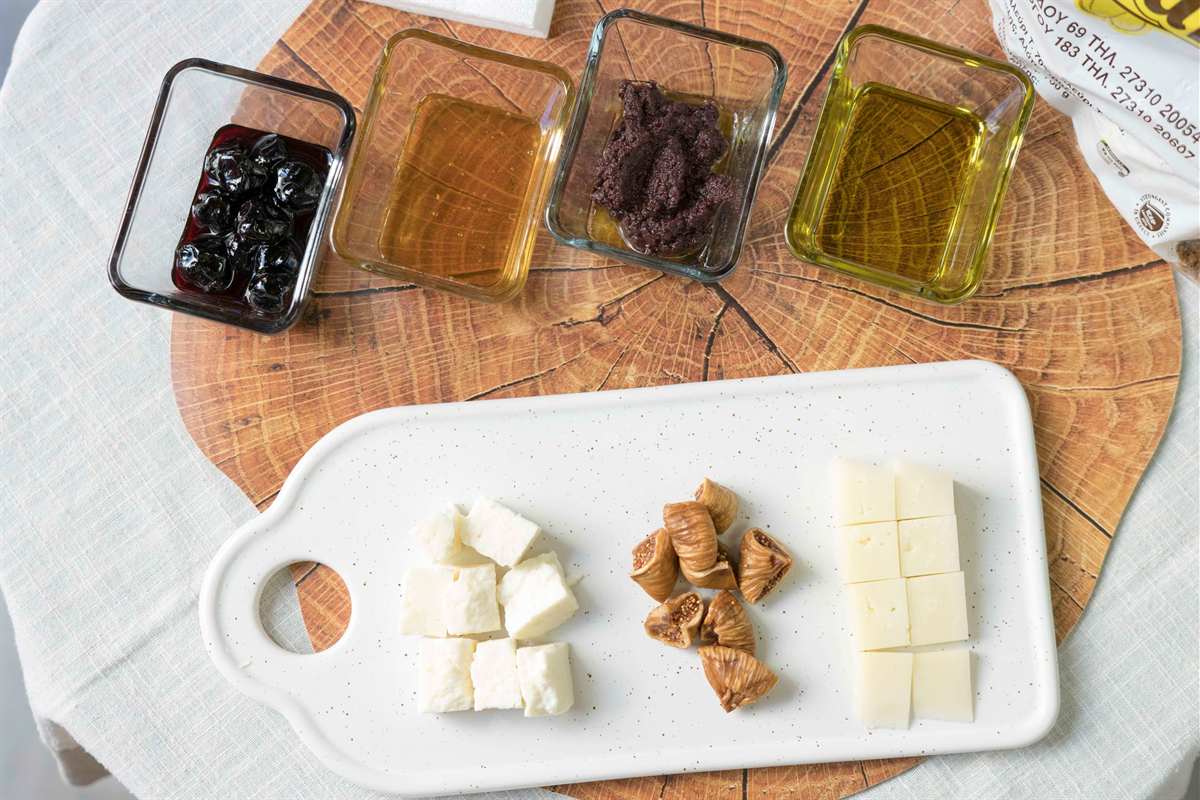
A Kalamata food tour tastes the olives, olive oil, honey and sweets of Kalamata in Messenia, on food walks in the city and on visits to the groves around it. The tour is one of the Greece Tours on Greece Ville, listed with the other Peloponnese tours and Greece food tours.
This post covers the formats on sale, the Kalamata olive and how it is cured, olive oil and how a tasting works, pasteli, diples and lalagia, honey and the questions that come up before booking.
What is a Kalamata food tour, and what does it cover?
A Kalamata food tour is a tasting walk or olive oil outing in Kalamata, the Messenian city after which the Kalamata olive is named. It covers table olives, olive oil, honey, sesame bars and fried sweets from the local list of specialities.
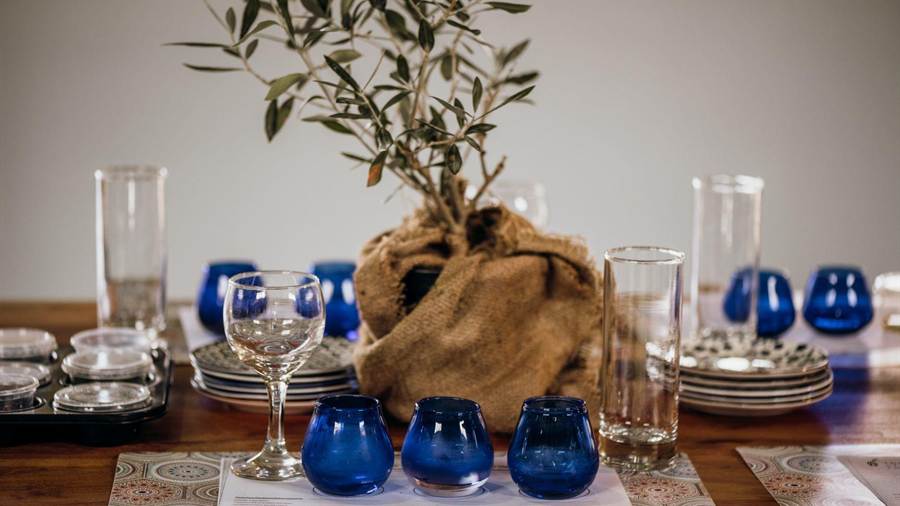
The city’s fame rests on three things: the Kalamatianos dance, Kalamata olives and Kalamata olive oil. A Kalamata food tour builds its route around the last two, with tastings in the city and nearby groves.
The city’s cuisine list names Kalamata olives, lalagia, diples, pasteli, talagani cheese and sfela cheese as local specialities. These six items give a tasting walk its core menu, from savoury bites to sweet ones.
Farming drives the economy of Messenia, the regional unit around the city. A small stockbreeding sector adds beef, milk, sfela cheese and honey, and the Gulf of Messenia supplies fish.
Greek cuisine rests on a triad of wheat, olive oil and wine, and olive oil ranks as its oldest and defining element. A Kalamata food tour places that triad inside an olive-growing region.
- Climate: Winters in Kalamata are mild and wet, and summers are hot and dry, in a hot-summer Mediterranean pattern.
- Olives: The city’s reputation leans on its black Kalamata olives.
- Cheeses: Talagani and sfela both appear on the list of local specialities.
- Desserts: Diples and pasteli carry the dessert label on the same food list.
A Kalamata food tour therefore mixes tastings of oil, olives, cheese and sweets, and each format on sale stresses a different part of this local larder.


Which Kalamata food tour formats are on sale?
A Kalamata food tour is on sale in eight formats: a tasting walk, a food and olive oil tasting with lunch, a vegetarian tour, two grove-to-table olive routes, a beekeeping day, and two olive oil tours with lunch or wine.
The first format is a Greek food tour that combines tastings with local food traditions. A Kalamata food tour of this type gives a general introduction to the city’s table.
A second format joins a food tour with an olive oil tasting and a light lunch. A third keeps the light lunch but makes the whole tour local and vegetarian, with no meat.
Two formats centre on the olive grove itself. One follows the olive oil routes from grove to table, and the other is a walk through the olive tree year, with olives and a tasting.
A sixth format leaves the olives aside for a beekeeping experience. It includes a honey tasting, which ties the outing to the honey listed among the stockbreeding products of Messenia.
Two further formats come from a second booking platform. One combines an organic olive grove tour, an olive oil tasting and lunch, and the other pairs olive oil and wine with a traditional lunch.
- Tastings: Five of the eight formats name a tasting of food, olive oil or honey in the title.
- Lunch: Four formats include a lunch, either light or traditional.
- Diet: One format is fully vegetarian.
- Wine: One format adds wine to the olive oil tasting.
The tour cards and availability boxes on this page list live dates for each Kalamata food tour format. An Ancient Messene tour covers the history side of the same region.
Which olive variety does a Kalamata food tour feature?
A Kalamata food tour features the Kalamata olive, a large, dark purple, almond-shaped fruit with a smooth and meaty texture. It takes its name from the city, and the variety first grew in the region of Messenia and nearby Laconia.
The Kalamata tree differs from the common olive in the size of its leaves, which grow to twice the size of those on other varieties. A grove visit on a Kalamata food tour shows this trait.
Kalamata olives cannot come off the tree green, and pickers take each fruit by hand so that it does not bruise. Across the Mediterranean region, the olive harvest begins in autumn, from October onwards.
The International Olive Council sorts table olives into green, semi-ripe and black classes by ripeness at harvest. Black olives are picked at full maturity, with colours from purple and brown to black.
The variety carries a long list of names. Kalamon, Calamata, Kalamatiani, Chondrolia and Nychati all refer to it, and the Marmara region of Turkey uses the name Karamursel Su Kalamata.
Kalamata olives now grow in places far from the Peloponnese, including the United States and Australia. In Western Australia, the list of synonyms records the names Kalamata Jumbo and Kalamata Tiny.
- Colour: The fruit has a dark purple skin.
- Shape: Each olive is plump and almond-shaped.
- Use: The fruit is a common table olive, kept in wine vinegar or olive oil.
- Picking: Hand-picking protects the fruit from bruising.
A Kalamata food tour presents this olive as the product the city is well known for, and the next step is the curing that turns bitter fruit into table olives.
How are olives cured for a Kalamata food tour, and why is the name protected?
A Kalamata food tour explains that raw olives taste bitter and need curing before they reach the table. The Kalamata name holds PDO status in the EU, so it covers only olives grown in the region around the city.
Fresh from the tree, olives taste bitter and astringent. Curing and fermentation strip out a large share of the bitter phenolic compounds, above all oleuropein, and make the fruit fit to eat.
A Kalamata food tour that covers curing describes two methods, the short and the long. The short method soaks the fruit in water or weak brine, changed daily for around a week.
Once debittered, the olives go into brine and wine vinegar under a layer of olive oil, with slices of lemon. Slitting the fruit shortens the processing time further.
In the long method, slit olives rest in strong brine for up to three months. A share of the polyphenol remains, so the cured fruit keeps a slightly bitter taste.
Olives of the same variety grown outside that region go on sale in the EU as Kalamon olives. The name Kalamon also appears in Crete, Cyprus, South Africa and China.
- Bacteria: Lactic acid bacteria drive a large part of the fermentation and make the olives more acidic.
- Storage: That acidity lets table olives keep without refrigeration.
- Speed: Lye cures olives in days, while brine or salt packing takes months.
- Name abroad: A small group of countries, mainly outside the EU and the United States, uses the name for olives grown anywhere.
A Kalamata food tour with a tasting stop sets cured olives beside the region’s oil, and that oil follows its own grading rules.
How does a Kalamata food tour run an olive oil tasting?
A Kalamata food tour tastes olive oil from Messenia, a region whose economy rests mainly on farming. The top grade, extra virgin olive oil, must show fruitiness, carry no defined sensory defects and hold no more than 0.8% free acidity.
Messenia counts a large number of small and medium firms that process and standardise farm products. A Kalamata food tour on the olive routes shows the start of that chain, from grove to table.
Olive oil comes from grinding ripe olives into a paste and then separating the oil. Oil made by mechanical means only, with no chemical treatment, carries the name virgin oil.
As it matures, the fruit passes from green through violet to black. The stage of ripeness at harvest shapes the taste of the oil, and underripe fruit gives a bitter oil.
Tasters read a peppery or bitter note as a sign of higher polyphenol content. They also check extra virgin oil for defects such as rancid, fusty, musty, winey and muddy sediment.
Oil that skips filtering looks slightly cloudy when fresh. Filtering removes fine particles that hold water and enzymes, and this step makes an extra virgin oil more stable in storage.
- Virgin grade: Virgin olive oil allows free acidity of up to 2.0%.
- Refined oil: Refining strips colour, odour and flavour from the oil.
- Cold extraction: In Europe, oil from a centrifuge carries the label cold extracted, while only a pressed oil can say cold pressed.
- Heat limit: Cold-pressed oil cannot exceed 27 °C during extraction.
Grove tastings also feature on a Crete olive oil tour, and a Kalamata food tour adds the Messenian oil to that comparison.
How does pasteli, the sesame and honey bar, fit a Kalamata food tour?
A Kalamata food tour can feature pasteli, a flat, oblong bar of sesame seeds and honey that the city lists among its desserts. The Greek name comes from the Italian pastello, and the bar descends from a Byzantine sweet called sesamous.
Across its range, sesame seed candy binds sesame seeds with sugar or honey and presses them into a ball, a bar or a wafer. The result can be chewy or crisp.
In modern Greece and Cyprus, sesame seed candy goes by the name pasteli. The Greek version is a flat, oblong bar bound with honey, and it can also include nuts.
Similar foods appear in ancient Greek cooking. Itrion, a thin biscuit or cake, combined sesame seeds with honey, and Herodotus mentions sweet cakes of sesame and honey without further detail.
Another ancient cake, kopte sesamis or simply kopte, was made from pounded sesame. Its ingredients suggest that it resembled the modern pasteli on the sweet stop of a Kalamata food tour.
In the Byzantine Empire, John Tzetzes and Theodore Prodromos wrote of a sesame sweet called sesamous and said it was an everyday food. John Choumnos records that it was eaten at weddings.
- Weddings: The sweet is still eaten at weddings in Greece, as the Byzantine sesamous was.
- Rhodes: Rhodes has its own version of the bar, called melekouni.
- Cretan cousin: The ancient Cretan gastris layered ground nuts between two layers of sesame crushed with honey.
- Kalamata list: Pasteli carries the dessert label on the city’s list of local specialities.
A Kalamata food tour sets pasteli beside local honey, and honey syrup also coats the fried doughs of the region.
How are diples made, and where do lalagia fit on a Kalamata food tour?
A Kalamata food tour can include diples, a Peloponnese dessert of thin dough strips fried and folded in hot oil, then dipped in sugar or honey syrup. Lalagia sit on the same list of Kalamata specialities as diples and pasteli.
Diples, also spelt thiples, come from a thin, sheet-like dough. Cooks roll the dough into long, thin strips, then fry and fold them in hot oil before the syrup bath.
Bow ties and spirals lead the range of shapes. A second method dips an iron mould into diples batter and fries it until the pastry comes away from the mould.
Syrup, crushed walnuts and cinnamon go on top of the mould version. Across the Peloponnese, diples count as a standard dessert and appear at weddings and at New Year.
Diples are close kin to angel wings, the fried ribbon pastry of European kitchens. The difference lies in the finish: angel wings stay dry under powdered sugar, while diples go into syrup.
Lalagia, written in Greek as Λαλάγγια or Λαλαγγίδες, appear on the Kalamata cuisine list beside diples. A Kalamata food tour that follows the local list can cover both.
- Loukoumades: Greek kitchens, above all in the south, treat these honeyed fried dough balls as a staple.
- Ancient link: Evidence links loukoumades to enkrides, a dough fried in oil and eaten with honey in ancient Greece.
- Fasting: In the Byzantine period, enkrides suited Lent, since they held no dairy or meat.
- Finish: Diples end in a sugar or honey syrup, not a dusting of sugar.
A Kalamata food tour links diples to Peloponnese tables, and a Thessaloniki food tour applies the same tasting format to a city in northern Greece.
How does a Kalamata food tour cover honey and beekeeping?
A Kalamata food tour covers honey and hives through a beekeeping experience with a honey tasting. Honey is one of the stockbreeding products of Messenia, and pine honey, a honeydew type, accounts for 60 to 65% of Greek honey output.
Bees make honey by gathering floral nectar or honeydew and refining it. Inside the hive, water evaporates until the sugars concentrate and the honey turns thick and viscous.
Honey bees store the result in honeycomb, a beeswax structure of hundreds or thousands of hexagonal cells. The beekeeping format of a Kalamata food tour centres on these hives.
A smoker, which burns fuel without full combustion, helps beekeepers calm the colony. The smoke is thought to mask alarm pheromones, so the keeper can open the hive without a defensive reaction.
The face and neck are the key areas to protect at a hive, so beekeepers wear at least a veil. Novices add gloves and a hooded suit or hat.
Keepers remove the comb and extract honey by crushing it or with a honey extractor, then filter out beeswax and debris. Crystallised honey has not expired and returns to liquid when warmed.
- Greek hives: Modern movable frames are thought to derive from the old basket top-bar hives of Greece, which let the keeper avoid killing the bees.
- Ancient Crete: Finds of hives, smoking pots and honey extractors at Knossos point to high-status beekeeping.
- Aristotle: Aristotle wrote at length about how bees live and how people keep them.
- Myth: In Greek myth, Zeus and the twelve Olympians fed on honey taken as nectar and ambrosia.
A Kalamata food tour with the beekeeping day links the hive to the syrup on diples and the honey in pasteli.
What do travellers ask about a Kalamata food tour?
A Kalamata food tour raises four common questions: whether an olive oil tasting is on sale, whether a vegetarian format exists, what a Kalamata olive is, and what pasteli is. The answers below draw on the current listings and food sources.
Does a Kalamata food tour include an olive oil tasting?
Yes. One Kalamata food tour on sale combines food stops with an olive oil tasting and a light lunch. A grove walk through the olive tree year includes a tasting, and an organic grove tour adds an olive oil tasting and lunch.
Is there a vegetarian Kalamata food tour?
Yes. A local vegetarian Kalamata food tour is on sale, and it includes a light lunch. The format keeps the tasting and lunch structure of the other food tours, without meat. The tour cards on this page show its live dates.
What is a Kalamata olive, as served on a Kalamata food tour?
The Kalamata olive is a large, dark purple, almond-shaped olive named after the city. Its tree has leaves twice the size of other varieties, and the fruit is hand-picked to avoid bruising. Within the EU, olives of the same variety from elsewhere are sold as Kalamon.
What is pasteli on a Kalamata food tour?
Pasteli is the Greek sesame seed candy, a flat, oblong bar made with honey that can include nuts. Its name comes from the Italian pastello, and it descends from the Byzantine sesamous. Similar sesame and honey cakes, such as itrion, existed in ancient Greece.