
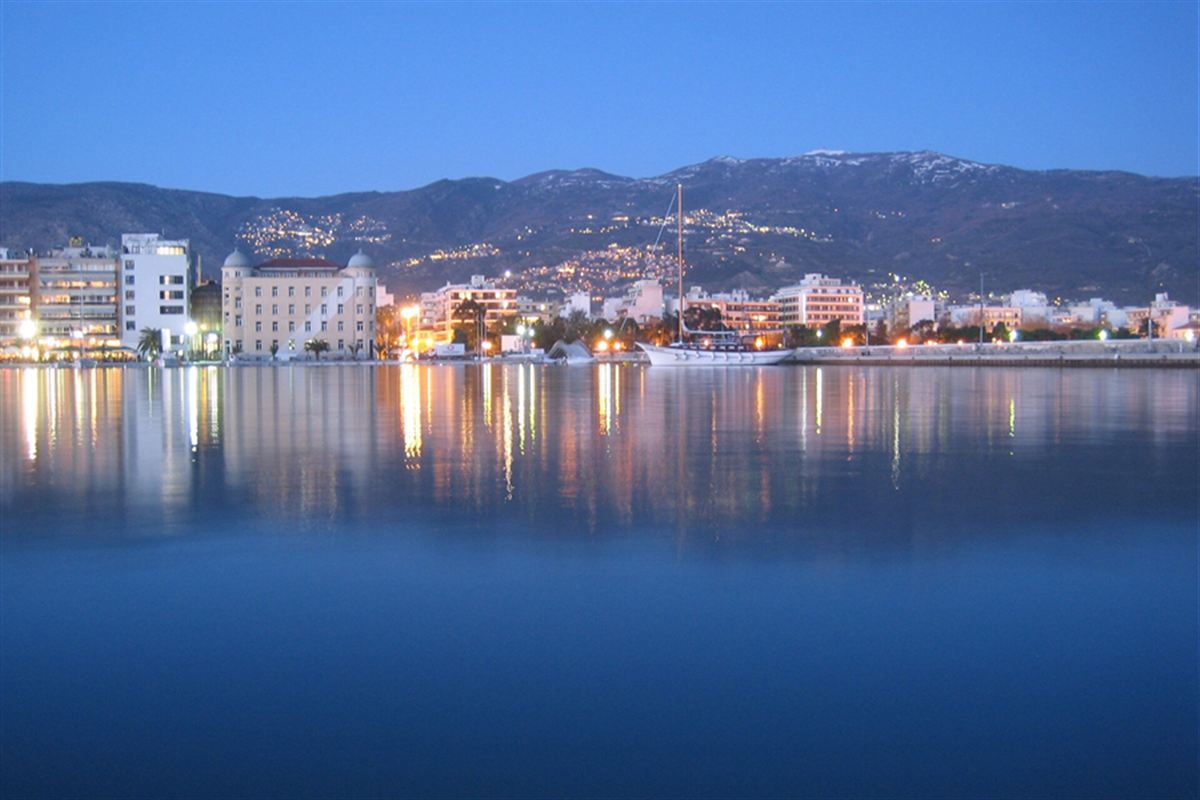
Volos tour covers the port city on the Pagasetic Gulf and the sites around it: Iolcos and the Argonauts, Dimini, Sesklo, ancient Demetrias, the Athanasakeio museum, Nea Ionia and the tsipouro tradition. The tour is one of the Greece Tours on Greece Ville, listed with the other Central Greece tours.
This post covers what the tour is, the gulf, Iolcos, Dimini, Sesklo, Demetrias, the museum, tsipouro and meze, the history of the city, Mount Pelion and the ferries to the Sporades. Common questions come last.
What is a Volos tour?
A Volos tour explores a young port city at the head of the Pagasetic Gulf, where prehistoric villages, the myth of the Argo, a neoclassical museum and a tsipouro table share one municipality. The city is recent, but the ground around it is ancient.
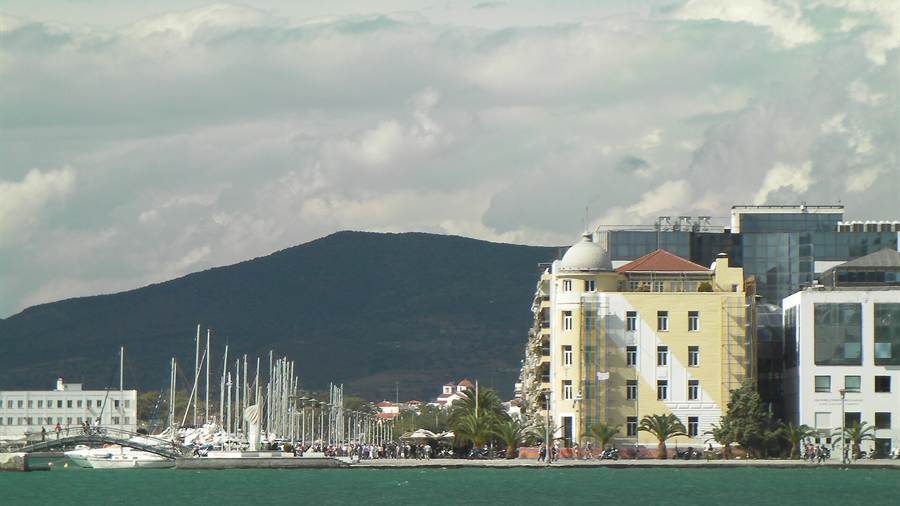
Volos is the newest of the Greek port cities. A large proportion of its buildings went up after the catastrophic earthquakes of 1955, so the street grid looks modern while the sites around it reach back thousands of years.
The present municipality dates from 2011, when nine former municipalities merged into one. They are Agria, Aisonia, Artemida, Iolcos, Makrinitsa, Nea Anchialos, Nea Ionia, Portaria and Volos itself, and a Volos tour crosses their old boundaries.
The municipality has an area of 385.614 square kilometres. It takes in the city, the plain, the gulf shore and villages on the foothills of Mount Pelion, so a Volos tour can stay within it and still cover prehistory, myth and food.
The University of Thessaly, founded in 1984, is based in the city. Its faculties of engineering, humanities and social sciences, and agricultural sciences give Volos the character of a university town, and foreign students arrive through Erasmus and other programmes.
- Setting: Volos is built at the innermost point of the Pagasetic Gulf, at the foot of Mount Pelion.
- Port: The city is a major commercial port of mainland Greece in the Aegean, after Piraeus and Thessaloniki.
- Sport: Volos took part in the 2004 Olympic Games and later hosted the European Athletic Championships.
- Science: The city hosted the 7th International Olympiad on Astronomy and Astrophysics in 2013.
A Volos tour is therefore a layered visit, from the gulf and the myth to the villages, the museum and the table.
Where does a Volos tour meet the Pagasetic Gulf?
A Volos tour follows the shore of the Pagasetic Gulf, the bay that the Pelion peninsula forms in the Magnesia regional unit. Volos is its main port, and the ancient town of Pagasae gave the gulf its name.
Pagasae stood at the northern extremity of the bay. In Greek myth it was the port where Jason built the Argo, and ruins of the ancient city were still visible near Volos in the nineteenth century.
Ancient writers explained the name in two ways. One school derived it from the building of the ship, and another from the abundant springs at the spot. Strabo wrote of the copious sources of water at the foot of the rocks.
Those springs were rather saline to the taste. For that reason Roman builders supplied the city with water from a distance by an aqueduct, and the ruined piers of that aqueduct remained a conspicuous object. Philip II of Macedon had conquered Pagasae after defeating Onomarchus.
Around the shore, in clockwise order, lie Amaliapolis, Alos and Almyros in the west, Nea Anchialos in the northwest, Agria in the northeast, Neochori and Argalasti in the east, Milina in the southeast and Trikeri in the south.
The Pelion tour post covers the mountain villages above this gulf. A Volos tour stays on the shore and in the city, where the gulf meets the plain.
- Nea Anchialos: The northwest shore holds a beach and a port at this town.
- Agria: The northeast shore has a beach and a port at Agria.
- Argalasti: The east shore has beaches at Lefokastro, Kalamos and Horto.
- Trikeri: The south shore has a port at Agia Kyriaki.
The gulf links a working port, ancient springs and a ring of small harbours. A Volos tour reads the city against that water.
What does a Volos tour say about Iolcos and the Argonauts?
A Volos tour places Iolcos, the home city of Jason in Greek myth, inside the modern municipality. Tradition holds that the Argo sailed from here with fifty heroes to fetch the Golden Fleece from Colchis, on the Black Sea.
On a Volos tour, Iolcus appears as a former municipality and a municipal unit, north of the gulf. Its land area is 1.981 square kilometres, and the 2021 census counted 2,008 people in Agios Onoufrios, Anakasia and Ano Volos.
The Bibliotheca of Pseudo-Apollodorus says that Cretheus founded the city and that Minyans from Orchomenos colonised it. In myth, it was Pelias who sent Jason and his Argonauts to look for the Golden Fleece.
Pindar names heroes of the crew in his Pythian Odes. They include Jason, Heracles, Castor, Polydeuces, Euphemus, Orpheus, Zetes, Calais and Mopsus. The crew was sometimes called Minyans, after a prehistoric tribe in the area.
History records Iolcus too. The Thessalians gave the city to Hippias when he was expelled from Athens in 511 or 510 BCE, but he rejected it. Strabo adds that a festal assembly was held there in honour of Pelias.
- Founder: Pseudo-Apollodorus names Cretheus as the founder of the city.
- Colonists: Minyans from Orchomenos settled the city, according to the same source.
- Ship: The Argo takes its name from its builder, Argus.
- Date: Myth places the voyage in the years before the Trojan War, around 1300 BC.
For a Volos tour, Iolcos is a story first and a site second. The myth explains why the port, the gulf and the museum all carry the names of Jason and his ship.
What does a Volos tour show at Dimini?
A Volos tour reaches Dimini, where a Neolithic settlement and a Mycenaean one lie side by side near the city. Excavators believe the palace of ancient Iolcos stood here, and in 2001 they uncovered a Mycenaean palace complex.
Christos Tsountas excavated Dimini and Sesklo between 1899 and 1906. Both settlements had a large central megaron surrounded by smaller buildings and houses, and both were enclosed by walls.
The Dimini settlement covered about 5,000 square metres, with a megaron in an oval courtyard. Its fortifications consisted of six or seven concentric walls, two to three metres tall and as close as one metre apart.
The walls had four or five baffle gates. A gate of this type forced anyone approaching to turn left, which exposed the unshielded right side. The gates also slowed visitors and gave inhabitants a choice of exits.
Archaeologists still debate the walls. Tsountas saw them as defences, but later scholars proposed retaining walls, markers of living space, animal pens or ritual features. Re-excavation found no trace of superstructures on top.
- Lamiospito: Lolling and Wolters excavated this Mycenaean tholos tomb in 1886.
- Hill tomb: Valerios Stais discovered a tholos tomb on the hill of the Neolithic settlement in 1901.
- Later digs: Excavations of the Mycenaean settlement began in 1980 under V. Adrimi-Sismani.
- Writing: The digs of 2001 found a stone weight and a sherd inscribed in Linear B.
Dimini gives a Volos tour two prehistoric chapters on one hill, the ringed Neolithic walls and the Mycenaean palace, within sight of each other.
What does a Volos tour show at Sesklo?
A Volos tour shows Sesklo, a village near the city where a Neolithic town stood millennia before the Mycenaean period. Its adobe houses, painted pottery, stone walls and a burned phase record how early farmers in Greece organised a settlement.
The first houses at Sesklo were small, with one or two rooms, and builders used wood or mudbrick. Later the houses were all of adobe on stone foundations, and the first two-level houses appeared, which shows a clearly intentional urbanism.
The lowest levels lack pottery, but the people of Sesklo soon made very fine glazed earthenware. They decorated it with geometric symbols in red or brown, and flame motifs appeared toward the end of the culture.
Figurines are abundant. Statuettes of women, frequently pregnant, and scholars link them to prehistoric fertility cults. Marija Gimbutas also recognised a gorgon mask from Sesklo, dated to about 6000 BC.
The stone walls of Sesklo were about one metre wide and enclosed parts of the acropolis. The early settlement had an unusually thick wall on its east side, and a baffle gate opened in the west.
The remains show extensive burning and destruction. That evidence supports a theory of conflict, though the fire can have another cause, since the buildings used flammable materials.
- Excavations: Tsountas dug here and at Dimini between 1899 and 1906.
- Courtyard: A paved courtyard lay in front of the larger megaron at the centre of the town.
- Ravine: A steep ravine protected the east side, so the baffle gate stood in the west.
- Style: Pottery of the classic Sesklo style also reached Western Macedonia, as at Servia.
Sesklo gives a Volos tour its earliest chapter, with planned houses, fine pottery and walls, and the village lies a short distance from Dimini.
What does the Athanasakeio museum add to a Volos tour?
The Volos tour includes the Archaeological Museum of Volos, also called the Athanasakeion, a neoclassical building of 1909. It houses finds from excavations across Thessaly, from the Neolithic villages of Dimini and Sesklo to early Christian and Byzantine reliefs.
Alexios Athanassakis, a merchant from Portaria, financed the construction. After the building was completed, he granted it to the Greek State. It is one of the oldest museums in Greece.
Cases of jewellery, household utensils and agricultural tools come from the Neolithic settlements of Dimini and Sesklo. Clay statuettes sit beside them, and the sequence moves on to the Geometric period.
That period was a time of great heroic events, such as the Argonaut expedition and the Trojan War. Statues and uncommon jointed statuettes from the classical period follow, along with reliefs from the early Christian and Byzantine eras.
Rare steles with relief work from the Hellenistic period have well-preserved colours. The museum also shows tombs moved in their entirety from the sites where they were found, with the skeleton and the offerings placed around it.
Outside the building stand reconstructions of Neolithic houses from Dimini and Sesklo. They let a Volos tour compare the finds in the cases with the shape of the dwellings.
- Founder: A merchant from Portaria paid for the building and gave it to the State.
- Building: The museum occupies a neoclassical house, one of the buildings that mark the new city.
- Burials: Whole tombs were transported from their sites with the skeletons inside.
- Houses: Reconstructed Neolithic homes from Dimini and Sesklo stand outside.
The museum ties the other stops together. A Volos tour finds the pottery, tombs and statuettes of Dimini and Sesklo gathered under one roof.
Why does a Volos tour include ancient Demetrias?
A Volos tour includes ancient Demetrias, a Macedonian royal city at the head of the Pagasaean Gulf, about 3 km south of the modern centre. Remains of its walls, theatre and palace survive, and Christian basilicas record its later life.
Demetrias soon became an important place and the favourite residence of the Macedonian kings. Its position commanded the interior of Thessaly as well as the neighbouring seas, and the city stood at Aivaliotika.
Its walls ran for about 11 km, and the remains are preserved. The acropolis stood in the northwest, at the highest point of the city, and a Volos tour shows how large the ancient town was.
On a Volos tour, the uncovered remains include the theatre, the Heroon above it, an aqueduct and the sacred agora, which held a temple and the administrative centre. The Anaktoron, the royal palace, stood east of the city on a hilltop.
In 196 BC the Romans took possession of Demetrias after the Battle of Cynoscephalae. Four years later the Aetolian League captured it by surprise, and Philip held it until the Macedonian monarchy fell at the Battle of Pydna in 169 BC.
Under Roman rule the city lost importance but became the capital of the Magnesian League, a point a Volos tour notes. In Christian times two churches rose, the Basilica of Damokratia in the northern port and the Cemetery Basilica outside the walls.
- Theatre: The ancient theatre of Demetrias remains preserved near Volos.
- Palace: People lived in the Anaktoron until the middle of the second century BC, and the Romans later used it as a cemetery.
- Bishopric: Under Constantine the Great the city became a Christian episcopal see.
- Decline: The Catalan Company sacked the town in 1310, and from 1333 it was abandoned for Volos.
Demetrias thus shows how the modern city grew. A Volos tour that stops here sees the Hellenistic centre that Volos replaced, before the Ottomans took the region in 1393.
How does a Volos tour present tsipouro and the meze tradition?
A Volos tour presents tsipouro and the meze tradition as the best-known customs of the city table. Volos is known for its assortment of mezedes and for tsipouro, a clear spirit, and seafood is served with the drink.
According to tradition, Greek Orthodox monks made the first tsipouro in the fourteenth century on Mount Athos. The spirit is an un-aged brandy that comes from Thessaly, Epirus and Macedonia.
Production, which a Volos tour explains, begins when ripe dark grapes pass through crusher and destemmer machines. The mass settles just long enough to start fermentation, and distillation units then monitor temperature and pressure.
The distiller discards the first and last batches, the head and the tail. Only the heart is kept, and repeating the process gives double-distilled tsipouro that then settles and matures in stainless steel tanks.
Meze are small dishes served as appetisers in Eastern Mediterranean cuisines. A meze can be a course within a multi-course meal or a meal in itself, and spirits arrive with it at meyhanes and ouzeria.
- Dishes: Cubes of cheese, olives, grilled meats and stuffed leaves are common features of meze.
- Spreads: Fava spread, melitzanosalata and taramosalata appear among the cold dishes.
- Hot plates: Fried or grilled cheeses called saganaki sit beside fried whitebait and calamari.
- Greek form: In Greece the mezedes are small dishes, hot or cold, spicy or savoury.
A Volos tour that ends at a table of mezedes and tsipouro follows the custom the city is known for.
What does a Volos tour show on the waterfront?
A Volos tour follows the waterfront promenade and the port, where the churches of St Nicholas and St Constantine and Helen stand. The port, founded in 1893, drove the city’s industrial growth and now receives cruise ships.
Two of the best-known churches of Volos stand on the promenade. St Nicholas and St Constantine and Helen are both the work of the architect Aristotelis Zachos.
The new port was founded in 1893 and was the weightiest element in the industrial development of the area. Volos has the third-largest cargo port in Greece, after Piraeus and Thessaloniki, carrying agricultural and industrial products.
The port lies upon the ancient settlement of Iolkos. It once had a maritime link with Tartus in Syria, and a Volos tour reads the quay as the place where the Argo story began.
Cruise ships use the port too. During the summers of 2015 and 2016, more than 100 cruises arrived in Volos, carrying more than 100,000 visitors to the city.
The development of the new city coincided with neoclassicism. Examples include the Old Tobacco Factory of Matsaggos of 1890, the National Bank of 1895, the Yellow Tobacco Warehouse of 1926 and the Bank of Greece building of 1935.
- Churches: Zachos designed the two best-known churches on the promenade.
- Port: The harbour carries cargo, and it also links the city with the Sporades.
- Theatre: Volos acquired its Municipal Theater in 1894.
- Sea sports: The city has a significant presence in Greek sporting history in rowing and sailing.
The waterfront closes the circuit. A Volos tour that begins with myth and prehistory ends where the modern city earns its living, on the quay and promenade of the gulf.
How does a Volos tour reach Nea Ionia and the refugees from Asia Minor?
A Volos tour reaches Nea Ionia, a district that borders the city and takes its name from refugees who came from western Anatolia after the Greco-Turkish War of 1919 to 1922, so its name records the arrival of a displaced population.
Nea Ionia borders the city of Volos and has been a municipal unit since the 2011 reform. The 2021 census counted 31,884 inhabitants, so a Volos tour enters a large district.
In the 1920s a large influx of refugees reached the settlement, especially from Ionia, but also from Pontus, Cappadocia and Eastern Thrace. The district name keeps the memory of the Ionian group.
After 1922 and the Asia Minor Catastrophe, Volos received a large number of people from the destroyed regions. Living beside the locals left a mark that stays visible in food, music, sports, entertainment and social life.
The Krafsidonas torrent forms the boundary between the municipalities of Volos and Nea Ionia. The Xirias torrent also passes through the Nea Ionia area, so two torrents shape the district.
- Football: Niki Volos F.C. appears among the sporting teams of Nea Ionia.
- Stadium: The Panthessaliko Stadium, a venue of the Athens 2004 Olympics, is a site of interest there.
- Museum: The Museum of Greek Resistance is a second site of interest in the district.
- Area: The land area of the district is 63.314 square kilometres.
A Volos tour that includes Nea Ionia shows the city beyond its waterfront. The district records how the arrival of refugees from Asia Minor changed the population, the clubs and the daily life of Volos.
What does a Volos tour show of the city after the annexation of Thessaly?
A Volos tour follows a port that joined the Greek kingdom with the rest of Thessaly and then built banks, labour institutions and public buildings, so the streets record how a small Ottoman town became a regional commercial centre.
In 1882 the banker Andreas Syngros founded the Privileged Bank of Epirothessaly in Volos. The National Bank of Greece acquired it in 1899, after the death of its founder.
In 1897, during the Greco-Turkish War, Ottoman forces occupied the city. In 1908 Volos became home to the first Labour Union in Greece. Both belong to the early history of the Greek city.
A Volos tour also recalls the vibrant Jewish community of the early twentieth century, which fell drastically to 882 members by 1940 as families left for Thessaloniki, Athens and abroad.
During the Axis occupation, the local rabbi, Moshe Pesach, and the Greek authorities acted promptly and saved about 700 members of the community from deportation to the Nazi death camps.
- Library: The Bank of Athens building of 1903 is today the library of the University of Thessaly.
- Hospital: The Achillopouleion Hospital dates from 1901 and is named among the notable buildings.
- Cinema: The Cine-theater Achilleion dates from 1925 and belongs to the same list of buildings.
- Courthouse: The Averofeian Courthouse is named among the notable buildings of the city.
A Volos tour therefore reads the years after annexation through banks, a labour union, a hospital and a cinema. The record also holds the sober history of the Jewish community of Volos.
What does a Volos tour say about the tile and brick industry?
A Volos tour meets the tile and brick industry at the Tsalapatas Rooftile and Brickworks Museum, a national museum of industrial history that keeps the memory of a clay trade in a city built on industry and shaped by its factories.
The old factory of Tsalapatas also appears among the buildings that mark the architecture of Volos. The two entries carry the same family name, and both belong to the industrial history of the city.
A brickworks is a factory that makes bricks from clay or shale. Clay comes from a quarry, is crushed and mixed with water, then formed in moulds or cut from an extruded strip.
The dried bricks are fired in a kiln, which gives them their final hardness and appearance. A Volos tour that reaches the museum can set that process beside the local trade.
Roof tiles are overlapping tiles that keep out rain and snow. The imbrex and tegula, a pair of flat and half-round tiles, were used by Greeks and Romans, among other ancient cultures.
- Steel: Three major steel producers have plants in the industrial areas of Volos and nearby Almyros.
- Cement: A cement plant at Agria was founded in 1911 and occupies a natural harbour.
- Research: The Institute of Bio-Economy and Agri-Technology is based in Volos.
- Railway: The Thessaly Railway Museum stands in the railway station of Volos.
Clay, steel, cement and rail explain why Volos ranks among the industrialised provincial cities of Greece. A Volos tour that includes the Tsalapatas museum adds the clay trade to that list.
How does a Volos tour see Mount Pelion from the city?
A Volos tour sees Mount Pelion from the foothills where the city spreads, and the mountain looks over the plain as a refuge in wartime, a source of three torrents and a home of villages with coloured doors and windows.
After an aerial attack by Italian troops in November 1940 and another by the Germans in 1941, large numbers of the city’s inhabitants took refuge in Pelion villages. A Volos tour recalls it.
After Italy capitulated in September 1943, the Italians left Volos and abandoned storerooms full of food, arms and ammunition. The Pelion railway carried a large quantity of it to the village of Milies.
Under the supervision of ELAS, the material was loaded onto mules and taken to secure hideaways. The mountain thus served the city as a store as well as a shelter.
Rivers set natural dividing lines between districts of Volos. Three torrents rise on Pelion and cross the whole city before they end in the Pagasetic Gulf, flowing west.
Volos has a cold semi-arid climate, with measurable rain on about 89 days a year. Snow falls on the city in nearly every year, yet it rarely disrupts daily life.
- Portaria: The majority of the buildings show Pelion architecture, with windows and doors in varied colours.
- Anakasia: The Theofilos Museum holds works of the artist Theofilos Hatzimikhail.
- Rails: Remnants of triple gauge lines still exist near the station of Volos.
- Station: The railway station of Volos was designed by Evaristo De Chirico.
A Volos tour thus treats Pelion as more than scenery. In the history of the city the mountain served as shelter, store and source of water.
Which villages of the Pagasetic shore does a Volos tour pass?
A Volos tour passes the villages and small towns of the Pagasetic shore, where a refugee town from the Black Sea, an old harbour of the Persian Wars and a prison island add layers of history to the bay.
Nea Anchialos was founded in 1906 by Greeks who fled the Black Sea town of Anchialos, today Pomorie in Bulgaria, after anti-Greek riots linked to the Greek-Bulgarian struggle in Macedonia.
The town stands on the ruins of ancient Pyrasos, a harbour with a famous temple of Demeter and Kore. Homer names Pyrasos in the Iliad, and the site was settled from the sixth millennium BC.
A new wave of residents reached Agria in 1922, when refugees from Asia Minor, mainly from Eastern Thrace, took shelter there. The composer Vangelis appears among the notable people of Agria.
A Volos tour that turns west reaches Almyros, the centre of the fertile Krokio plain, an agricultural and commercial town of Magnesia. Its main crops include tomatoes, cotton, wheat and peanuts.
- Chapels: At Agria the chapels of Timios Stavros, Panaghia Goritsa and Panaghia Tripa are built within the rocks.
- Olives: Around 200 tons of table olives are exported each year from Agria.
- Trikeri: The municipal unit of Trikeri counted 992 inhabitants at the 2021 census.
- Kala Nera: The village lies 17 km southeast of Volos on the Pagasetic coast.
These shore towns show that the gulf holds more than the ports named on a map. A Volos tour that follows the water meets refugees, farmers, merchants and prisoners in turn.
Where do the ferries to the Sporades fit into a Volos tour?
A Volos tour includes the ferries to the Northern Sporades because the port also links the city with Lemnos, Lesbos, Chios and Skyros, and a seaplane service based in Volos ties the city to Skiathos, Skopelos and Alonnisos.
Volos is the first city in Europe to feature seaplane services based in the city itself. The flights connect Volos with the islands of Skiathos, Skopelos and Alonnisos and with Athens and Thessaloniki.
Skopelos is slightly larger than Mykonos and Santorini, and two mountains rise above 500 metres there: Delphi in the centre and Palouki in the southeast of the island.
Alonnisos is the third member of the Northern Sporades after Skiathos and Skopelos, and it lies 3 km east of Skopelos. Its rock is mostly limestone, and the island covers 64 square kilometres.
From the port, further connections run to Lemnos, Lesbos, Chios and Skyros, so the quay serves the northern Aegean as well as the nearby islands of the Sporades.
The Skiathos boat trip post covers a sea outing around the island of Skiathos. A Volos tour that ends at the quay can continue there by ferry or by seaplane.
- Skopelos: The main town on the north coast is noted for its architectural heritage.
- Alonnisos: Signs call the village The Old Village, while local people know it as Chora.
- Width: Alonnisos measures 4.5 km across at its widest.
- Heights: Delphi, the highest mountain of Skopelos, reaches 681 metres.
The ferries and the seaplane make Volos the gate of the Northern Sporades. A Volos tour records that role in the port, even when the day itself stays on the mainland.
Which formats of Volos tour are on sale?
The Volos tour formats on sale include Pelion village days, Meteora and Delphi excursions from the port, a sailboat day on the Pagasetic Gulf, and walking tours of the city that centre on tsipouro, local history and gastronomy.
The Pelion formats start in the villages. One visits Pinakates, Vizitsa and Milies, another adds a swim and lunch, a third adds an olive oil experience, and a fourth tastes wine in South Pelion.
East Pelion has its own formats. One goes to Tsagarada and Damouchari, one to Tsagarada and Mylopotamos beach, and one to Afissos village and Abovos beach on the Pagasetic shore.
The Meteora formats leave Volos for the rock monasteries, and another day trip runs to Delphi, Thermopylae and Arachova. Variants add Trikala and a mushroom museum, or Theopetra Cave.
A private sailboat tour covers the Pagasetic Gulf. Three formats centre on the city: a tsipouro ritual walk, a history and gastronomy tour with tsipouro tasting, and a city and Makrinitsa tour with lunch.
The Skopelos boat trip post covers a sea outing around the island of Skopelos, for travellers who want an island day beside the mainland formats of a Volos tour.
- Pelion: Village formats pair the mountain with a swim, an olive oil experience or wine tasting.
- Meteora: The rock monastery formats include a variant with Trikala and a mushroom museum.
- Delphi: One day trip joins Delphi, Thermopylae and Arachova.
- City: The walking formats centre on tsipouro, history and the village of Makrinitsa.
The tour cards and availability boxes on the page list live dates for each format. A Volos tour can be compared there, format by format.
What do travellers ask about a Volos tour?
A Volos tour raises practical questions about the refugee district, the airport, the western shore and the island camp, and the four answers below draw on records of Nea Ionia, the Pagasetic Gulf coast, Almyros and Old Trikeri.
Why does a Volos tour mention the population exchange of 1923?
A Volos tour mentions the exchange because the convention signed at Lausanne on 30 January 1923 displaced roughly 1,221,489 Greek Orthodox Christians from Asia Minor, Eastern Thrace, the Pontic Alps and the Caucasus. Volos received large numbers of refugees in the 1920s, and Nea Ionia still carries their memory in its name.
How does a Volos tour begin for travellers who arrive by air?
A Volos tour can begin at the International Airport of Central Greece in Nea Anchialos, which links the city to international destinations. The airport has the second longest commercial runway in Greece after Eleftherios Venizelos. Seaplane flights add a second air link, with services to Skiathos, Skopelos, Alonnisos, Athens and Thessaloniki.
Does a Volos tour reach Almyros and ancient Halos?
A Volos tour that turns west can reach Almyros, whose history starts with the ancient city of Halos, about 10 km south of the town and famous for its port. In the Middle Ages Italian merchants from Venice, Pisa and Genoa settled in Halmyros, and a naval force plundered it in 1158.
Why does a Volos tour mention Old Trikeri?
A Volos tour mentions Old Trikeri, a small island off the end of the Pelion peninsula, because Greek authorities turned it into a camp for Bulgarian prisoners of war in June 1913, at the end of the Second Balkan War. From 1946 the island served as a concentration camp for political prisoners.
Featured photo: Nikolaos Vergos, CC BY-SA 3.0, via Wikimedia Commons.