
Private vs small group tours is the choice between a tour for one party alone and a tour shared with other travellers in a small group, and it changes pace, flexibility and cost. The post is part of the Greece Tours on Greece Ville, listed with the other Greece private tours and Greece small group tours.
This post covers how the two formats differ, how they work at timed sites, for families, solo travellers, food tours, boat trips and day trips. Common questions come last.
Each section ends with tours that can be booked online, and the linked Greece Ville pages list the private and small-group formats on sale in Athens, Santorini and beyond.
What are private vs small group tours?
Private vs small group tours are two ways of seeing a place with a leader: a private tour serves one party that booked together, while a small group tour joins separate parties into one shared, capped group on a set route.
A tour operator is a business that combines meals, sightseeing and transport into one product, and a package tour sells transport and accommodation together. Private vs small group tours are two formats sold inside that system.
Organised tours have a documented start. Thomas Cook chartered a train on 5 July 1841 for temperance campaigners travelling from Leicester to Loughborough. By 1872 the same firm ran worldwide tours with small groups.
A tour leader interprets the cultural and natural heritage of a place for visitors, in the language they choose. The role is the same in a private party and a shared one. Only the audience changes.
In a private format, the party that booked is the whole audience. In a shared format, strangers join, a cap is set on numbers and the route is fixed ahead. Both are compared below.
- Private: One booked party shares the tour with nobody else.
- Small group: Separate bookings merge into one capped party.
- Route: Shared tours follow a set route, while private ones follow the party’s plan.
- Leader: Both formats use a local expert to explain each stop.
Every later section takes one topic and sets private vs small group tours side by side, from size and pace to boats and day trips.


How does group size compare in private vs small group tours?
Private vs small group tours differ first in numbers: a private tour holds only the people who booked together, while a small group tour fills a capped party with travellers who booked separately, so the audience around the leader changes.
Tour operators run a wide range of party sizes, including large group events such as conferences and seminars. Small group tours sit at the other end of that range, with a cap on numbers.
A small party is easy to count at each stop and quick to move through a gate. A private party removes the counting problem, because it is one family or one circle of friends.
The difference shows in conversation. In a shared party, questions come from strangers with different interests. In a private party, every question comes from the people who booked, so the leader can follow their interests.
Group size also changes teaching in private vs small group tours. A small cap lets the leader speak at normal volume, and a private party lets the leader pitch each explanation to the people listening.
- Private size: The party is exactly the people who booked together.
- Shared size: A cap is set, and strangers fill the remaining places.
- Audibility: A small cap keeps the leader audible at every stop.
- Counting: A private party needs no head count, since it is one booking.
Size is the first filter in private vs small group tours. The Athens tours post covers the tours of the capital, where both formats are set up.
How does pace differ in private vs small group tours?
Private vs small group tours differ in pace because a shared tour must suit every member of a mixed party and keep to a fixed route, while a private tour moves at the speed of one party that can slow down or speed up.
A shared tour needs a single rhythm. The leader sets stops, talks and breaks so that the whole party stays together, and the route is planned so that the same stops fit every departure.
A private tour has no such constraint. The leader watches one party and adjusts. A quick walk past a ruin or a long pause at a view can be decided on the spot.
Terrain sets the baseline for both formats. The Acropolis of Athens stands on a flattish-topped rock that rises 150 m above sea level, so the climb is part of the visit however the party is organised.
Pace also affects how much a party takes in. A slower rhythm leaves room for questions, while a tighter plan covers more stops. Private vs small group tours trade depth against coverage in their own ways.
- Shared rhythm: One speed is chosen to suit the whole party.
- Private rhythm: The speed is set by the people who booked.
- Stops: Shared tours keep a fixed list, while private tours can drop or add a stop.
- Breaks: A private party can rest when it chooses.
Pace is a matter of fit. Private vs small group tours suit different walkers, and the right match depends on how the party likes to move.
How does cost logic work in private vs small group tours?
The private vs small group tours cost logic is about sharing: a private tour spreads the fixed costs of leader and vehicle over one party, while a small group tour spreads the same costs over separate bookings, so the cost per person falls.
Tour operators hold contracts with suppliers, and they use that contracting power to build packages and group departures for places that are otherwise hard and expensive to visit. Shared departures follow the same idea.
A leader and a vehicle cost the same whatever the party size. In a shared tour, each traveller carries a slice of that cost. In a private tour, the party carries it all.
Payment models vary too. Walking tours involve a payment to the leader or run on tips, and a pay-what-you-want model appeared around 2004. These models belong to shared city walks.
Cost therefore has two sides in private vs small group tours. In general terms, a private tour costs more per person and buys control. A small group tour costs less per person and buys company.
- Shared cost: The leader and vehicle are split across bookings.
- Private cost: One party carries the whole cost of the tour.
- What it buys: A private tour buys control, while a shared tour buys company.
- Extras: Entry and meals are separate lines in either format.
Cost is best read as a trade rather than a ranking. Private vs small group tours charge for different things, and the lower figure is not always the better fit.
How does flexibility compare in private vs small group tours?
Private vs small group tours differ sharply in flexibility: a private tour can change its start, stops and length to suit one party, while a small group tour keeps a published route so that every member of the shared party knows the plan.
Flexibility is the main reason travellers pick a private format. A party with a particular interest, such as one period of history, can ask the leader to build the day around it.
A shared format gives up that freedom in return for a lower cost and a ready plan. The route is tested, the stops fit together and nobody in the party needs to decide anything.
Tour operating grew from the difficulty ordinary people had in arranging trips to distant places, with problems of language, currency and communication. Private tours answer a wish for control that the internet later strengthened.
The Santorini private tour post covers a tour of the island built for one party, with the plan set around that party and its interests, which shows the private side of private vs small group tours.
- Private start: The start can be moved to suit the party.
- Private route: Stops can be swapped for others on request.
- Shared plan: A published route spares the party from planning.
- Changes: A shared tour cannot bend for one member without affecting the rest.
Flexibility is the clearest gain in private vs small group tours for travellers with fixed ideas, while a ready plan suits those who prefer not to plan.
How do sites with timed entry work in private vs small group tours?
At sites with timed entry, private vs small group tours differ in how they fit the slot: a shared tour arrives with a fixed party and a fixed time, while a private tour can be matched to the slot that suits one party.
Large sites in Greece manage visitor flow by entry slot. A tour operator books the slot in advance, so the leader meets the party at the gate and the party passes through together.
A shared departure is built around one slot. Every member must arrive on time, because the party enters as one unit. A private departure can be set around the slot the party prefers.
The Acropolis Museum shows why planning matters in private vs small group tours. It opened to the public on 20 June 2009, and it exhibits more than 4,250 objects over 14,000 square metres.
A party at a museum of that size cannot see everything. A shared tour picks a standard route through the galleries, while a private tour can follow one theme, such as the sculptures of the Parthenon.
- Slot: A shared tour is fixed to one slot for the whole party.
- Private slot: A private tour can be matched to the slot the party prefers.
- Museum scale: A large collection forces a choice of route in either format.
- Arrival: Late arrival costs a shared party its place in the group.
Timed entry rewards planning. The Acropolis tour post covers the hill and its monuments, and private vs small group tours both work there.
How do families and mobility needs fit private vs small group tours?
Families and travellers with mobility needs weigh private vs small group tours by who sets the pace: a private tour adapts to children, seniors and slower walkers, while a small group tour asks the party to match a shared rhythm.
Accessible tourism covers people travelling with children, people with disabilities and seniors. As of 2020, about 15% of the world’s population lived with a disability, so access needs are common.
Universal design set out seven principles in 1997, and one of them is flexibility in use. That principle describes the strength of a private tour, where the route, the stops and the breaks can bend.
Terrain matters in Greece. The Acropolis had two lesser approaches on its north side, made of steep, narrow flights of steps cut in the rock, which shows how old paths can be hard for slower walkers.
Private vs small group tours can both suit families. A cap keeps a shared party small, and the leader can explain the stops to children in short pieces. The shared rhythm is the main trade.
- Children: A private tour can add breaks and shorter talks for young travellers.
- Seniors: A private route can avoid steps and long walks.
- Disability: Access needs are best stated at the time of booking.
- Shared rhythm: A small group tour fits families who match its pace.
Access is a question of fit. Private vs small group tours both work for families, and the deciding factor is how far the plan can bend.
How do solo travellers choose between private vs small group tours?
Solo travellers choose between private vs small group tours by weighing company against control: a small group tour supplies companions and shares the cost across the party, while a private tour supplies the full attention of the leader for the whole day.
Tour operating began as a remedy for travellers facing problems of language, currency and communication in far-off places. A solo traveller meets the same problems alone, and a leader removes them.
A small group tour solves a second problem, which is company. The party is made of strangers who share a route, and meals and views are shared with others in the same position.
A private tour gives a solo traveller the full attention of the leader. The trade is that the traveller carries the whole cost of the tour and has nobody to share it with.
Tourism is defined as staying in places outside the usual environment, so every visitor is a stranger somewhere. Private vs small group tours turn that shared status into either company or quiet.
- Company: A small group tour gives a solo traveller companions on the route.
- Attention: A private tour gives the traveller the leader’s full attention.
- Cost share: A shared tour splits the cost, while a private tour does not.
- Language: Both formats can use the language the traveller chooses.
The solo choice depends on temperament. Private vs small group tours offer quiet attention on one side and easy company on the other.
How do food tours work in private vs small group tours?
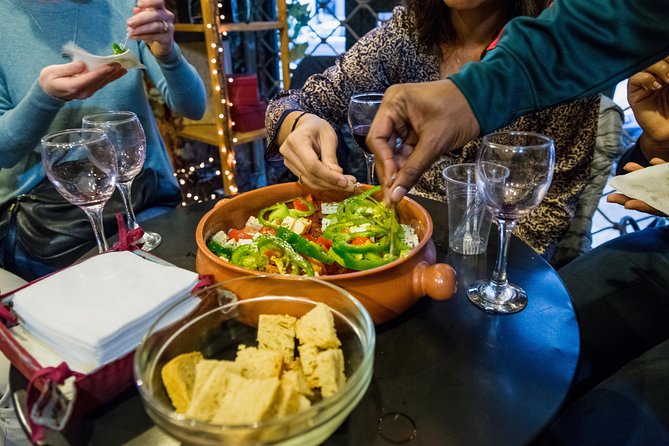
Food tours work in both private vs small group tours, but the formats differ at the table: a shared food tour mixes tastes and companions in a capped party, while a private food tour follows the dishes and diets of one party.
Food tourism includes cooking classes, food or drink tours, food and beverage festivals, specialty dining and visits to farms, markets and producers. Food tours are one branch of a wider field.
The World Food Travel Association estimates that food and beverage spending makes up 15% to 35% of all tourism spending. That share shows why food is a core part of any trip.
A shared food tour lets strangers try more dishes, because each person tastes a small portion and the party moves between stops together. In private vs small group tours, the cap keeps the tables manageable.
A private food tour lets the party set the menu. Dietary needs, favourite dishes and the order of stops can all be agreed in advance. Cooking classes can also take place in local homes.
- Shared tasting: Strangers share a table and try small portions.
- Private tasting: The party agrees dishes and stops in advance.
- Diets: A private tour can build the route around allergies and diets.
- Classes: Cooking classes run in both formats.
Food is social by nature. The Greece food tours post covers food tours across the country, and private vs small group tours both fit them.
How do boat trips work in private vs small group tours?
Boat trips work in both private vs small group tours, but the formats differ aboard: a shared boat trip seats separate parties on one vessel and one route, while a private charter gives one party the whole boat and the plan.
Recreational sailing divides into racing and cruising, and cruising covers coastal sailing within sight of land and daysailing. Boat trips in private vs small group tours around Greece belong to the coastal and day kinds.
Greece has 51 marinas and 14,661 mooring places. That network gives private skippers a wide choice of stops, and it also lets shared trips use bays and harbours along a fixed route.
A shared boat trip works like a small cruise. Cruise ships make round-trip voyages to ports of call, where passengers can go on shore excursions. A small boat keeps that pattern at a smaller scale.
A private boat trip lets the party choose the bay, the swim stop and the time to turn back. Sea conditions still decide what is possible, and the skipper has the final word.
- Shared boat: Separate parties ride one vessel on one route.
- Private charter: One party has the boat and sets the plan.
- Stops: A private skipper can pick bays to suit the party.
- Weather: The skipper decides what the sea allows in either format.
On the water, private vs small group tours differ in who sets the route. The Greece boat tours post covers the boat tours of the Greek seas.
How do day trips work in private vs small group tours?
Day trips work in both private vs small group tours, but the formats differ in the route: a shared day trip runs a fixed itinerary with a capped party, while a private day trip lets one party choose the stops and the order.
A day trip is a visit to a destination from a hotel or home in the morning, returning to the same lodging in the evening. It needs no overnight stay, which keeps the plan simple.
The format has deep roots. Medieval day trips went to a shrine or a fair, and later the railway excursion and the coach outing grew into a distinct industry of day-trippers.
Greece holds 21 UNESCO World Heritage Sites, and a number lie within reach of the capital. A shared day trip picks the best-known stops, while a private one can add or skip a site.
Both formats return the party by evening. Private vs small group tours differ in the route: shared trips keep a fixed itinerary, and private trips let one party reorder it.
- Shared day: A fixed itinerary and a capped party keep the day on plan.
- Private day: One party chooses stops, order and breaks.
- Transport: Both formats include a vehicle between the stops.
- Return: Both formats bring the party back to the same lodging.
Day trips show the choice clearly. The day trips from Athens post covers one-day outings from the capital, and private vs small group tours trade a ready plan against control.
What do travellers ask about private vs small group tours?
Private vs small group tours raise the same questions again and again, and the answers come down to four points: who is in the party, who sets the pace, how the cost is shared and how far the plan can change.
Which is better among private vs small group tours?
Neither format is better in every case. A private tour gives control of pace and route to one party, while a small group tour gives company and a lower share of the cost. The right choice follows the traveller and the day.
How small are the groups in private vs small group tours?
The cap is set by the operator and differs from tour to tour. A small group tour keeps the party small enough for the leader to be heard at each stop, and a private tour has no cap beyond the booking itself, so the party is whoever booked.
Do private vs small group tours cover the same sites?
Both formats can visit the same sites. The difference lies in how the visit is run: a small group tour follows a set route and a set slot, while a private tour can reorder, skip or extend stops to suit the party and its interests.
Who suits private vs small group tours, solo travellers or families?
Solo travellers pick a small group tour for company, or a private tour for attention. Families pick a private tour for the freedom to rest and to adjust, though a small group tour can suit a family that matches its rhythm.
Featured photo: northernsky7007, CC BY-SA 3.0, via Wikimedia Commons.