
A classical tour of Greece is a multi-day road trip from Athens to the great sites of the ancient world: the Corinth Canal, Mycenae, Epidaurus, Olympia, Delphi and the Meteora monasteries. The tour is one of the Greece Tours on Greece Ville, listed with the other Peloponnese tours and Greece private tours.
This post follows the route stop by stop, from the Argolid and Nafplio across Arcadia to Olympia, over the Gulf of Corinth to Delphi, then north through Thessaly to Meteora and back. The formats on sale and common questions come last.
What is a classical tour of Greece and which route does the first part follow?
A classical tour of Greece links the great ancient sites of the Greek mainland in one journey from Athens. The first part runs through the isthmus and the Argolid, with stops at the Corinth Canal, Corinth, Mycenae, Epidaurus, Nafplio, Tiryns and Argos.
Argolis is a regional unit in the eastern part of the Peloponnese peninsula. Much of its territory sits on the Argolid Peninsula. A classical tour of Greece reaches it after crossing the isthmus.
Four municipalities divide Argolis: Argos-Mykines, Epidaurus, Ermionida and Nafplio. Nafplio is the capital of the unit, yet Argos is the largest city, with nearly twice the population of Nafplio.
On a classical tour of Greece, Mycenae occupies the north-east corner of the Argive plain. Epidaurus stands on the Saronic Gulf side of the Argolid, while Nafplio sits on the Argolic Gulf in the north-east of the Peloponnese.
Tiryns and Argos close the circuit. Argos lies 11 kilometres from Nafplio, which served as its historic harbour, so the last three stops sit close together on the plain.
- Provinces: The old provinces of Argolis were Argos, Ermionida and Nafplia.
- Coast: Argolis has a coastline on the Saronic Gulf in the northeast and on the Argolic Gulf in the south and southeast.
- Farmland: The arable land of Argolis lies in the central part of the regional unit.
- Separation: Argolis became separate from Corinthia in 1949, forty years after the two units had joined again.
The remaining parts of the post follow the road west and north. This part keeps to the isthmus and the Argolid, where a classical tour of Greece meets its first dense cluster of ancient sites.


Why does a classical tour of Greece cross the Isthmus of Corinth?
A classical tour of Greece crosses the Isthmus of Corinth, the narrow land bridge that joins the Peloponnese peninsula to the rest of the mainland. The crossing marks the passage from central Greece into the region of the old Peloponnesian cities.
The Gulf of Corinth lies west of the isthmus and the Saronic Gulf lies east of it. In the ancient world the strip served as the landmark that separated the Peloponnese from mainland Greece.
The geographer Strabo noted a stone slab on the isthmus that carried two inscriptions. One faced east towards Megara and named the land there as Ionia. The other faced west and named the Peloponnese.
Plutarch credited the Attic hero Theseus with setting up the stone on his way to Athens. A classical tour of Greece therefore passes a boundary that Greek tradition marked in stone.
The day trips from Athens post covers the single-day excursions that start in the capital. It places the isthmus within the wider set of journeys that a classical tour of Greece can start from.
- Hexamilion: The Roman wall across the isthmus guarded the only land route into the Peloponnese and is the largest single archaeological structure in Greece.
- Bridges: Two road bridges, two railway bridges and two submersible bridges link the mainland side with the Peloponnese side.
- Emergency: A military emergency bridge stands at the west end of the canal.
- Logs: Boats were rolled across the isthmus on logs, a method in use by AD 32.
The canal itself comes next. Since 1893 it has run through this strip of land, so a classical tour of Greece reaches the Peloponnese by crossing water as well as land.
How does the Corinth Canal fit into a classical tour of Greece?
A classical tour of Greece pauses at the Corinth Canal, a channel with no locks cut through the isthmus. Rulers from Demetrius Poliorcetes to the Venetians weighed a cut, but only engineers of the modern age ever finished one.
After independence, Ioannis Kapodistrias asked a French engineer to assess a canal. The study put the cost at 40 million gold francs, which was far too high for the newly independent country.
The opening of the Suez Canal in 1869 gave fresh impetus. In 1870 the government of Prime Minister Thrasyvoulos Zaimis passed a law that authorised construction of a Corinth canal.
In 1881 a concession went to the Société Internationale du Canal Maritime de Corinthe, which was to operate the canal for 99 years. King George I attended the start of work on 23 April 1882.
The Corinth Canal tour post covers the cutting itself, with its bridges, its walls and the ships that pass through it. Here the classical tour of Greece looks at the long road to its construction.
- Capital: The first company began with 30,000,000 francs and ran out of money after eight years.
- Bonds: A bid to issue 60,000 bonds of 500 francs each flopped when under half were sold.
- Surveyors: Demetrius Poliorcetes dropped his plan after surveyors miscalculated sea levels and feared heavy floods.
- Rome: Herodes Atticus considered a canal in the second century AD but never started a project.
These false starts explain why the canal belongs on a classical tour of Greece. It carries an ancient ambition that took modern engineering and company capital to realise.
What does Ancient Corinth add to a classical tour of Greece?
A classical tour of Greece stops at Ancient Corinth, a city-state on the isthmus that rivalled Athens and Thebes in wealth. Myth places Sisyphus, Jason and Medea in its story, and a museum on the site holds the finds.
In myth, Sisyphus founded a line of ancient kings at Corinth, and Jason abandoned Medea there. The Catalogue of Ships in the Iliad lists the Corinthians among the contingent under Agamemnon.
According to legend, the winged horse Pegasus drank at the Upper Peirene spring inside the walls of Acrocorinth. The Corinthian hero Bellerophon captured and tamed the animal there.
The Bacchiadae ruled as a group instead of under a king. Each year they elected a prytanis to hold the kingly position. By 730 BC the city that a classical tour of Greece visits held at least 5,000 people.
Herodotus reports two prophecies from the Delphic oracle that the son of Eëtion was destined to overthrow the Bacchiadae. His mother Labda hid the baby in a chest, where the killers failed to find him.
- Building: The Archaeological Museum of Ancient Corinth was built between 1931 and 1932 to a design by the architect Stuart Thompson.
- Donor: A donation by Ada Small Moore paid for the building, which the American School of Classical Studies constructed.
- Extension: In 1951 the west part of the building was extended, which organised the museum around two atriums.
- Galleries: Separate galleries cover prehistoric Corinth, the powerful city-state, the Roman colony and the Asklepieion.
The museum lies within the archaeological site, so a classical tour of Greece can read the finds beside the ruins they came from.
How does a classical tour of Greece reach the citadel of Mycenae?
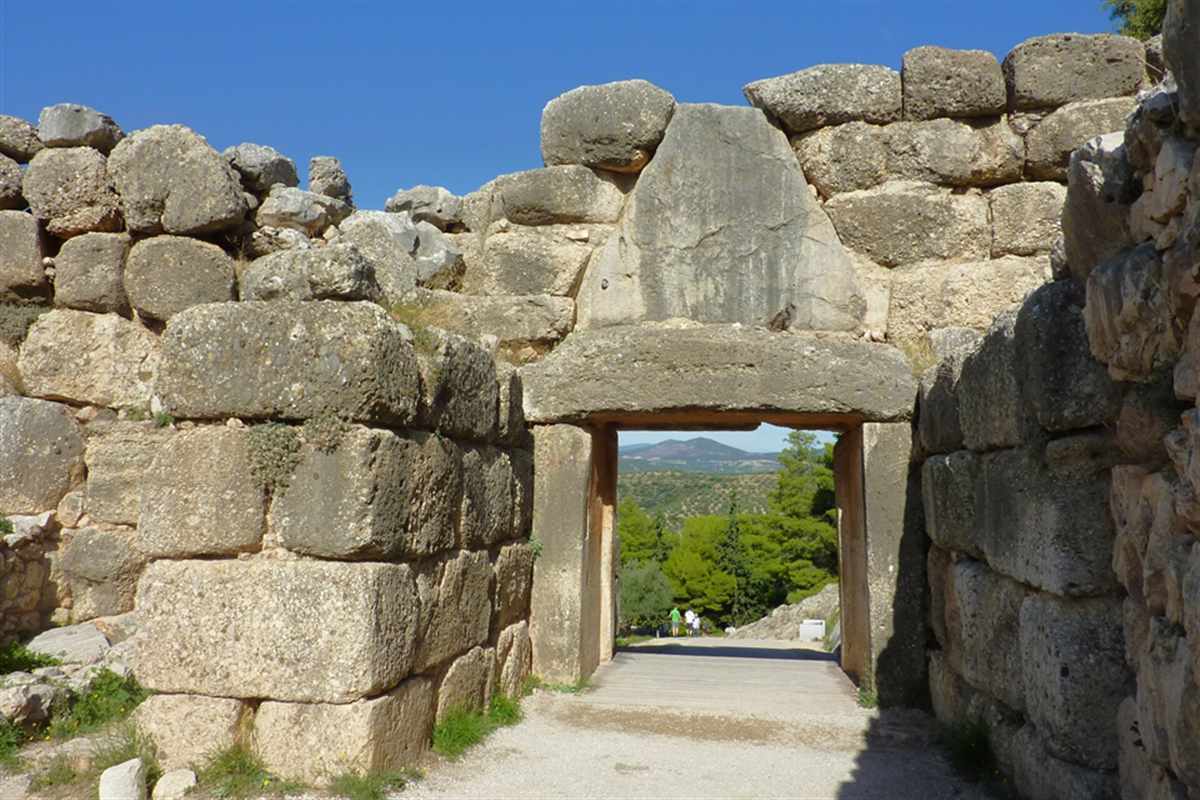
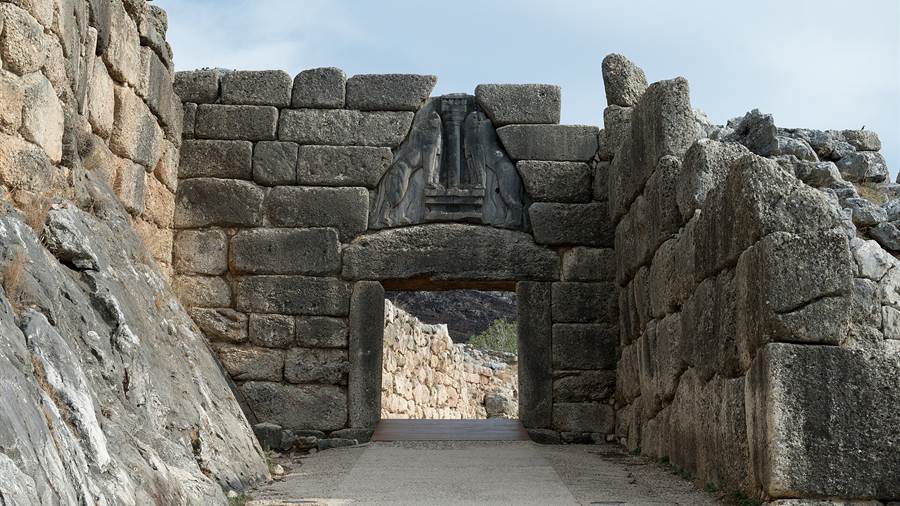
A classical tour of Greece climbs to Mycenae, a Bronze Age citadel in the north-east corner of the Argive plain. The period from about 1600 BC to about 1100 BC takes its name from this site and is called Mycenaean.
Scholars think the name Mycenae comes from a pre-Greek language. Pausanias says the hero Perseus named the place after the cap of his sword sheath or after a mushroom he plucked there.
The causes of the destructions around 1200 BC are unknown. Proposed explanations include enemy attack, internal strife and earthquakes. Mycenae was partly rebuilt afterwards, but it was no longer the centre of a literate central bureaucracy.
Linear B texts name the Mycenaean ruler wanax, a title that translates as lord. Beneath him stood the lawagetas, sometimes read as a military leader, and the telestai, officials who held fiefs.
The site was briefly reoccupied in the Hellenistic period, when it boasted a theatre over the Tomb of Clytemnestra. By the Roman period the ruins had become a tourist attraction, much as they are on a classical tour of Greece today.
- Postern: An undecorated postern gate pierced the north wall of the citadel.
- Clearing: In 1840 the Greek Archaeological Society cleared the debris and soil that had buried the site.
- Scarab: A scarab of Queen Tiye of Egypt, wife of Amenhotep III, lay in the Room of the Idols.
- Shepherds: Pausanias said shepherds led him to the site, which shows that the area was never fully deserted.
A classical tour of Greece therefore treats Mycenae as a place with a long afterlife, one that later Greeks and visiting travellers kept returning to.
What do the royal tombs add to a classical tour of Greece?
A classical tour of Greece reaches the royal burials of Mycenae in two forms: the early shaft graves of Grave Circle A and the later beehive tombs. Together they show a change in how Mycenaean rulers honoured the dead.
On a classical tour of Greece, Grave Circle A measures 27.5 metres across and holds six shaft graves. Nineteen people lay buried in them: eight men, nine women and two children.
Grave goods separated the sexes: men were buried with weapons and women with jewellery. Boars’ tusks lay in Grave IV, and a sceptre from the same grave points to a very high status.
The Mycenae Epidaurus day trip post covers the citadel and the theatre as one excursion. It names the sights that each site holds.
The approach passage of the Treasury of Atreus, the dromos, is 36 metres long and 6 metres wide. Its walls rise from 0.5 metres at the east end to 10 metres at the façade.
- Circle B: Grave Circle B lies outside the walls and dates from about 1650 to 1550 BC, and its contents are less wealthy than those of Circle A.
- Tholos: After the last burial about 1500 BC, the rulers turned to the tholos, a tomb form already developing in Messenia.
- Removal: In the 19th century Lord Elgin and the Ottoman governor Veli Pasha removed parts of the façade sculptures.
- Name: The name Treasury of Atreus is thought to date to the 18th century, and Pausanias did not link the tomb with Atreus.
The shaft graves and the tholos tombs give two answers to one question, and a classical tour of Greece sets them side by side.
What does the Epidaurus Festival add to a classical tour of Greece?
A classical tour of Greece reaches the ancient theatre of Epidaurus, which belongs to the municipality of Epidaurus and still stages ancient drama in the summer months. The Epidaurus Festival uses the ancient theatre as its main stage.
The festival was founded in 1955, at the same time as the Athens Festival, through the efforts of Georgios Rallis, then Minister of the Presidency. During the Greek junta the festival stagnated and tended towards withdrawal.
From 1957 the National Theatre also staged ancient comedies at the festival, beginning with Aristophanes’ Lysistrata. Alexis Solomos revived the plays of Aristophanes, and Karolos Koun later brought a production of the Birds.
In 1959 the staging of the Birds drew both approval and opposition. The government intervened and the production was withdrawn. Manos Hadjidakis wrote the music and Yannis Tsarouchis designed the sets and costumes.
In 1965 the theatre that a classical tour of Greece visits hosted the Damnation of Faust by the Paris Opera, directed and choreographed by Maurice Béjart. Herbert von Karajan led Verdi’s Requiem with the Berlin Philharmonic Orchestra.
- Outsiders: In 1975 companies from outside the National Theatre performed on the ancient stage for the first time.
- Oresteia: In 1982 Peter Hall presented Aeschylus’ Oresteia with the Royal National Theatre, as the first foreign director at the festival.
- Second stage: Performances at the Theatre of Palaia Epidavros began in 1995 with the Musical July programme.
- Suppliants: In 1980 the Theatrical Organization of Cyprus presented Euripides’ Suppliants, directed by Nikos Charalampous.
The festival keeps the theatre in use, so a classical tour of Greece can see the building as a working stage rather than only as a ruin.
What does the sanctuary of Asclepius add to a classical tour of Greece?
A classical tour of Greece visits the sanctuary of Asclepius at Epidaurus, the main holy site of the god in the Classical and Hellenistic periods. In importance the sanctuary rivalled the cult sites of Zeus at Olympia and of Apollo at Delphi.
Panagiotis Kavvadias began digging at Epidaurus on 28 March 1881 for the Archaeological Society. It was the first major excavation that the society ran outside Athens.
The dig of 1881 uncovered the theatre and two inscribed stone slabs. The slabs, from the late fourth or early third century BC, name at least twenty individuals and the dreams or visions linked to each.
In 1882 Kavvadias uncovered the tholos, or circular building, and the Temple of Asclepius, both on the route of a classical tour of Greece. The abaton followed in 1883, and in 1884 he excavated the Temple of Artemis and the Great Propylaia.
Sulla looted the sanctuary in 87 BC, and pirates plundered it before 67 BC. A visit by the emperor Hadrian in AD 124 brought a revival.
- Cults: Hadrian’s reforms brought new cults of All the gods, Zeus Olympius, Zeus Panhellenius and Telesphorus.
- Era: The Epidaurians honoured Hadrian with a new era and dated documents by the years since his visit.
- Goths: The Goths raided the sanctuary in AD 395, yet it was known as a Christian healing centre into the fifth century.
- Grove: Pausanias reported that no birth or death took place inside the boundary marks of the sacred grove.
The excavation record shows how recent the knowledge is, and a classical tour of Greece walks through ground that archaeologists uncovered step by step.
Which names and bastions of Nafplio belong on a classical tour of Greece?
A classical tour of Greece reaches Nafplio, a coastal town whose name changed repeatedly over the centuries. Byzantine writers used Náfplion, Anáplion and Anáplia, and the bastions of Palamidi carry a similar layering of names from successive rulers.
The modern Greek name, used on a classical tour of Greece, is Nafplio. In English the commonest forms are Nauplia and Navplion. In the nineteenth and early twentieth centuries, official documents and travel books used Náfplion and Nafplio side by side.
The bastions of Palamidi changed names with each ruler. After the Greek capture they took the names of ancient leaders and heroes: Epaminondas, Phocion, Achilles, Miltiades, Leonidas and Themistocles. The two remaining bastions honour Saint Andrew and the French philhellene Robert.
The Nafplio day trip post covers the town as a single excursion, with its squares, forts and harbour. It also gives the road from Athens and the food of the surrounding plain.
The word Bourtzi comes from Ottoman Turkish and Arabic, where burc means tower. Seven fortresses in Greece carry the name, and the one in the harbour of Nafplio is the best known.
- Aegina: A Bourtzi stands on an islet off Aegina.
- Aulis: A ruined castle called Bourtzi stands near Aulis.
- Poros: A Bourtzi stands on an island off Poros.
- Chalkis: The Venetian Bourtzi at Chalkis has been demolished.
On a classical tour of Greece the names matter because each ruler of Nafplio left a label on its towers, bastions and walls.
What does the modern town of Nafplio add to a classical tour of Greece?
A classical tour of Greece meets a town that keeps a distinct traditional architectural style. Colourful buildings in the old town show Venetian influence from the period between 1338 and 1540, and a much smaller Ottoman influence on top of it.
On a classical tour of Greece the city also shows a great number of eclectic and neoclassical buildings and a smaller number of modernist ones. Statues around the town recall Ioannis Kapodistrias, King Otto and Theodoros Kolokotronis.
Nicolas the Greek, active from 1519 to 1522, was one of the 18 survivors of the expedition that completed the first circumnavigation of the world on the Victoria. Nafplio counts him among its notable people.
Notable people from Nafplio include Charilaos Trikoupis, who lived from 1832 to 1896 and was Prime Minister of Greece seven times from 1875 until 1895. The poet Nikos Karouzos lived from 1926 to 1990.
Resident writer Nina Bawden lived from 1925 to 2012. Austen Kark, managing director of the BBC World Service, lived from 1926 to 2002, and the actor Vangelis Kazan lived from 1936 to 2008.
- Football: Pannafpliakos F.C. plays football in the city.
- Road: The bus to Athens runs via Corinth, Isthmos and Argos.
- General: Emmanouil Zymvrakakis, who lived from 1861 to 1928, served as a Greek general in the First World War.
- Struggle: Tellos Agras, who lived from 1880 to 1907, fought in the Greek Struggle for Macedonia.
The town links the fortress past to everyday life, and a classical tour of Greece finds in it a place that still works as a city.
What does the Argolid plain add to a classical tour of Greece?
A classical tour of Greece crosses the Argolid plain, which holds the springs and former lake of Lerna south of Argos. Lerna sits on a narrow point between mountains and sea, along an ancient route from the Argolid to the southern Peloponnese.
Strabo recorded a proverb, a Lerna of ills, that arose from the cleansings which took place in the lake. He also noted that writers ascribed the wells of the area to the daughters of Danaus.
The Lernaean Mysteries, sacred to Demeter, were celebrated at Lerna along with a festival called the Lernaea. Tradition held that the lake was one of the entrances to the Underworld.
Pausanias wrote that the Alcyonian Lake had no limit to its depth. Even Nero, he says, failed to find the bottom with ropes that he had fastened together and weighted with lead.
Excavations at Lerna, a stop on a classical tour of Greece, began under John L. Caskey in 1952, which led to the series of publications titled Lerna I to V.
- Fire: A fire destroyed the House of the Tiles at the end of the Early Helladic II period, and an earthen tumulus later covered the site.
- Seals: The same seal made banded patterns on pottery at Lerna, Tiryns and Zygouries.
- Trade: The supply of obsidian from Melos fell at the end of Early Helladic III, a sign of reduced long-distance trade.
- Cemetery: Lerna was a cemetery in the Mycenaean age and was abandoned about 1250 BCE.
The plain therefore gives a classical tour of Greece a layer of settlement older than the palaces, in a place that later Greeks filled with myth.
What does Tiryns add to a classical tour of Greece?
A classical tour of Greece stops at Tiryns, a Mycenaean hill fort in Argolis. The citadel rose in three building phases between about 1500 BC and 1200 BC, and the surviving ruins all belong to the third phase.
Heinrich Schliemann returned in 1884 and worked at Tiryns for five months. The next excavation, under Wilhelm Dörpfeld of the German Archaeological Institute, assessed the ruins properly and continued with other German archaeologists until 1938.
On a classical tour of Greece the entrance is found on the east side, but its position and form differed in each of the three phases. In the second phase the gate took the form of the Lion Gate of Mycenae.
A tower and an arm of the wall forced attackers through a very narrow corridor, where defenders struck from above and from both sides.
The palace was 11.8 metres by 9.8 metres in plan, with an outer portico with two columns, an anteroom and a main hall. Alabaster slabs with relief rosettes lined the portico walls.
- Hoard: About 1180 BC a cauldron in the lower town held gold and silver objects and a Minoan signet ring from the fifteenth century BC.
- Temple: After the mansion burned in the eighth century BC, a Doric temple was built in its ruins.
- Postwar: After the Second World War the Institute and the Greek Archaeological Service resumed work, with excavations in 1977, 1978 to 1979 and 1982 to 1983.
- Treasure: The Tiryns Treasure came to light in 1915 under the Greek archaeologist Apostolos Arvanitopoulos.
Tiryns shows the defensive side of Mycenaean building, and a classical tour of Greece sees there how gates, corridors and walls worked together.
What does Argos add to a classical tour of Greece?
A classical tour of Greece ends this part of the route at Argos, a city that rivalled Sparta for dominance over the Peloponnese in classical times. Its greatest expansion and power came under the seventh-century BC king Pheidon.
Under Pheidon, Argos regained sway over the cities of the Argolid and challenged Sparta’s dominance. Argive troops defeated the Spartans in a hoplite battle at Hyssiae in 669 to 668 BC.
In 494 BC Sparta crushed Argos at the Battle of Sepeia, a defeat that a classical tour of Greece recalls in Argive politics. The losses were so heavy that a revolution followed, and previously excluded outsiders entered the state for the first time.
Argive democracy had an Assembly called the aliaia, a Council called the bola and a body called The Eighty. Magistrates served six-month terms and faced an audit afterwards.
In 272 BC Pyrrhus of Epirus entered the city by stealth and was trapped in its narrow streets. Plutarch tells how an old woman on a rooftop threw a tile that knocked him from his horse.
- Olympic Games: Pheidon took control of the Olympic Games away from the citizens of Elis and appointed himself organiser.
- Isokrates: In 346 BC Isokrates counted Argos among the four major Greek cities, with Athens, Sparta and Thebes.
- Territory: In 337 BC Philip II rewarded Argos with Spartan territory, so that it controlled an area of up to 1,400 square kilometres.
- Settlers: After the Ottomans plundered Argos in 1397, the Venetians settled Albanians there and granted them long-term tax exemptions.
Argos closes the Argolid circuit with a political history, and a classical tour of Greece moves on from there towards Arcadia and the west.
How does a classical tour of Greece cross Arcadia?
A classical tour of Greece crosses Arcadia between the Argolid and the west coast. The region fills the central Peloponnese with mountains, closed basins and high plains, so the road climbs inland first and then descends toward Elis and the Ionian Sea.
In the seventh century BC the towns of Arcadia joined a loose League of the Arcadians and faced down the threat from Sparta. That independence set the region apart for the classical tour of Greece.
The ancient region held all the headwaters of the Alpheios river but none of the Eurotas. Its highlands therefore fed the river that later reaches Olympia, and the classical tour of Greece follows that river west.
Arcadia kept a cult of Despoina, a title meaning the mistress, with a sanctuary at Lycosura. Tradition holds that her real name was told only to those initiated in the mysteries.
Greek myth makes Arcadia the home of Hermes and Pan. It also places there the king Lycaon, whose daughter Callisto was turned into a bear and shot, becoming the constellation Ursa Major.
- Cult: Despoina and Demeter were the primary deities worshipped across Arcadia.
- Letter: Tsan, a letter of the Greek alphabet, occurs only in Arcadia.
- Historian: Polybius came from Megalopolis and was a historian of the Hellenistic period.
- Victor: Euthymenes of Maenalus won Olympic gold in 400 and 392 BC.
The Arcadian stretch of a classical tour of Greece passes through myth, mountains and old leagues before it reaches Tripoli. The Peloponnese tours post covers the wider peninsula around it.
What does a classical tour of Greece see in Tripoli?
The classical tour of Greece passes through Tripoli as a working city rather than an excavated site. The town lies in a high basin and gives travellers a modern pause between the ruins of the Argolid and the sanctuary at Olympia.
In 1830 the old Ottoman buildings of Tripolizza were demolished. The town was renamed and rebuilt as a main city of the Kingdom of Greece, so the classical tour of Greece meets later streets.
The main plazas of the city line up along the main street. One bears the name Kennedy and another that of King George II, while the main street of the southern quarter is named Washington.
Distances show why the town works as a junction. Kalamata lies 65 km south-west, Sparti 60 km south and Patras 144 km north-west, so the classical tour of Greece turns west here.
Tripoli holds the flagship campus of the University of the Peloponnese, founded in 2000. It also hosts two of the largest army and air force training bases in Greece.
- Song: The siege of Tripolitsa was made famous in the folk song Forty lads from Livadeia.
- Units: The municipality of 2011 merged eight former municipalities, among them Mantineia, Tegea and Valtetsi.
- Poet: Kostas Karyotakis, a poet, appears among the notable people of Tripoli.
- Sport: Tripoli hosts three sport clubs in the higher national divisions of football and basketball.
Tripoli therefore gives the classical tour of Greece a short pause in a modern town before the road turns west toward the valley of the Alpheios and the sanctuary at Olympia.
What does a classical tour of Greece show at the sanctuary of Olympia?
The classical tour of Greece reaches the sanctuary of Olympia, the principal stop of the western leg. The site lies in the valley of the Alpheios, held the sacred grove of Zeus, and combined temples, treasuries and sports grounds in one sprawling precinct.
Pausanias counted over 70 temples at Olympia, besides treasuries, altars and statues. Unlike Delphi, where the monuments pressed together, Olympia sprawled beyond its wall, especially around the games areas.
The Temple of Hera, built around 580 BC, is the oldest temple at Olympia. Its colonnade of six by sixteen columns began in wood, and stone replaced the shafts one by one.
The Temple of Zeus rose between about 472 and 456 BC. Its exterior columns stood in a six by thirteen arrangement, and tiles of Pentelic marble, cut thin enough to be translucent, roofed it.
The classical tour of Greece meets the later history here. The Temple of Hera fell to an earthquake in the early fourth century AD, and repeated floods ended the settlement in the early seventh century.
- Altar: The Olympic flame is lit at the altar of the Temple of Hera.
- Setting: The ruins sit north of the Alpheios and south of Mount Kronos.
- Pelops: The classical Pelopion was a separate sanctuary with a peribolos wall of the 6th century BC.
- Trees: Judas-trees, olives and plane trees now grow across the site as a quasi-grove.
The Ancient Olympia tour post covers the buildings of the sanctuary in detail, so the classical tour of Greece needs only this outline of the precinct.
What does a classical tour of Greece show at the stadium of Olympia?
The classical tour of Greece walks into the stadium of Olympia through the vaulted entrance used by the athletes. The stadium is a plain field with marked start and end lines, and its length became the standard unit of distance across the Greek world.
The first stadium, built around 560 BC, was only a simple track. About 500 BC it was remodelled with sloping sides for spectators and shifted slightly eastward, which shaped the form seen today.
Around 350 BC the Echo Stoa rose and separated the sanctuary from the area of the games. The hippodrome for chariot racing and the final form of the stadium stood east of it.
In 200 BC builders erected a vaulted archway that linked the entrance of the stadium to the sanctuary. The classical tour of Greece passes under the line of that approach, as the athletes once did.
Spectators sat mainly on the sloping flanks of the field. The stadium has been used again for Olympic events without any intentional change to the ancient ground, since temporary stands are easy to raise.
- Unit: The length of the field became the standard stadion, a unit of distance used by the geographers.
- Race: According to Pausanias, the stadion race over about 190 metres was the only competition at first.
- Word: The modern word stadium derives from that ancient event.
- Entry: Athletes entered under an archway at the start of a vaulted corridor.
A classical tour of Greece reads the ruins in order, and the stadium is the place where the stone plan of the festival is easiest to follow.
What does a classical tour of Greece see in the Archaeological Museum of Olympia?
The classical tour of Greece visits the Archaeological Museum of Olympia, which holds the finds from the sanctuary. Its bronzes, temple sculptures and statues turn the empty ruins into a readable story, and the first building opened in 1888.
An earthquake damaged the first museum building in 1954, and plans for a new museum were approved in the 1970s. Since 2004 the old building has housed a museum of Olympic history.
In 1877 Ernst Curtius uncovered the body of Hermes and the Infant Dionysus in the ruins of the Temple of Hera. A collapsing roof had buried it, and thick clay protected it.
The sculpture uses Parian marble, and Hermes stands about 2.10 m high. The face and torso glow with a polished surface, while the back shows the marks of the rasp and chisel.
The Nike of Paionios came out of the ground in pieces in 1875 and 1876. The restored figure lacks a face, wings and forearms, and without its pillar it stands 198 cm tall.
- Rooms: The main building has twelve rooms, which a classical tour of Greece reads by theme and by the age of the objects.
- Bronzes: The extent of the bronze collection makes it one of the important collections in the world.
- Banknote: The Apollo from the west pediment of the Temple of Zeus appeared on the 1000 drachma note of 1987.
- Discus: A bronze discus awarded to an Olympian in 241 is among the notable holdings.
The museum completes what the open ground cannot show, and a classical tour of Greece places it after the stadium so that the finds match the buildings.
How does a classical tour of Greece explain the ancient Games of Olympia?
The classical tour of Greece links the ruins of Olympia to the ancient Games, held at the sanctuary every four years in honour of Zeus. The festival grew from a local event into a Panhellenic institution that ran into the fourth century AD.
Greeks counted time in Olympiads named for the stadion winner. One record on the classical tour of Greece reads the third year of the eighteenth Olympiad, when Ladas of Argos won the stadion.
In 668 BC, according to Pausanias, Pheidon of Argos took the sanctuary from the town of Elis at the request of Pisa. Elis regained control the next year, so the contest over the Games began early.
Under Nero the scheduled Games of AD 65 were postponed to 67, when he competed in the chariot races. After his suicide the judges had to repay his bribes and declared that Olympiad void.
Under Hadrian and Antoninus Pius the Games drew great crowds again. Until recently the last securely datable winner was Publius Asclepiades of Corinth, who won the pentathlon in 241.
- Circuit: The Pythian, Nemean and Isthmian Games joined the Olympics as the Panhellenic Games.
- Entrants: Only freeborn Greek men competed, although women won as chariot owners.
- Wives: Pausanias placed married women on the south side of the river Alpheios.
- Revival: The Games were restored on a global basis in 1894.
The classical tour of Greece therefore treats the Games as the reason for every stone at Olympia, from the temples to the stadium and the museum.
Why does a classical tour of Greece follow the Alpheios valley?
The classical tour of Greece follows the Alpheios valley because the river leads from Arcadia to Olympia and the sea. The Alpheios rises on the north slopes of Mount Taygetus, flows north-west toward the sanctuary, and then turns west to the Ionian Sea.
The Alpheios of today differs from the ancient river. Large sections have been straightened by embankments, and water is diverted for towns and irrigation, so the classical tour of Greece follows a managed river.
The valley is a regular trough from the coast to the interior. Scarps along it suggest that the two basins are rift valleys, formed as the ridges on each side move apart.
On the left bank runs the long ridge of Mount Lykaion. Around 1000 BC Dorian highlanders overran the Mycenaean coast but failed to climb into central Arcadia, and they kept the valley.
That history explains the strong Doric character of the architecture at Olympia. The classical tour of Greece reads the buildings and the landscape together, since the valley decided who held the sanctuary.
- Dam: The Flokas Dam, a hydroelectric facility, impounds the river before it reaches the sea.
- Mouth: The river reaches the gulf across agricultural land and a sandy beach partly blocked by a spit.
- Trees: The Judas-tree is a pink-flowering low tree that grows among the ruins.
- Fires: Aleppo pine covered the Kronion hill until the fires of 2007.
The valley thus ties the Arcadian highlands to the western plain, and a classical tour of Greece uses it as the natural line between the two.
What does a classical tour of Greece pass in Elis?
The classical tour of Greece passes through Elis, the western region that administered the ancient Games. Fertile plains, pine forests and river mouths fill the landscape around Olympia, while Pyrgos serves as the modern regional capital of the area.
The independent state of Elis administered the Games. The Eleans managed them well, but the ancient record shows bias and interference at times, and the classical tour of Greece meets that history on site.
About one-third of the land in Elis is fertile, and the rest is mountainous and unsuited to crops. Ranges include Movri, Divri and Minthe, with the interior colder than the coast.
The Alfeios, Pineios and Neda all flow into the Ionian Sea in Elis. The classical tour of Greece crosses a coastal plain cut by these rivers, while the Erymanthos also drains the region.
In the 1510s a villager from Kalavryta found a well full of ancient gold coins and gave them to Sultan Selim I. The Sultan rewarded him with land, and he built a tower, a pyrgos.
- Fires: The fires of August 2007 left 45 dead and burnt 8,500 hectares of forest.
- Site: The archaeological site of Olympia was seriously threatened in 2007 but not damaged.
- Quake: The earthquake of 8 June 2008 caused 2 deaths in Elis.
- Rank: Elis ranks second by population among the regional units of the Peloponnese, after Achaea.
Elis ends the sanctuary stage of the route, and a classical tour of Greece then turns north along the coast toward Patras and the crossing of the gulf.
Why does a classical tour of Greece stop in Patras?
The classical tour of Greece stops in Patras because the city is the western port of the Peloponnese and the last large town before the crossing to the mainland. Roman remains, a great church and neoclassical streets give the stop a clear purpose.
Patras is a commercial hub, and its busy port ties the region to Italy and the rest of Western Europe through trade and communication. Three public universities give the city a large student population.
In the early twentieth century Patras became the first Greek city to introduce public streetlights and electrified tramways. The classical tour of Greece meets a city that modernised early.
The Roman Odeon in the upper town dates from around 160 AD. Restored and partly rebuilt, it serves as an open-air theatre for summer performances, and the classical tour of Greece can pause there.
The church of Saint Andrew was founded in 1908 by King George I and inaugurated in 1974. Its central cupola is 46 m tall, and the church ranks second among Byzantine-style temples in the Balkans.
- Castle: The Byzantine emperor Justinian first built the castle on the ancient acropolis in the 6th century AD.
- Cemetery: The Mycenaean cemetery of Voudeni shows active use for nearly five hundred years.
- Aqueduct: The Roman aqueduct ran 6.5 km from the springs of Romanos to the acropolis.
- Baths: The Ottoman baths of the 16th century are among the oldest surviving in Europe.
Patras therefore combines Roman, Byzantine and Ottoman layers, and a classical tour of Greece uses the city as a final western stop before the bridge.
How does a classical tour of Greece cross the Rio-Antirrio Bridge?
The classical tour of Greece crosses the Rio-Antirrio Bridge east of Patras to move from the Peloponnese to the mainland. The cable-stayed structure spans the Rion Strait on four pylons, and it stands among the major engineering works of modern Greece.
Charilaos Trikoupis, a nineteenth-century prime minister, proposed a bridge at this site, but the finances of Greece did not permit its construction. Planning for the modern bridge began only in the mid-1990s.
Site preparation and dredging started in July 1998, and work on the supporting pylons began in 2000. With these complete in 2003, builders started on the traffic decks.
The deck is 28 m wide, with two vehicle lanes in each direction, an emergency lane and a pedestrian walkway. Its cable-stayed portion of 2,252 m is the world’s third longest cable-stayed deck.
The site posed hard problems. The water is 65 m deep, the seabed is loose, and the gulf widens by 10 to 15 mm a year, so the piers rest on levelled gravel.
- Design: Berdj Mikaelian was the lead architect of the bridge.
- Award: The bridge received the 2006 Outstanding Structure Award from the International Association for Bridge and Structural Engineering.
- Cable: On 28 January 2005 a cable snapped from the M1 pylon after lightning started a fire, and the bridge reopened after repair.
- Torch: Olympic torchbearers were the first to cross the bridge officially.
The crossing marks the point where the classical tour of Greece leaves the Peloponnese and heads for the northern coast of the gulf, with the western end of the bridge in Antirrio.
What does a classical tour of Greece find in Nafpaktos?
The classical tour of Greece finds in Nafpaktos a harbour town on the northern side of the Gulf of Corinth, just beyond the bridge. The town has a long record as a naval base and as a prize for rival powers.
In 1040 the town did not join the uprising of Peter Delyan, and when the rebel army attacked it, Nafpaktos alone among the towns of its theme resisted successfully.
St Nicholas of Trani sailed from the port in 1094. In the medieval centuries the town passed from the Epirote rulers to the Albanian despot John Bua Spata, who held it in 1376 or 1377.
The Knights Hospitaller occupied the town briefly in 1378. Carlo I Tocco, Count of Cephalonia, then pressed on one side and Ottoman lands on the other, which prepared the sale of the town to Venice.
The 2007 forest fires damaged Nafpaktos. The classical tour of Greece reaches a town rebuilt around its port, with the municipality enlarged in 1997 by the incorporation of 13 communes.
- Epidemic: An epidemic from Italy almost emptied the town and its hinterland in 747/8.
- Revolt: A rebellion killed the local strategos George early in the reign of Constantine VIII.
- Thessaly: Constantine Doukas of Thessaly captured the town in 1295 and handed his conquests back in 1296.
- Archbishops: About 20 archbishops served under Frankish rule, a detail the classical tour of Greece notes only in passing.
The Nafpaktos tour post covers the harbour, the castle and the sea battle in full, which leaves this part of the classical tour of Greece to the medieval story.
Why does a classical tour of Greece follow the northern coast of the Gulf of Corinth?
The classical tour of Greece follows the northern coast of the Gulf of Corinth because the coast road joins Nafpaktos, Itea and the mountains behind. The northern margin has gentle slopes, while the southern shore falls steeply, which explains the route.
The gulf separates the Peloponnese from western mainland Greece, and its tectonic movement is comparable to parts of Iceland and Turkey. The northern margin slopes between 10 and 20 degrees, the southern between 30 and 40.
Shipping routes between Piraeus and the western Mediterranean pass along the gulf. On the northern shore the classical tour of Greece passes Antirrio, Nafpaktos, Galaxidi, Itea, Kirra and Antikyra.
Itea lies on the Gulf of Iteas, a northward projection of the Gulf of Corinth. The community covers 6.305 km2, and the municipal unit around it covers 26.351 km2.
In Mycenaean times the gulf was called the Gulf of Krisa. According to the Homeric Hymn to Apollo, Cretans founded Crissa under the god’s own lead, and they became his priests.
- Quake: An earthquake of magnitude 6.2 struck near Aigion on 15 June 1995.
- Borders: The gulf borders Aetolia-Acarnania, Phocis, Boeotia, Attica, Corinthia and Achaea.
- Tides: The gulf grows by 10 mm per year, and the rift continues to open.
- Roads: National Road 27 links Itea with Amfissa, where the classical tour of Greece turns inland.
The shore road keeps the classical tour of Greece between sea and mountain until it turns inland toward the olive plain and the town of Amfissa.
What does a classical tour of Greece see in Amfissa and its olive plain?
The classical tour of Greece ends its western loop at Amfissa and the olive plain below it. The town stands at the head of the plain, and the groves that fill the valley floor are tended along dirt roads and channels.
Amfissa lies 72 km south of Lamia and 85 km north-east of Naupactus. Its history spans around 3,000 years, and it has traditionally been the largest town and the capital of Phocis.
The ancient name is believed to come from a Greek verb meaning to surround, since mountains ring the town. In the 13th century the Franks renamed it La Sole, and the Greek form Salona followed.
In 653 BC settlers from Amfissa founded Epizephyrian Locri in southern Italy. Its coins showed the head of Apollo on one side and a spear-head with a boar jaw-bone on the other.
The Pleistos was disconnected from its wetlands and made to irrigate the olive trees. Dirt roads lace the surface of the groves, and private farmhouses and footbridges line a controlled channel through them.
- Tomb: A Mycenaean tomb at Amfissa was in use from the 13th to the 11th century BC.
- Months: Four month names of the Amphissian calendar survive: Argestyon, Panigyrion, Amon and Pokios.
- Quake: A huge earthquake destroyed towns in Phocis, including Salona, in 1580.
- Council: A council of notables and military chiefs met at Salona on 15 to 20 November 1821.
The olive plain closes the western loop of the classical tour of Greece, and the road beyond it, covered in the next part of the classical tour of Greece, leads toward Delphi.
What does the sanctuary at Delphi show on a classical tour of Greece?
A classical tour of Greece reaches the sanctuary of Delphi, an ancient sacred precinct on the southwestern slope of Mount Parnassus. Its remains include a temple of Apollo, a theatre and a stadium, while traces of the hippodrome lie in the plain below.
On a classical tour of Greece the stadium lies farther up the hill, beyond the theatre. It dates from the fifth century BC, and its last major remodelling took place in the second century AD.
Chariot races drew rulers such as Cleisthenes, tyrant of Sikyon, and Hieron, tyrant of Syracuse, to the Pythian Games. Archaeologists sought the hippodrome that Pindar named for over two centuries before finding traces at Gonia.
The Temple of Apollo seen today dates from the fourth century BC. Spintharus, Xenodoros and Agathon raised the Doric building, which replaced an earlier temple that burned down in 548/7 BC.
A polygonal wall holds up the terrace of the temple. Builders laid it in 548 BC, and from 200 BC onwards its stones carry carved contracts that freed slaves, about a thousand in all.
- Stadium: Herodes Atticus paid for stone seating for 6500 spectators.
- Theatre: Builders added it in the fourth century BC, and its orchestra began as a full circle seven metres across.
- Tholos: The round building of Athena Pronaia had twenty Doric columns outside and ten Corinthian columns inside.
- Roman Agora: This paved square stood about 500 metres from the Castalian Spring.
A classical tour of Greece therefore reads Delphi as a place of contests as well as prophecy. The Delphi day trip from Athens post covers the sanctuary visit in full.
How did the oracle at Delphi shape a classical tour of Greece?
A classical tour of Greece meets the Pythia, the priestess through whom Apollo spoke at Delphi. She sat on a tripod in a sunken inner room, and rulers frequently consulted her before wars and before the founding of colonies.
A classical tour of Greece hears that tradition chose the Pythia from the peasants, a woman of blameless life. Alone in the adyton, a name meaning do not enter, she sat over a chasm.
The oracle stayed closed in winter, when tradition placed Apollo among the Hyperboreans and Dionysus in the temple. Priests turned the trance speech of the Pythia into hexameters for the petitioners.
The fame of the oracle crossed borders. Lydia, Caria and Egypt respected it, and Rome’s seventh and last king, Lucius Tarquinius Superbus, sent a delegation that included two of his sons.
A yearly round of festivals marked the sanctuary. The Septeria staged the slaying of the serpent, the Theophania marked the return of Apollo in spring, and the theoxenia centred on a summer feast.
- Serpent: Myth holds that Apollo killed the serpent Python, whose body fell into a fissure in the earth.
- Laurel: One scholar argues that the laurel named in ancient sources included oleander.
- Hearth: An eternal flame burned in the hearth of the Temple of Apollo.
- Colonies: Foundation stories of Greek colonies say the colonists were first dedicated at Delphi.
A classical tour of Greece reads the oracle as an institution of advice, not only a legend, because cities weighed its replies before they acted.
What does the Delphi museum hold for a classical tour of Greece?
A classical tour of Greece includes the Delphi Archaeological Museum, which houses finds from the sanctuary dating from the Mycenaean period to the early Byzantine era. Its collection runs from bronze votives to pediments, and one hall holds the Charioteer.
On a classical tour of Greece the museum has a wartime story. The chryselephantine objects, the silver bull and the Charioteer went to the vaults of the Bank of Greece and stayed there for ten years.
The Charioteer then stood in the National Archaeological Museum of Athens until 1951. The region was a combat zone in the Greek Civil War, so the Delphi museum reopened only in 1952.
Room 4 resembles a safe. It holds offerings found in a pit on the Sacred Way, among them a silver bull and chryselephantine statues thought to show Apollo, Artemis and their mother Leto.
Room 3 shows the metopes of the Sicyonians, which depict the Argonaut expedition, the hunt of the Calydonian boar and the abduction of Europe by Zeus in the form of a bull.
- Room 8: It holds fragments of the Delphic Hymns and an Attic white-ground cup that shows Apollo playing the lyre.
- Room 13: The Charioteer belonged to a larger group that included a chariot, horses and possibly a stable boy.
- Ground floor: Finds from the Corycian cave include the Muses around Pan.
- Room 12: A Roman frieze from the theatre shows labours of Heracles, among them Cerberus.
A classical tour of Greece gains from this museum a chronological view of the sanctuary, from Mycenaean figurines to its final years in Room 14.
Why does the Castalian Spring matter on a classical tour of Greece?
A classical tour of Greece passes the Castalian Spring, the sacred spring in the ravine at Delphi. Contestants in the Pythian Games and pilgrims washed and drank there, and the Pythia and the priests cleansed themselves there before the oracle gave answers.
On a classical tour of Greece the archaic fountain house dates to the sixth century BC. Its marble-lined basin has benches around it, and a short aqueduct fed pipes ending in lion-headed spouts.
The Roman fountain dates to the first century BC and stands about fifty metres higher than the archaic one. A closed aqueduct brought the water to its facade, which carried seven bronze spouts.
Roman poets saw the spring as a source of poetic inspiration. The Castalian Band, poets at the court of James VI of Scotland, took its name from it, and the king was a member.
In certain versions of the myth, Apollo killed the monster Python at this spring, which explains why it counts as sacred. Poets sometimes confused it with the Spring of Pieris.
- Modern fountain: A modern fountain near the street to the archaeological site offers respite to travellers.
- Roman Agora: The agora lies about 500 metres from the spring, between the spring and the sanctuary of Apollo.
- Tennessee: The town of Castalian Springs took its name when interest in classical Greece and Rome revived.
- Ohio: Castalia in Ohio has Blue Hole pools of constant temperature that now serve as fish hatcheries.
A classical tour of Greece treats the spring as the entrance to the ritual of the sanctuary, because every visitor, from athlete to priest, stopped here first.
What does Arachova add to a classical tour of Greece?
A classical tour of Greece passes through Arachova, a mountain town on the southern slope of Mount Parnassus that lies on the road to Delphi. The town joins scenery with local customs and a record of resistance in the Greek War of Independence.
On a classical tour of Greece the town recalls 1826, when Greek rebels under Georgios Karaiskakis defeated the Ottomans at the Battle of Arachova. It belongs to the war as well as the oracle.
Since the 2011 local government reform, Arachova has been a municipal unit within the municipality of Distomo-Arachova-Antikyra. Before the reform, it was a municipality of its own in the western part of Boeotia.
In 1889 the Greek press quoted the French writer Paul Lefaivre, who found the Greek type preserved intact in Arachova. He described the men as athletes rather than farmers, built for running and wrestling.
On a classical tour of Greece, National Road 48 near Delphi follows a pass between Mount Parnassus and the mountains of the Desfina Peninsula. The river Pleistos runs along it and provides an easy route.
- Press: The newspaper Ephemeris carried the account on 17 March 1889.
- Memoir: Lefaivre wrote of an excursion to Delphi, and he mentioned the antiquities only briefly.
- Valley: On its west side the pass joins the north-south valley between Amfissa and Itea.
- Spur: A spur of Parnassus above that junction holds the site of ancient Krisa.
A classical tour of Greece uses Arachova as a mountain pause on the way to Delphi. The Arachova day trip post covers the village, the ski slopes and the nearby cave and monastery.
Why is Mount Parnassus part of a classical tour of Greece?
A classical tour of Greece runs beneath Mount Parnassus, a mountain range that ancient Greeks held sacred to Apollo, Dionysus and the Muses. The range lies in central Greece, and the Oracle of Delphi perches on its southern slopes.
A classical tour of Greece learns that the ancient Greeks believed Parnassus took its name from Parnassos, son of the nymph Kleodora. As home of the Muses, the mountain stood for poetry, music and learning.
No Mycenaean text in Linear B records the name Parnassos, although Mycenaean settlements were abundant to the south and east of the mount. The origin of the name remains unexplained.
In antiquity the mountain was home to Dorian states in Phocis, whose people spoke Phokian, a Doric dialect of ancient Greek. The Iliad cites ancient communities of the range.
The Corycian Cave on the slopes of Parnassus was linked with Hermes and the Bee Maidens, the Thriae. It later became sacred to Pan and to the Muses.
- Castalia: Certain traditions place the water deity Castalia and her spring on Parnassus, while others place the Muses on Mount Helicon.
- Dionysus: The mountain was sacred to Dionysus and to the Dionysian mysteries.
- Apollo: The oracle was sacred to Apollo, so the mountain itself became associated with the god.
- Swift: Jonathan Swift made Parnassus the site of a war between the ancients and the moderns in The Battle of the Books.
A classical tour of Greece treats Parnassus as the backdrop of the oracle, a range whose name stands in later literature for poetry and the Muses.
What does Hosios Loukas show on a classical tour of Greece?
A classical tour of Greece adds Hosios Loukas, a walled monastery founded in the mid-10th century on the slopes of Mount Helicon. Its churches and mosaics make it one of the major monuments of Middle Byzantine architecture and art.
Tradition says the hermit Luke foretold the reconquest of Crete under an emperor named Romanos. Sources leave open which Romanos he meant, and the island fell to Nicephorus Phocas under Romanos II.
Byzantium knew the monastery for its lavish decoration, applied to every surface. Revetment, carving, gold and silver plate, murals and mosaics were joined by icons, chandeliers, silk curtains and altar cloths.
On a classical tour of Greece the original image of Christ Pantocrator inside the dome is missing, as are the archangels between the upper windows. Even so, scholars rate the interior highly for its age.
A stairwell on the southern side leads down to the burial crypt beneath the Katholikon. Its main space includes nine groin-vaulted bays, and three vaulted passages were once called bone vaults.
- Cleaning: The Greek Archaeological Service cleaned the crypt in the 1960s, after centuries of dust had hidden its frescoes.
- Lunettes: Eight lunettes around the crypt walls show the Passion and the Resurrection of Christ.
- Mosaics: Mosaics around the tomb show Luke and the hegumen Philotheos offering a model of the new church to the saint.
- Tombs: The crypt holds the tomb of Luke along with two others, believed to belong to abbots.
A classical tour of Greece reads Hosios Loukas as a later chapter of the same region, a Christian monastery founded in the centuries after the pagan sanctuaries fell silent.
Where do Itea and Kirra fit on a classical tour of Greece?
A classical tour of Greece reaches the Gulf of Itea at the town of Itea, on a northward projection of the Gulf of Corinth. Kirra, beside it, was once the port of ancient Krisa, the ruling power of the valley.
On a classical tour of Greece Itea lies 52 km east of Naupactus, and Greek National Road 48 connects it with Delphi and Livadeia. The community covers 6.305 square kilometres, and the municipal unit covers 26.351.
Homer’s Catalogue of Ships names both Amphissa and Krisa, and Krisa was a Mycenaean stronghold. Archaeological dates for the valley go back to the Early Helladic, and Krisa itself dates to the Middle Helladic.
These early dates match the earliest dates at Delphi, which suggests that Phocians from Krisa appropriated and transformed the site. Later, states of southern Greece broke the power of Krisa over access to Delphi.
Control of the shrine passed to the Amphictyonic League, an organisation of states with an interest in Delphi, in the early Classical period. Krisa was destroyed for its arrogance, according to the sources.
- Power: In Mycenaean times Krisa was a major land and sea power, one of the first in Greece.
- Port: Ruins of Kirra, now part of the port of Itea, are believed to be the old port of Krisa.
- Dorians: Like Corinth, Krisa was a Dorian state.
- Roads: Greek National Road 27 links Itea with Amfissa and Lamia.
A classical tour of Greece uses the shore of Itea to explain how Delphi rose beside an older power, Krisa, whose port lay on the coast.
What does Galaxidi add to a classical tour of Greece?
A classical tour of Greece reaches Galaxidi, a small port in Phocis whose medieval history shows the gulf passing between Byzantines, Franks, Epirotes, Catalans, Ottomans and the Despotate of the Morea. The town grew into a maritime power in later centuries.
On a classical tour of Greece Galaxidi shows how Norman invasions devastated the town in 1081 and 1147. After 1204 it came under the Frankish Lordship of Salona, and Epirus recovered it in 1211.
Around 1268 the town passed to John I Doukas, ruler of Thessaly, when the Epirote realm was divided. In 1311 the Catalan Company conquered it together with Salona.
The Ottomans captured Galaxidi in 1397, and the Despotate of the Morea under Theodore I Palaiologos regained it soon after. In 1403 it passed briefly to the Knights Hospitaller.
Constantine Kantakouzenos refortified the town in 1447-48, yet the Ottomans took it shortly after. The Chronicle of Galaxidi, written in 1703, appeared in print in 1865 under Konstantinos Sathas.
- Amphoras: Seven commercial amphoras for wine transport come from Corinth, Corfu, Cnidus and other regions.
- Pelike: A red-figured pelike from the second quarter of the fifth century BC shows two men in cloaks talking.
- Roman pottery: One Roman vessel carries a gladiator design, and another shows a cupid.
- Women’s items: Two bronze mirrors and a pendant shaped like the head of Ammon Zeus are on display.
A classical tour of Greece finds in Galaxidi a record of the gulf in the medieval centuries. The Galaxidi day trip post covers the harbour, the museums and the local customs.
What does the road north through Lamia show on a classical tour of Greece?
A classical tour of Greece turns north through Lamia, a city in central Greece that is the capital of Phthiotis and of the Central Greece region. Its site on the slopes of Mount Othrys, beside the river Spercheios, controlled the route to Thessaly.
On a classical tour of Greece Lamia recalls how, after Alexander the Great died in 323 BC, Athenians and other Greeks rebelled. Antipatros took refuge behind the walls of Lamia in the Lamian War.
The war ended with the death of the Athenian general Leosthenes and the arrival of a Macedonian army of 20,000 men. In 190 BC the Roman Manius Acilius Glabrio sacked the city.
In 997 the Byzantine general Nikephoros Ouranos defeated Tsar Samuel of Bulgaria near the town in the Battle of Spercheios. Emperor Basil II visited in 1018 on his triumphal journey to Greece.
After the Fourth Crusade the Knights Templar received the city as a fief and rebuilt its fortress, but they lost it in 1209-10. The Catalans held Lamia from 1318 until 1391.
- Castle: Lamia Castle is the old acropolis, and it housed army barracks until the reign of King Otto.
- Squares: Freedom Square holds the main cathedral, and Diakos Square holds the statue of Athanasios Diakos.
- Climate: The record low in the city is 12.6 degrees below zero, recorded in December 2001.
- University: Six departments of the University of Thessaly are based in the city.
A classical tour of Greece therefore uses Lamia as a hinge between southern Greece and Thessaly, a role the city held in antiquity as well.
How does Thessaly appear on a classical tour of Greece?
A classical tour of Greece crosses Thessaly, a region of northern central Greece that borders Macedonia, Epirus and Central Greece. Its land lies on the east side of the Pindus watershed and meets the Aegean Sea on its eastern edge.
On a classical tour of Greece the Trikala and Larissa lowlands form a central plain that a ring of mountains surrounds. Summer rains add to its fertility, which has earned Thessaly the name breadbasket of Greece.
The Chasia and Kamvounia mountains lie to the north, the Olympus massif to the northeast and the Pindus range to the west. Ossa and Pelion form the coastal mountains of the southeast.
In 480 BC the Persians invaded Thessaly, and the region soon surrendered. The Aleuadae of Larissa joined them, and the Persian defeat at Plataea the following year ended their hold.
In the fourth century BC Jason of Pherae made the region a significant military power. Philip II of Macedon then became archon of Thessaly, and Thessalian cavalry helped Alexander win at Issus and Gaugamela.
- Economy: Thessaly is the leading cattle-raising area of Greece, and the alluvial soils of the Pineios Basin favour grain.
- Nuts: Cultivation of almonds, pistachios and walnuts has risen, especially around Almyros.
- Ports: The nearly landlocked Gulf of Pagasai gives Volos a natural harbour for farm produce and chromium.
- Population: The region counted 687,527 people at the 2021 census, and Larissa has a metropolitan area of more than 230,000.
A classical tour of Greece therefore passes through a farming region with a long political record, from Persian invasion and Macedonian ties to the Ottoman centuries.
Why does Kalambaka matter for a classical tour of Greece?
A classical tour of Greece reaches Kalambaka, also spelled Kalabaka and Kalampaka, a town in the Trikala regional unit of Thessaly and the seat of the municipality of Meteora. The town proper counted 8,573 residents at the 2021 census.
On a classical tour of Greece the name Kalabaka is of Turkish origin and means powerful fortress. It dates from six or seven centuries ago, and the Greek Orthodox Church still uses the older name Stagoi.
A Greek inscription on the wall of the church of Saint John the Baptist testifies to an ancient settlement. Of the medieval monuments, only the cathedral Church of the Dormition survives.
A reference of 1163 names the castle of Stagoi. In 1204 Stagoi fell under the Despotate of Epirus, and at the end of the 13th century under the Duchy of Neopatria.
In 1334 John II Orsini took the town again, and soon after it returned to Byzantine control. Under Ottoman rule Kalabaka fell first under the Pasha of Larisa and later the Sanjak of Trikala.
- Spelling: English also writes the name as Kalambaka or Kalabaki.
- Cathedral: The Dormition church dates from the late 11th or early 12th century and stands on an earlier late antique church.
- Footballer: The professional footballer Christos Albanis was born in the town.
- Business: Athanasios and Efrosine Demoulas, founders of a Greek-American supermarket family, were born in Kalabaka.
A classical tour of Greece therefore finds in Kalambaka a small town whose history runs from an ancient settlement through Byzantine, Serbian and Ottoman rule.
What does the bishopric of Stagoi tell a classical tour of Greece?
A classical tour of Greece meets the bishopric of Stagoi in Kalambaka, an episcopal see that dates from the beginning of the 10th century. The see was a suffragan of the Metropolis of Larissa, and it received privileges and donations from Byzantine emperors.
On a classical tour of Greece the see owned significant stretches of land and had dependent farmers in neighbouring settlements. Its territory included the fields of northwest Thessaly and a mountainous zone in central Pindos.
The bishopric survived with small intermissions until 1900. In that year it merged with the bishopric of Tricca to form the Metropolis of Tricca and Stagoi, based in the town of Trikala.
The province of Kalabaka was one of the provinces of the Trikala Prefecture. It had the same territory as the present municipality of Meteora and was abolished in 2006.
In the 2011 reforms Kalabaka became a municipality. In 2018 the municipality took the name Meteora, with Kalabaka as its seat, and Kalabaka became a municipal unit of 277.087 square kilometres.
- Communities: The municipal unit includes Avra, Diava, Kastraki, Krya Vrysi, Megali Kerasea, Orthovouni, Sarakina and Vlachava.
- Twin towns: Kalampaka is twinned with Schwabach in Germany, Le Haillan in France and Mioveni in Romania.
- Rail: Kalambaka station lies on the Palaiofarsalos-Kalambaka line.
- Neighbours: Seven other municipal units surround Kalabaka, but none of them lies in the massif.
A classical tour of Greece therefore closes its Thessaly leg in a town where church history, civic boundaries and the foot of a rock massif meet.
What do the Meteora rocks add to a classical tour of Greece?
A classical tour of Greece reaches the Meteora rocks in the regional unit of Trikala, in Thessaly, where tall stone pillars rise from the northwestern edge of the plain and carry monasteries, so the route moves from ancient sanctuaries to a natural landscape.
The pillars differ from the volcanic plugs of igneous rock found elsewhere. Sedimentary rock of uniform make-up was laid down over millions of years and left almost no sign of vertical layering.
Abrupt vertical weathering cut the stone, and the cliffs rose as a cone during earthquakes to form steep columns. The classical tour of Greece meets this type of weathering only inside a small local area.
Plants grow thickly out of the vertical walls, fed mainly by the water that collects in cracks and crevices. The wider formation also runs northwest into the Gavros and Agios Dimitrios areas.
Mapping of the Meteora trail network began in 2021 and now covers 14 interconnected trails across the whole area. Walkers who add time on foot to a classical tour of Greece use these paths.
- Place: The rocks stand between the town of Kalabaka and the village of Kastraki.
- Setting: The pillars rise near the Pineios river and the Pindus Mountains.
- Recreation: Meteora draws hikers, trail runners, mountain bikers and rock climbers from around the world, particularly in the summer.
- Race: The Meteora MTB Race, named for Vasilis Efstathiou, takes place every year.
The Meteora day trip from Athens post covers the monasteries as a separate outing from the capital. The rest of this part follows the monasteries, Trikala, the Thessalian plain and Thermopylae in turn.
How do the Meteora monasteries fit into a classical tour of Greece?
The classical tour of Greece meets six surviving Meteora monasteries, and each one adds its own building story, from the frescoed church of Holy Trinity to the newest church at Saint Stephen and the hospital of the Great Meteoron.
Local legend says the monk Dometius reached the site of Holy Trinity in 1438. A widely cited date for the monastery itself is 1475 to 1476, although other sources call the construction dates unknown.
Two monks painted the main church of Holy Trinity with frescoes in 1741. A small skeuophylakion, a chamber for the sacred furnishings, was built beside the church in 1684.
On a classical tour of Greece, Saint Stephen shows a new katholikon of 1798, the newest of the Meteora structures. Its old refectory is now a museum, and its workrooms serve painting, embroidery, incense-making and needlework.
The Great Meteoron hospital has a brick roof over its ground floor, held up by four columns. Rousanou’s cathedral was decorated in 1540, and its name is believed to come from monks from Russia.
- Varlaam: The monastery stood abandoned for two hundred years after its founder died, until two monk brothers began rebuilding.
- Chapel: A small chapel of Saint John the Baptist is carved into the rock at Holy Trinity and holds seventeenth-century frescoes.
- Benefactors: Damascene, Jonah and Parthenios took part in restorations at Holy Trinity, and their names appear on its walls.
- Frescoes: The church interior at Saint Stephen was painted for a short period after 1545.
Together these buildings show that the monasteries of a classical tour of Greece were rebuilt, restored and redecorated across centuries, not raised in a single campaign.
How does history shape a classical tour of Greece at Meteora?
A classical tour of Greece at Meteora follows a history that starts with monks in the rock caverns, runs through the monastic building of the 1300s and 1400s, and reaches the twentieth century, when the monasteries were bombed.
Monks occupied the caverns of Meteora as early as the 11th century, but they built no monasteries until the 1300s. They sought a place to hide from a rising number of attacks by the Turks.
John Uroš succeeded his father Simeon in 1370, became a monk at the Meteoron monastery in 1373 and died there in the early 1420s. A classical tour of Greece passes a house that sheltered a former ruler.
Until the 1600s, baskets and ropes carried goods and people up to the high monasteries. Monks have lived at Varlaam since the 16th century, but their numbers have declined steadily since the 17th century.
In the world wars the monasteries were bombed heavily and ransacked, in the belief that the monks held refugees. At Holy Trinity, the treasures of a rock chapel were looted during the German occupation.
- Abbots: Emilianos led the Great Meteoron from 1961 to 1973, and Alexios followed him from 1973 to 1976.
- Visitor: The writer Patrick Leigh Fermor is reported to have visited the monasteries as a guest of the Abbot of Varlaam.
- Poverty: Even then Holy Trinity was one of the poorest monasteries in Meteora.
- Nuns: Saint Stephen was home to 28 nuns in 2015.
Each layer of this history is visible on the rocks, which is why the monasteries form the northern end of a classical tour of Greece.
How does a visit to Meteora work on a classical tour of Greece?
A classical tour of Greece visits Meteora by road and on foot, because the monasteries stand on tall rock tops that visitors reach by steps, ladders, tunnels or bridges rather than by a straight drive to the door.
A road reaches the back of the cliff below Holy Trinity, and tunnels with 130 stone steps lead up to the monastery. A foot track of 3 kilometres also runs there from Kalambaka.
Holy Trinity keeps a garden of 0.8 hectares at its summit, and visitors are allowed inside. It and Saint Stephen stand apart from the main group of monasteries, which lies further north.
On a classical tour of Greece, Theopetra Cave, near Kalambaka, is open to the public after restoration. Its chamber covers 500 square metres, and the entrance is 17 metres wide and 3 metres high.
Varlaam is entered by climbing a series of ladders on its rock’s north side. The Great Meteoron is sited 613 metres above sea level, and Saint Stephen stands 575 metres above sea level.
- Bridge: A bridge from the nearby plateau gives access to the steps cut into the rock.
- Chasia: Theopetra Cave lies at the foot of the Chasia range, the natural boundary between Thessaly and Macedonia.
- Lithaios: The small Lithaios river, a tributary of the Pineios, flows in front of Theopetra Cave.
- Peak: Saint Stephen sits at the top of a rocky precipice below the Kukulas peak.
The Delphi Meteora tour post covers a route that links the two sites. A classical tour of Greece reaches the same monasteries after the Delphi sanctuary.
What does Trikala add to a classical tour of Greece?
The classical tour of Greece passes through Trikala, the capital of the Trikala regional unit in northwestern Thessaly, a city on the Lithaios river that had 62,064 inhabitants in 2021 and lies close to both Meteora and the southern Pindus.
The city takes its name from ancient Trikka or Trikke, which was named for a nymph, a daughter of Peneus or Asopos. The form Trikala appears in the Byzantine period.
According to Strabo, the Asklepieion of Trikke ranked first in importance and age among Greek sites of its kind. Excavations at the site beside Saint Nicholas Cathedral uncovered the remains of an ancient theatre.
A classical tour of Greece sees the Byzantine castle that Justinian built on the acropolis of ancient Trikke in the 6th century. The Ottomans rebuilt it and added a clock tower in the 17th century.
Neoclassical buildings and a Hippodamian grid reshaped the centre after Thessaly joined Greece in 1881. In the 21st century the centre was pedestrianised and the Lithaios river was environmentally revitalised.
- Municipality: The municipality of Trikala had 78,605 inhabitants in 2021.
- Digital life: Trikala is the first smart city in Greece, with government services offered through e-governance.
- School: The Trikke School ran from 1543 to 1854 and made the city an intellectual centre.
- Cooperative: Trikala founded the first agricultural cooperative in Greece in 1906.
These layers explain why Trikala sits between the monasteries and the plain on a classical tour of Greece, with antiquity, Byzantium, the Ottomans and the modern city in one place.
How does the Thessalian plain frame a classical tour of Greece?
The classical tour of Greece crosses the Thessalian plain, a central lowland formed by the Trikala and Larissa basins and ringed by mountains, where summer rains add to the fertility and give the region distinct summer and winter seasons.
The plain has been called the breadbasket of Greece. Its alluvial soils support grain, cattle and sheep, and farming changes in the mid-20th century brought the chronic flooding under control.
Thessaly is the leading cattle-raising area of Greece. Aromanian shepherds move large flocks of sheep and goats between higher and lower ground with the seasons. Their routes link the Pindus with the plain.
On a classical tour of Greece, farmers’ fields show recent almond, pistachio and walnut plantings, especially around Almyros, and a growing number of olive trees. Volos ships the plains’ produce and the chromium of the mountains.
The Persians invaded Thessaly in the summer of 480 BC. The Greek army guarding the Vale of Tempe was alerted by Alexander I of Macedon and left the road before the enemy arrived.
- Cavalry: Thessalian cavalry played a crucial role in the victories of Alexander the Great at Issus and Gaugamela.
- Horse: The famous horse of Alexander the Great, Bucephalus, came from Thessaly.
- Jason: Jason of Pherae turned the region into a significant military power in the 4th century BC.
- Population: The region counted 687,527 people in the 2021 census.
The plain thus links Meteora, Trikala and the road south to Thermopylae with farmland and rivers, all within one stage of a classical tour of Greece.
What does Thermopylae add to a classical tour of Greece?
The classical tour of Greece reaches Thermopylae on the way back south, where a narrow pass above the Malian Gulf saw the stand of Leonidas and his allies, and where the three days of the battle can be followed event by event.
On the first day, Xerxes sent 5,000 archers, but Greek shields and helmets deflected the arrows. Medes and Cissians then attacked the Phocian wall at the narrowest part of the pass.
Xerxes then sent the Immortals, an elite corps of 10,000 men, but they fared no better. Xerxes is said to have stood up three times from his seat as the Medes fell.
Hydarnes took the mountain path that evening, according to Herodotus, although Diodorus gives him a force of 20,000. At daybreak the Phocians on the path noticed the column by the rustling of oak leaves.
Leonidas told his allies they were free to leave, and around 2,000 soldiers stayed. Xerxes ordered the hill surrounded, and arrows rained down until the last Greek was dead. A classical tour of Greece retells it.
- Rearguard: One theory holds that Leonidas formed a rearguard so that more than 3,000 men were free to retreat and fight again.
- Thebans: The king later had the Theban prisoners branded with the royal mark.
- Cost: Herodotus puts Persian losses at up to 20,000 for forcing the pass.
- Aftermath: The Persian army burned Plataea and Thespiae before it marched on Athens.
The Thermopylae tour post covers the pass, its allies and its monuments in full. A classical tour of Greece treats the site as one stop on the road back to Athens.
How does a classical tour of Greece return to Athens?
A classical tour of Greece returns to Athens along the A1 motorway, which largely replaced National Road 1, a route followed since antiquity, and the road passes near Lamia and Thebes before it reaches the capital at the end of the run.
Work on the A1 began in the mid-1950s. The first section, from Larissa to Katerini, opened in 1959, followed by Athens to Lamia in 1962 and Lamia to Larissa in 1967.
On a classical tour of Greece, the A1 runs close to the coast of the Aegean Sea from the Boeotia-Phthiotis boundary up to near Velestino. A bypass at Lamia crosses the Spercheios on a new bridge.
Lamia serves as the capital of Phthiotis and also of the Central Greece region, and 47,529 people lived in the city itself at the 2021 census. It stands on the slopes of Mount Othrys, near the river Spercheios.
In the Lamian War of 323 to 322 BC, the regent Antipatros took refuge behind the walls of Lamia. The Athenian general Leosthenes died, and with his death the war ended.
- Castle: Lamia Castle is the fortified acropolis of the city and held army barracks until the reign of King Otto I.
- Square: Diakos Square holds the statue of Athanasios Diakos, a commander who died in Lamia.
- Battle: Tsar Samuel of Bulgaria lost to the Byzantine general Nikephoros Ouranos in 997, at the Battle of Spercheios near Lamia.
- Tunnels: The last Maliakos section of the A1, with the tunnels of Stylida, opened to traffic in 2015.
The A1 runs on to Thebes and then into Athens, where a classical tour of Greece comes back to its starting point.
When does a classical tour of Greece suit each season?
A classical tour of Greece runs through a hot-summer Mediterranean climate with four distinct seasons, so the cold, wet period from late October to mid April and the warm, moderately dry period that follows set the feel of each stop.
At Lamia, the cold and wet period lasts from late October to mid April, and the warm, moderately dry period lasts from mid April to late October, with transitional phases in between.
The record low in Lamia is -12.6 °C, recorded in December 2001, and the record high is 46.5 °C, recorded during the summer of 1973. The record range shows how far the seasons swing.
Trikala has a Mediterranean climate of the Csa type, with large daily temperature swings. The August average high there is 34.5 °C, while autumn and spring stay mild.
On a classical tour of Greece in winter, freezing temperatures occur in Trikala at night, and snowfall is not significant. The continental influence there is not strong enough to remove it from the Csa class.
- Seasons: Lamia has four distinct seasons: winter, spring, summer and autumn.
- Rain: Summer rains add to the fertility of the Thessalian plains.
- North: A rare humid subtropical climate marks the north of Thessaly, at the limit of that subtype in Europe.
- Larissa: The capital of Thessaly has a cold semi-arid climate on the Mediterranean edge of that category.
Spring and autumn are mild in Trikala, which suits a classical tour of Greece that spends the day outdoors on rock tops and an open pass.
How do the sites fit together on a classical tour of Greece?
The classical tour of Greece joins sanctuaries, palaces, theatres and monasteries into one route, and the UNESCO list gives it a frame, because Greece’s ratification of the World Heritage Convention came on 17 July 1981 and made Greek sites eligible for inclusion.
The first Greek site on the list was the Temple of Apollo Epicurius at Bassae, in 1986. Delphi and the Acropolis of Athens followed on the list in the next year.
Five sites joined the list in 1988, the year Meteora was added, and two joined in each of 1989 and 1990. The route covers sites that entered the list in different years.
One site joined the list in 1992 and one in 1996, followed by two in 1999 and one in 2007. A classical tour of Greece therefore follows a list that grew in steps over the years.
Nominations from signatory states are accepted only if the site was first placed on a tentative list. Criteria i through vi are cultural, and vii through x are natural.
- Convention: UNESCO established the World Heritage Convention in 1972.
- Cultural: Cultural heritage covers monuments, groups of buildings and sites, including archaeological sites.
- Natural: Natural heritage covers physical and biological formations, geological formations and habitats of threatened species.
- Mixed: A mixed property is listed for both its natural and its cultural significance.
The UNESCO World Heritage Sites in Greece post covers each listed property in turn, so it extends the stops of a classical tour of Greece.
Which classical tour of Greece formats are on sale?
The classical tour of Greece is on sale as departures from Athens that join Mycenae, Epidaurus, Olympia, Delphi and Meteora, plus a classical format with Meteora and a separate Meteora day format with a sunset stop and lunch.
One format links Mycenae, Epidaurus, Olympia, Delphi and Meteora in a single departure from Athens. A second departure drops Epidaurus and links Mycenae, Olympia, Delphi and Meteora, so the two differ by one stop.
A further departure from Athens carries the title Explore Ancient Greece, and another is titled the Classical Tour with Meteora. The titles show how sellers label the same classical theme in different ways.
Two scooter formats stay inside Athens. One covers ancient, Olympic and modern sites, and the other covers the Acropolis, Plaka and ancient Athens. Neither leaves the capital for the rest of the classical route.
A separate Meteora day format adds a sunset, caves, a beachfront stop and lunch to the rock monasteries. It covers Meteora without the rest of the classical route.
Each title names its stops, so a reader of a classical tour of Greece can compare the formats by the sites they join, from Mycenae and Olympia to Delphi and Meteora.
- Full route: One departure joins Mycenae, Epidaurus, Olympia, Delphi and Meteora.
- Shorter list: Another joins Mycenae, Olympia, Delphi and Meteora from Athens.
- Athens scooter: Two scooter formats cover the ancient, Olympic and modern sites of the capital.
- Meteora day: One format adds a sunset, caves, a beachfront stop and lunch.
The tour cards and availability boxes on this page list live dates for each format, so the departures on sale are checked there rather than in the text.
What do travellers ask about the classical tour of Greece?
The classical tour of Greece raises practical questions about the Meteora monasteries, Trikala, the Pineios river, the pass at Thermopylae and the name of its traitor, and the answers below give the facts for each one in short form.
Who was Ephialtes on a classical tour of Greece?
Ephialtes was a Trachinian who told Xerxes of the mountain path around Thermopylae, motivated by the wish for a reward. His name came to mean nightmare in Greek and to stand for the archetypal traitor in Greek culture. The path ran along the ridge of Mount Anopaea behind the cliffs that flanked the pass.
Which river runs past Meteora on a classical tour of Greece?
The Pineios is 205 km long. It rises near the village of Malakasi, east of Metsovo, and empties into the Aegean Sea near Stomio. Meteora and Larissa lie along it, and Trikala stands on its tributary, the Lithaios. Its drainage basin covers 9,500 square kilometres.
What happened to the Greek dead after Thermopylae on a classical tour of Greece?
After the Persians left, the Greeks collected their dead and buried them on the hill. A full 40 years after the battle, the bones of Leonidas were returned to Sparta, where he was buried again with full honours, and funeral games were held every year in his memory.
What is the oldest sign of settlement near Trikala on a classical tour of Greece?
The first signs of permanent settlement in the Trikala region come from Theopetra cave and date to about 49,000 BC. Neolithic settlements of 6,000 BC have been found at Megalo Kefalovriso and other places. The ancient city of Trikka was founded around the third millennium BC.
Featured photo: Chris06, CC BY-SA 4.0, via Wikimedia Commons.