
Greece in October covers the first autumn rains, the warm sea, Ohi Day, the Demetria of Thessaloniki, the Acropolis and Delphi, the forests of Olympus, Pelion and the Pindus, the grape and olive harvests and the islands. The post is one of the Greece Tours on Greece Ville, listed with the other Greece multi-day tours and Greek island tours.
This post covers what the month is, the weather, Ohi Day, the Demetria, the sites, migratory birds, the autumn colours of the mountains, the harvests, the islands, turtles at Zakynthos and autumn dishes. Common questions come last.
What is Greece in October?
Greece in October is a month of autumn turning, when the dry Mediterranean summer gives way to rain, the nation marks Ohi Day on 28 October, chestnuts fall in the mountain woods, and migrating birds cross the mainland on their route south.

October is the tenth month of the year and has 31 days. In the Northern Hemisphere the month is commonly linked with autumn, and Greece in October follows that pattern.
Ohi Day gives the month its fixed point. The national holiday is observed every year on 28 October in Greece, in Cyprus and in Greek communities around the world.
The climate sets the frame of the month. It is predominantly Mediterranean, wetter west of the Pindus range, drier east of it, and alpine in marginal mountain areas.
The woods keep their own calendar. The sweet chestnut sheds its nuts during October, and the autumn crocus opens its flowers long before its leaves appear in spring.
The sky keeps one too. Birds that bred in the north fly back in autumn to wintering grounds in warmer regions to the south, and Greece in October lies on routes that carry them.
- Holiday: Ohi Day is a national day of remembrance for 1940.
- Feast: Saint Demetrius, patron saint of Thessaloniki, has a feast in the month.
- Sites: The Acropolis, Delphi, Olympia, Epidaurus and Mycenae anchor the ancient mainland.
- Nature: Mushrooms, cyclamen and crocus follow the autumn rain.
The sections below follow the month from its first rain and warm sea to Ohi Day, the ancient sites, the birds, the mountains and the small plants of Greece in October.
How do the first autumn rains arrive in Greece in October?
Greece in October receives its first autumn rains as the dry Mediterranean summer ends, with moist air lifted by mountain ranges such as the Pindus, wetter slopes in the west, and incursions of cold air that feed storms over the sea.
Orographic lift explains the first step of the rain in Greece in October. Air forced up rising terrain cools quickly, its relative humidity can reach 100 per cent, and clouds and rain form.
The climate is wetter with maritime features on the western side of the Pindus range, while the eastern side is drier. The range therefore divides the autumn rain between the Ionian side and the interior.
Ioannina, the capital of Epirus, is considered the wettest city of mainland Greece, receiving precipitation just short of 1,100 mm per year. The figure shows how much water the western mountains collect.
Cold air from the north adds storms. Mediterranean tropical-like cyclones need incursions of colder air, and a medicane on 22 October 2015 formed near the Albanian coast with winds of about 48 km/h.
Mountain weather also shaped the first days of the Greco-Italian War. The Italian attack in the Pindus began under torrential rainfall, and snowfall set in on 29 October 1940.
- Windward: Rain falls on the slope that faces the moist wind.
- Leeward: A rain shadow of reduced rainfall lies behind a tall range.
- Medicane: A tropical-like storm formed near the Albanian coast on 22 October 2015.
- Snow: A snowstorm covered an Albanian assault on the Grabala heights in November 1940.
Rain therefore falls unevenly across Greece in October, with the western slopes of the high ranges taking more water than the drier east.
How does the sea hold its summer heat in Greece in October?
Greece in October keeps warm seas because water has a greater heat capacity than land, so the surface of the sea warms more slowly than the shore in summer and gives up its heat more slowly once the autumn sun weakens.
The Aegean shows the stored warmth in a thin layer. Its surface water forms a veneer 40 to 50 metres thick, so the store of summer heat is shallow.
In winter the same surface layer cools to 8 degrees Celsius in the north of the Aegean, which shows how far the sea still has to fall after the warm days of Greece in October.
Depth adds delay. The temperature of the ocean at depth trails the temperature of the air by 15 days for every 10 metres, so deeper water follows the atmosphere slowly.
Land behaves differently. Dry land cools faster than water when sunshine fades, and once the land is cooler than the adjacent sea surface, a land breeze blows from the land towards the water.
Over the water that night breeze pushes warmer air upwards. With enough moisture and instability it brings showers or thunderstorms, a small sign of the sea giving heat back to the air.
- Capacity: The sea warms more slowly than land.
- Layer: The Aegean surface layer is 40 to 50 metres thick.
- Lag: Ocean temperature at depth trails the air by 15 days per 10 metres.
- Night: A land breeze blows from cool land towards the warmer sea.
Sea warmth in Greece in October is therefore a stored summer, released slowly into the autumn air along the coast while the land cools faster.
What is the origin of Ohi Day and the Greco-Italian War in Greece in October?
Greece in October holds Ohi Day because Italy delivered an ultimatum to Greece on 28 October 1940, Ioannis Metaxas, the Greek leader, rejected it, and Italian forces from Albania attacked the Greek frontier in Epirus, which began the Greco-Italian War.
Italy had invaded Albania on 7 April 1939 and ran a hostile press campaign against Greece, accusing it of being a British ally. On 15 August 1940 the Italians sank the Greek light cruiser Elli.
The Italian ambassador in Athens, Emanuele Grazzi, delivered the ultimatum to Metaxas at his residence in Kifissia. It demanded that Axis forces cross the Greek-Albanian border and occupy strategic positions.
Metaxas replied in French, then the language of diplomacy, with the words Alors, c’est la guerre, meaning Then, it is war. He appears never to have used the word no himself.
The single word ochi, meaning no, became the popular symbol of the refusal. The Athens newspaper Ellinikon Mellon ran it as a front-page headline on 30 October 1940, and Kathimerini followed on 21 November.
The Greek army of Greece in October 1940 halted the invasion by mid-November and then counter-attacked into southern Albania. Mark Mazower called the outcome the first Axis setback of the entire war.
- Dates: The war ran from 28 October 1940 to 23 April 1941.
- German entry: Germany invaded northern Greece on 6 April 1941.
- Losses: Greek forces lost 13,325 killed, and Italian forces lost 13,755 dead.
- Surrender: Greece surrendered to German troops on 20 April 1941 and to the Italians on 23 April.
Ohi Day therefore commemorates a refusal, and the memory of that night shapes how Greece in October marks its closing days.
How do parades and school marches mark Ohi Day in Greece in October?
Greece in October stages Ohi Day parades in which a military parade in Thessaloniki, attended by the President of the Republic, stands beside school marches in Athens and other towns, while public and private buildings fly the Greek flag.
The main commemorative event of Greece in October is the military parade in Thessaloniki. The President of the Republic and other officials attend it, and military parades in Greece date back to the 1870s.
Athens and other municipalities hold school parades instead. Student parades entered the tradition later, under the Metaxas regime, and military parades became part of national celebrations in 1930.
Thessaloniki holds its student parade a day early, on 27 October, to make room for the military parade on the next day. Each school flag is customarily carried by the pupil with the best academic record.
The anniversary was first marked in occupied Athens on 28 October 1941 as an act of resistance. Women laid flowers at the Tomb of the Unknown Soldier, and students marched towards Syntagma Square.
The government of Georgios Papandreou made 28 October a national holiday by decree on 24 October 1944. In 1952 the Church of Greece moved the feast of the Protection of the Theotokos to the same date.
- Military: The main parade takes place in Thessaloniki with the President present.
- Schools: Pupils march in Athens and other municipalities.
- Church: Special church services mark the day.
- Pause: The 2020 parades were cancelled because of the COVID-19 pandemic.
The first official celebration, on 28 October 1944, included a parade attended by Papandreou, and marches and flags still define Ohi Day across Greece in October.
What are the Demetria and the feast of Saint Demetrius in Thessaloniki in Greece in October?
Greece in October honours Saint Demetrius, the patron saint of Thessaloniki, on 26 October, and the Dimitria festival of the city takes its name from him, while the feast opens the celebrations that lead into Ohi Day on 28 October.
Saint Demetrius was a Christian martyr of the early fourth century. Accounts say he was born in Thessalonica in 270 and was run through with spears around 306, under the emperor Galerius.
His feast day is 26 October, which falls on 8 November for those who follow the old calendar. In Thessaloniki the celebrations of Ohi Day begin on 26 October with a feast for the patron saint.
On 26 October 1912, the feast day by the old calendar, the Greek Army accepted the surrender of the 25,000-strong Ottoman garrison of Thessaloniki, and the city marked the centennial in 2012.
Rural Greece also venerated Demetrius as patron of agriculture, peasants and shepherds. The historian Hans Kloft holds that he inherited this role from the goddess Demeter, whose rites passed to the saint.
A warm spell of autumn weather is tied to the saint in Greece and Cyprus. The Dimitria festival belongs to a city renowned for its festivals, which fill the calendar of Greece in October.
- Patron: Demetrius is the patron saint of Thessaloniki and a military saint.
- Relics: Scented liquid from his relics gave him the epithet Myroblyte.
- Neighbours: The Bulgarian and Romanian Orthodox Churches also revere him on 26 October.
- Names: Dimitris and Dimitar derive from his name.
The feast of Saint Demetrius and Ohi Day together make the last week of Greece in October a calendar of remembrance in Thessaloniki.
How does the Acropolis of Athens look in Greece in October?
Greece in October shows the Acropolis of Athens as a citadel of layers, where a wall of temple stones, a Byzantine church, a Latin cathedral, an Ottoman garrison and the memory of Ohi Day all stand on one rock.
The rock carries a war memorial of its own. After the Persians burned the unfinished Older Parthenon in 480 BC, the Athenians built its column drums, triglyphs and metopes into the northern wall.
Later ages reused the temples. In the Byzantine period the Parthenon became a church dedicated to the Virgin Mary, and under the Latin Duchy of Athens it became the cathedral.
After the Ottoman conquest the Propylaea became the garrison headquarters and the Erechtheum became the private harem of the governor. Independent Greece cleared the later additions, and the Parthenon mosque was demolished in 1843.
Ohi Day ties the rock to 1940. After the Italian attack, the publisher Georgios Vlachos wrote in Kathimerini that the barbarians will not desecrate our Parthenon, a line that links the temple to the refusal.
Monuments to foreign kings also stood on the rock. Attalos II of Pergamon raised one before the Parthenon, at its north-western corner, so the view of Greece in October mixes the ages.
- Wall: Stones of the older temple sit in the northern wall.
- Church: The Parthenon was once a Christian church dedicated to the Virgin Mary.
- Mosque: The mosque inside the Parthenon was demolished in 1843.
- King: Attalos II of Pergamon placed a monument by the Parthenon.
The Acropolis tour post covers a visit to the rock itself, while this section places the rock in Greece in October, the season of Ohi Day.
How do the Delphi and Peloponnese sites look in Greece in October?
Greece in October shows the ancient sites of Delphi, Olympia, Epidaurus and Mycenae as four separate settings: a sanctuary on a mountain slope, a river-valley precinct, a theatre in the Argolid and a citadel above the Argive plain.
Delphi, the first of these sites in Greece in October, was an ancient sacred precinct in central Greece, in legend called Pytho. The modern town beside it was created when buildings were removed from the precinct.
The name Delphi shares a root with the Greek word for womb. Python, the serpent of the legend, takes its name from a verb meaning to rot, and the priestess Pythia shares the same root.
Olympia, officially called Archaia Olympia, is a small town in Elis in the western Peloponnese, known for the nearby archaeological site. That site held over 760 significant buildings, and the Games there ran every four years.
Epidaurus lay on the Argolid Peninsula at the Saronic Gulf and was named after the hero Epidauros, son of Apollo. Two modern towns, Palaia Epidavros and Nea Epidavros, bear the name.
Mycenae lies near Mykines in Argolis, 11 kilometres from Argos, to its north, and 48 kilometres from Corinth, to its south. UNESCO added the site to its World Heritage List in 1999, together with Tiryns.
- Delphi: A small modern town of the same name lies beside the precinct.
- Olympia: Visiting the full site requires extensive walking.
- Epidaurus: The city stayed independent of Argos until the time of the Romans.
- Mycenae: Linear B tablets here preserve early examples of the Greek language.
These four places show how Greece in October offers the ancient mainland as sanctuary, games, theatre and fortified palace, each in its own landscape.
Which migratory birds cross Greece in October?
Greece in October lies under routes of southbound birds, where storks and raptors that soar on rising warm air avoid wide sea crossings, Eleonora’s falcon nests on island cliffs, and forests and wetlands such as Dadia and Kerkini serve as stops.
Large broad-winged birds such as vultures, eagles, buzzards and storks rely on thermal columns of rising hot air, which form only over land. These birds have great difficulty crossing large bodies of water.
Soaring birds must cross seas at the narrowest points. In social species such as white storks, flocks are led by the oldest members, and young storks learn the route on their first journey.
Dadia-Lefkimi-Soufli Forest National Park lies close to the easternmost migratory flyway over Greece in October. It has recorded 36 of the 38 European diurnal raptor species and hosts the Balkans’ only breeding site of the cinereous vulture.
Lake Kerkini, a reservoir in Central Macedonia, hosts 227 kinds of birds, of which 76 are recorded in the National Red Catalogue. A herd of buffalo also lives in the area of the lake.
Eleonora’s falcon breeds on islands in the Mediterranean, particularly off Greece, where two-thirds of the world population breeds. It nests in colonies on coastal cliffs and catches small birds in flight.
- Thermals: Soaring birds migrate in the daytime over land.
- Storks: White storks follow routes that older birds teach to the young.
- Dadia: The park covers 428 square kilometres.
- Kerkini: The lake was created in 1932 and redeveloped in 1980.
The birds of Greece in October follow the land, the wetlands and the island cliffs, and each stop supplies food for the next stage of the journey south.
How does Mount Olympus change in Greece in October?
Greece in October shows Mount Olympus as a mountain of weather, where wetter northeastern slopes face the sea, summer thunderstorms and winter snow drifts both mark the climate, and the highest peak of Greece rises above 2,900 metres.
Olympus has a Mediterranean climate with continental influence. The foothills near Litochoro are hot and dry in summer and humid and cold in winter, while the higher ground is more humid and more severe.
The coastal northeast slopes receive more rain than the continental northwest, so the vegetation is richer on the first. The hottest month on the mountain is August, and the coldest is February.
Annual precipitation runs from 149 cm at Prionia, at 1,100 metres, to 170 cm at Agios Antonios. About half falls as rain and hail in summer, and the rest falls as snow in winter.
Summer rainfall is frequent, commonly as evening thunderstorms with hail and strong winds. Springs above 2,000 metres are scarce, so the mountain in Greece in October asks for water to be carried.
Drifts of snow gathered by the winds reach 8 to 10 metres in thickness, called anemosouria in Greek, and in deep ravines snow lies all year. A summit weather station recorded the climate in the 1960s.
- Temperature: The average at altitude is minus 5 degrees Celsius in winter and 10 degrees in summer.
- Rain: Annual precipitation reaches 170 cm at Agios Antonios.
- Summit: Agios Antonios rises to 2,815 metres.
- Change: The weather can change more than once in one day.
The Mount Olympus day trip post covers a visit to the massif, and this section covers the climate that the mountain shows in Greece in October.
How do the chestnut woods of Mount Pelion turn in Greece in October?
Greece in October turns the chestnut woods of Mount Pelion to yellow, as the foliage of the sweet chestnut takes a striking autumn colour, the burrs split open on the branch or on the ground and the nuts fall onto the forest floor.
Pelion is a mountain in southeastern Thessaly, thickly forested with beech, oak, maple and chestnut, and olive, apple and pear trees grow nearby, so Greece in October colours its woods.
Around the time the fruit ripens, the burrs turn yellow-brown and split open in two or four sections. They release the nuts fully only after falling to the ground, partly through soil humidity.
A tree must be around 25 years old before it bears fruit. The sweet chestnut is a heat-loving tree that needs a long growing period, and low temperature in autumn can damage the fruit.
The English word comes from the Greek kastanon. One possible source is the ancient town of Casthanaea in Magnesia, at the modern village of Keramidi, in the region where Pelion rises.
A Greek army is said to have survived its retreat from Asia Minor in 401 to 399 BC on stores of chestnuts, and in places the tree is called the bread tree.
- Foliage: The leaves of the European chestnut take a striking yellow colour in autumn.
- Burrs: A burr holds one to seven nuts and splits open when ripe.
- Soil: The tree grows well on limestone-free, deeply weathered soil.
- Water: Pelion has an abundance of springs, gorges and streams.
The Pelion tour post covers the mountain, its villages and its food, and this section covers the chestnut woods in Greece in October.
How do the Pindus forests of Epirus colour in Greece in October?
Greece in October colours the Pindus forests of Epirus in two zones, conifers of Austrian pine and the endemic Greek fir on the heights, and mixed broadleaf woods of oak, beech and horse chestnut in the valleys and canyons.
The Pindus Mountains mixed forests lie in the montane parts of the southern Balkans above 300 to 500 metres. They cover Taygetus in the Peloponnese and the ranges of Central Greece, Western Macedonia and Epirus.
The lower forests hold deciduous oaks such as Quercus frainetto, Q. pubescens, Q. cerris, Q. trojana and Q. petraea. The horse chestnut grows in damper places, and evergreen oaks grow on dry, rocky, south-facing slopes.
The common beech reaches the Mediterranean only in mountain forests at 600 to 1,800 metres. Its leaves are not always shed in autumn and stay on the lower branches until spring, which colours Greece in October.
In the Vikos-Aoos National Park, founded in 1973, sub-Mediterranean woodland of deciduous broadleaf trees rises to about 1,500 metres. The park counts 873 vascular plants and 121 bird species.
The ecoregion belongs to the Mediterranean forests, woodlands and scrub biome. Natalie’s ramonda and the Greek fir are endemic or near-endemic to it, so the woods of Greece in October hold plants found nowhere else.
- Conifers: Austrian pine, Pinus heldreichii, Pinus peuce and Greek fir cover the highest elevations.
- Beech: The common beech grows in the north of the ecoregion.
- Oaks: Five deciduous oaks grow in the lower forests.
- Area: The ecoregion covers 39,500 square kilometres across three countries.
The forests of the Pindus show Greece in October in layers, from oak and horse chestnut in the valleys to pine and fir above them.
How do mushrooms and wild autumn flowers appear in Greece in October?
Greece in October brings mushrooms and wild autumn flowers after the first rain, as fungi send up fruit bodies from the mycelium, the cyclamen sprouts its leaves, and the autumn crocus opens its flowers before its leaves appear.
A mushroom grows from underground mycelium and expands rapidly under favourable conditions. The king bolete forms fruit bodies when rainfall during warm weather is followed by frequent autumn rain and a drop in soil temperature.
The king bolete is common in Europe south to the extremities of Greece. Its hosts include chestnut, beech, oak and fir, trees that cover the mountains in Greece in October.
The Pindus National Park records 86 species of mushroom, a sign of the fungal life in these forests. Picking wild mushrooms calls for care, because no single trait identifies every toxic or edible species.
Cyclamen species of the Mediterranean sprout their leaves in autumn. Cyclamen hederifolium flowers from late summer to autumn, and Cyclamen graecum, the Greek cyclamen, blooms in autumn in southern Greece, the Peloponnese and Crete.
Crocus cartwrightianus grows in mainland Greece, Euboea, Crete, Skyros and islands of the Cyclades. Its lilac or white flowers, with prominent red stigmas, appear with the leaves in autumn and winter.
- Colchicum: This autumn crocus flowers in late summer or autumn and is toxic.
- Saffron: The saffron crocus flowers in autumn, and each flower produces three stigmas.
- Cyclamen: Ants disperse the seeds, which carry a sweet sticky coat.
- Ancestor: Crocus cartwrightianus is a possible wild ancestor of the saffron crocus.
Mushrooms and bulbs show that Greece in October is also a season of growth, with the autumn rain starting the cycle again below the forest canopy.
How does the grape harvest end in Greece in October?
Greece in October brings the grape harvest to a close, as the last vineyards are picked, taken to the winery and fermented into wine. The weather of the final weeks decides whether the late crop arrives sound or damaged.
Harvesting marks the end of the growing season for a crop. The social weight of that moment makes it the focus of harvest festivals in cultures and religions across the world, and vineyards show it clearly.
A viticulturist monitors the development of the fruit and decides when to harvest. The best summer for grapes is long and warm, because it lets the fruit ripen fully and balance its acids against its sugars.
Rain at harvest time brings hazards such as fungal disease and berry splitting. Greece in October therefore favours dry spells in the vineyards, because the vine receives its rain in the winter and spring months.
Wine making begins with the picking. Grapes then travel to a winery, where red wine and white wine part ways. Red ferments together with the grape skins, while white ferments only the pressed juice.
Yeast turns the sugars of the juice into ethanol and carbon dioxide. After the primary fermentation of red grapes, the free run wine is pumped off and the skins are pressed for the juice that remains.
- Macedonia: The listed Greek wine regions of the north include Amyntaio, Epanomi, Naoussa and Chalkidiki.
- Peloponnese: Mantineia, Nemea, Patras and Monemvassia-Malvasia stand among the appellations of the southern mainland.
- Thessaly: Rapsani, Nea Anchialos and Messenikola form the appellations of the region.
- Islands: Lemnos, Paros, Rhodes, Samos and Santorini are the Aegean appellations of the list.
The close of picking in Greece in October hands the work from the vineyard to the cellar. There the juice ferments, and the crop becomes the wine of the following seasons.
How does the olive harvest begin in Greece in October?
Greece in October brings the first olives of the new crop from the groves to the presses. The method of picking depends on the slope of the land, the variety of the tree and the use planned for the fruit.
In parts of Italy, Croatia and Greece, olives are picked by hand because the terrain is too mountainous for machines. The fruit is then not bruised, and that care leads to a better finished product.
Picking by hand involves sawing off branches, a practice described as healthy for future production. Greece in October shows the method in terraced groves, where the slope rules out a machine.
Table olives are more delicate to harvest, because damaged fruit becomes bitter. The International Olive Council sorts them into groups by ripeness, from green fruit picked at full size to fruit turning colour.
Olive trees stay productive for centuries as long as they are pruned correctly and regularly. Strong root systems let them tolerate drought, although a temperature below minus ten degrees Celsius injures even a mature tree.
At the press, the fruit is ground into a paste. The paste is then stirred in a container, a step called malaxation, so that the tiny drops of oil join into larger drops.
- Pressing: Fibre disks hold the paste in a stacked column, and the press releases oil and water.
- Weather: A drought in the flowering phase lowers the quality of the oil.
- Alternate years: Olive trees bear a heavier crop every second year, with a lighter year between.
- Defects: Contact between olives and soil during picking is a recorded cause of faults in the oil.
The first pressing of Greece in October starts a cycle that fills the mills of the olive regions. The grove, the press and the weather together set the quality of each batch.
Which autumn fruit ripens in Greece in October (quince, pomegranate, figs)?
Greece in October holds the autumn fruit of quince, pomegranate and fig. The quince is picked late in the season, the pomegranate is in season from September, and the last fresh figs close a season that began in early August.
Quince is a deciduous tree with hard, aromatic, golden-yellow fruit that looks like a pear. Ripe quinces stay hard, tart and astringent, so cooks turn them into jam, quince cheese or drinks.
Quinces are harvested in late autumn, before the first frosts. The fruit is left on the tree to ripen fully, and a cool season helps the tree to flower properly.
The pomegranate is a shrub of up to five metres, and in the Northern Hemisphere its fruit is in season from September to February. Greece in October sits inside that window.
A pomegranate holds between two hundred and about fourteen hundred seeds in a red husk. Its juice tastes tart, because it has a low pH and a high content of polyphenols.
Fresh figs are in season from early August to early October in the Northern Hemisphere. They are easily damaged in transport and do not keep well, so the commercial crop is dried or processed.
- Quince in myth: In a lost poem of Callimachus, a quince from the orchard of Aphrodite carries the vow of Acontius.
- Quince cheese: It is a firm, sticky, sweet paste made by cooking the fruit down with sugar.
- Fig tree: Aristotle and Theophrastus described its cultivation in ancient Greece.
- Fig fruit: The fig is botanically a syconium, a hollow structure lined with tiny flowers.
The fruit stalls of Greece in October therefore show a change of stock, as the soft fig gives way to the hard quince and the seeded pomegranate.
How do the islands wind down their season in Greece in October?
Greece in October slows the islands to the pace of their farms, quarries and water supplies. The tourist trade of summer thins out, and the older trades that carry each island through the year come back into view.
The Cyclades hold about 220 islands. In recent decades they have become popular with European and other tourists, and that growth has brought problems of erosion, pollution and water shortage.
Naxos ranks first for fertility among the Cyclades. Water is plentiful there, in a region where supplies fall short, and that makes farming an important sector.
That water lets Naxos feed itself better than any other island of the Cyclades. Greece in October finds vegetable and fruit crops, cattle breeding, a cheese called Arseniko Naxou, and a honey drawn largely from thyme.
Mykonos has no rivers, only seasonal streams, and two of those were converted into reservoirs. Reverse osmosis of sea water also supplies 4,500 cubic metres of water daily to help meet the needs of the island.
The Dodecanese hold 150 smaller islands beside 15 larger ones, and 26 of them are inhabited. Rhodes has dominated the group since antiquity, while Kos and Patmos hold the next rank in history.
- Naxos: Kitron, a local lemon-citrus spirit, is among the products known across Greece.
- Antiparos: Its flat terrain and dry climate favour strong winds.
- Paros: White, translucent Parian marble was the chief source of wealth for the island.
- Mykonos: Clay and baryte were mined on the eastern side until the late twentieth century.
The island calendar of Greece in October turns from the beach to the field, the quarry and the cistern, which are the older supports of each Aegean community.
How does Crete look in Greece in October?
Greece in October shows Crete as a long, mountainous island with a warm south coast, a wetter west and snow still far off on the high peaks. The record of the island includes the highest October temperatures in Europe.
Crete holds the record for the highest temperatures ever registered in Europe during October, November, January and February among the stations of the World Meteorological Organization. Greece in October is therefore far from cold here.
The south coast, including the Mesara Plain and the Asterousia Mountains, enjoys significantly more sunny days and higher temperatures through the year. Date palms bear fruit there, and swallows stay all year.
Western Crete, the Chania province, receives more rain than the east, and its soil suffers more erosion. Two climatic zones meet on the island, the semi-arid and the Mediterranean, and the bulk of it falls within the Mediterranean one.
Snowfall is common on the mountains between November and April and rare in the low-lying areas. The White Mountains carry 30 summits above 2,000 metres, and the Idi Range reaches 2,456 metres.
Cretan cuisine rests on food from plants. People ate seasonal products from the local area with little or no processing, and fruit, pulses, wild herbs and rough cereals formed the base.
- Shape: The island covers 260 kilometres from west to east and narrows to 12 kilometres near Ierapetra.
- Seas: The Libyan Sea borders the island on the south, and the Sea of Crete on the north.
- Fat: Olive oil supplied the main fat, used in salads and in cooking.
- Crops: Viticulture and olive groves matter, and oranges, citrons, avocados and bananas also grow.
The Crete of Greece in October therefore pairs warm southern slopes with a rain-fed west, and a table built on plants, oil and wild greens.
How do Rhodes and the Dodecanese look in Greece in October?
Greece in October shows Rhodes as a spearhead of limestone with pine forest, farmed strips of land and a warm southeast. Around it the Dodecanese lie as a chain of islands off the coast of Anatolia, facing the Turkish shore.
Rhodes is shaped like a spearhead, 79.7 kilometres long and 38 kilometres across at its widest. Limestone forms the main bedrock, and the highest point, Mount Attavyros, rises to 1,216 metres.
The island lies 363 kilometres east-southeast of the Greek mainland and 18 kilometres from the southern shore of Turkey. Forests of Pinus brutia and cypress cover its slopes.
The shores are rocky, yet arable strips of land grow citrus fruit, wine grapes, vegetables and olives. Flowering plants, for which the island is named, are abundant in Greece in October.
The name Rhodes recalls the rose, since the ancient Greek word for the rose was rhodon. In modern Greek a similar-sounding word, rodi, means the pomegranate, a fruit of the season.
The Rhodian fallow deer population was found in 2005 to be genetically distinct, and it is of urgent conservation concern. In Petaloudes Valley, tiger moths gather during the summer months.
- Climate: Rhodes has a hot-summer Mediterranean climate with mild winters.
- Record heat: The highest temperature ever recorded on the island was 43.6 degrees Celsius, at Lindos.
- Dodecanese: The group has 15 larger islands, 150 smaller ones and 26 inhabited islands.
- Neighbours: Kos and Patmos are historically the leading islands after Rhodes.
The south-eastern corner of Greece in October stays warm and green on Rhodes, while the smaller islands of the Dodecanese keep their own slower rhythm.
How does Santorini look in Greece in October after the wine harvest?
Greece in October leaves Santorini with its vines already picked, since the grape harvest on the island takes place in mid-August. The vineyards are quiet, the wine rests in the cellars, and the island lives on dew and cisterns.
Grape growers of Santorini train the vines into low baskets, and the harvest takes place in mid-August. By Greece in October the picking has long ended, and the work moves indoors.
Assyrtiko is the flagship grape of the island, and it keeps its acidity even when very ripe. The wine called Santorini must contain at least 75 percent Assyrtiko, with Athiri and Aidani for the rest.
The wine called Nykteri takes its name from night work, since the grapes were traditionally picked before sunrise. After fermentation it must age in oak, and it is bone-dry with high acidity.
Vinsanto is made from late-harvested grapes dried in the sun. It must age in oak barrels and reach a minimum of nine percent alcohol, and the European Union named Santorini as its place of origin.
The soil holds little water. The island sits in a rain shadow, sheltered by the ranges of Crete and the Peloponnese, and vines and olives survive on the dew that condenses from the morning fog.
- Cisterns: Roofs and courtyards fed underground tanks, because the island has only one spring.
- Tomato: The Santorini tomato has held a designation of origin since June 2013.
- Humidity: Dew and a year-round humidity of 71 percent sustain the tomato crop.
- Soil: Volcanic ash holds no clay, so the old vines are untouched by phylloxera.
The autumn calm of Greece in October suits the study of this wine island, where each vine has found its own way to live on dew.
How does the Robola harvest shape Kefalonia in Greece in October?
Greece in October gives Kefalonia its Robola season, a harvest of white grapes grown in the mountain vineyards of the largest Ionian island. The wine from them is dry and lemony, and it suits a table of seafood and white fish.
Cephalonia ranks first by size among the Ionian Islands and sixth among all Greek islands. Its plains cover less than 15 percent of the land, and the remainder is rugged and mountainous.
Less than a quarter of the land is arable. The main farm trades are animal breeding and olive growing, and olive oil production is a major part of the island economy.
The island has a long winemaking tradition and gives dry, white, lemony wines from the Robola grape. Robola grows in the mountainous vineyards, and its wine has a smoky, mineral edge.
The Venetian ties of the island once suggested that Robola came from the Friuli grape Ribolla. DNA profiling in the twenty-first century has cast doubt on that, and the grape now counts as a separate variety.
Winter on Kefalonia brings up to 156 millimetres of rain and high humidity, while the summer months bring little or none. Greece in October stands between those two climates.
- Soil: Limestone soils across the island carry Robola vines.
- Style: The wines are dry and medium bodied, with a distinct lemon note.
- Population: Two thirds of the people live in urban areas today.
- Birds: More than 200 species of birds have been spotted on the island.
The Kefalonia wine tour post covers the vineyards and the wine houses of the island, which sit at the centre of Greece in October on Kefalonia.
How do Lesbos and the North Aegean keep October with olives and ouzo in Greece in October?
Greece in October fills Lesbos with olive picking and with the work of the ouzo distilleries. Olive oil is the main source of income on the island, and ouzo, soap and fishing supply the rest of the farm and sea economy.
The economy of Lesbos is essentially agricultural, and olive oil is its main source of income. Tourism in Mytilene and the coastal towns adds to it, as do fishing and the making of soap and ouzo.
Ouzo is a dry, anise-flavoured aperitif made from rectified spirits that have been distilled. Its roots lie in tsipouro, said to be the work of monks of the fourteenth century on Mount Athos.
In 1932 ouzo producers developed a method of distillation in copper stills, which is now the standard method. Greece in October pours the drink mixed with water, which turns it cloudy white.
Plomari, the second largest town of Lesbos, is famous for its ouzo-distilling industry. Its festival season starts in mid-July with an ouzo festival and ends towards the end of the month.
The mean annual temperature on Lesbos is 18 degrees Celsius, and the mean annual rainfall is 750 millimetres. Snow and very low temperatures are rare, and the sun shines strongly.
- Capital: Mytilene is the capital of the larger North Aegean region.
- North Aegean: The region includes Lesbos, Chios, Ikaria, Lemnos and Samos.
- Birds: The island is one of the best in the world for bird watching.
- Straits: The narrow Mytilini Strait separates the island from Asia Minor.
The Lesbos tour post gives the wider view of an island that spends Greece in October among olives and anise.
How do the Cyclades pass from the meltemi to the autumn winds in Greece in October?
Greece in October finds the Cyclades past the meltemi, the strong dry north wind that blows across the Aegean from the middle of the fifth month to mid-September. The winds of the new season are milder, and the sea is calmer.
The etesians, called meltemia in Greek, blow as strong, dry north winds across the Aegean Sea. Their influence on the weather of the basin is dominant, and they blow in clear weather.
Afternoon is when the winds peak, and they ease at night. Sometimes they last for days without a break, and they can blow at force seven or eight on the Beaufort scale.
The name etesian comes from the Greek word for year, which points to the yearly rhythm of the winds. The modern Greek name meltemi is a loan from the Italian mal tempo, meaning bad weather.
A trough of low pressure over the eastern Mediterranean, linked to a deep depression over southwest Asia, drives the winds. They are dry, and nothing corresponds to them in winter, so the pattern ends with the summer.
The Aegean climate is hot-summer Mediterranean, with milder and wetter winters. As the etesians fade, Greece in October hands the Cyclades to a calmer sea.
- North Aegean: The winds blow from the northeast to the north.
- Central Aegean: The winds blow from the north.
- South Aegean: Near Crete and the Carpathian Sea the winds blow from the northwest.
- Santorini vines: Growers train them low to the ground against strong winds.
The calm of Greece in October is the other side of a summer wind that blows from the north across the whole basin of the Aegean.
Which loggerhead turtle nests hatch late at Zakynthos in Greece in October?
Greece in October still holds the last loggerhead turtle nests on the sands of Laganas Bay at Zakynthos. Females lay from the fifth month to August, and the late nests give hatchlings that reach the sea after the busy weeks of summer.
The National Marine Park of Zakynthos was founded in December 1999 and belongs to the Natura 2000 network. It protects the loggerhead turtle, Caretta caretta, and the Mediterranean monk seal.
The park takes in the wetland of Keri Lake and the two small islands of Strofadia, 50 kilometres south of Zakynthos. Three marine zones, A, B and C, lie in the Bay of Laganas.
Warmer sand produces female hatchlings, and cooler sand produces male hatchlings. A constant temperature of 28 degrees Celsius gives males, 30 degrees gives an equal ratio, and 32 degrees gives females.
Coastal lighting and housing developments disorient hatchlings as they emerge. On Zakynthos, planes are barred from taking off or landing at night by Greek authorities, because of the nesting turtles.
- Nesting rank: Zakynthos hosts the largest nesting site in the Mediterranean.
- Rest period: A female lays about four clutches and then rests for two to three years.
- Food: The loggerhead feeds mainly on bottom-dwelling invertebrates.
- Lifespan: A loggerhead lives from 47 to 67 years.
The Zakynthos turtle boat tour post covers the bay from the water, and its late hatchlings belong to Greece in October.
Which dishes and sweets belong to Greece in October?
Greece in October brings dishes and sweets built on the crops of the harvest: olive oil, honey, nuts and fruit. The cuisine rests on wheat, olive oil and wine, with vegetables, herbs and cheese on the table of each district.
Greek cuisine rests on a triad made up of wheat, wine and olive oil. Olive oil is the defining and ancient element, and it is used in nearly every dish, while the olives themselves are eaten whole.
Common dessert ingredients include nuts, honey, fruits, sesame and filo pastry. Honey in Greece comes from fruit trees, citrus trees, thyme and pine, so each sweet carries the flavour of its district.
Greek cuisine keeps Byzantine foods such as moustalevria and paximadi, a hard bread baked from wheat, barley and rye. Greece in October shows how the old foods and the harvest crops sit together.
Home cooking centres on lathera, which are seasonal vegetables stewed with olive oil, herbs and tomato sauce. The vegetables include green beans, peas, okra, cauliflower, spinach and leeks.
Cretan desserts include amygdalopita, an almond cake, portokalopita, an orange cake, and xerotigana. Cretan appetizers include mizithropita, a flatbread stuffed with mizithra cheese.
- Cretan dairy: People ate dairy products every day in low to moderate quantities.
- Cretan meat: Poultry and fish reached the table weekly, in moderate quantities.
- Cretan dessert: The common dessert was yogurt and fresh fruit, with pastry based on honey.
- Cretan drinks: Tsikoudia, rakomelo and Cretan wine make up the list of drinks.
A table of Greece in October brings the three oldest crops together, with bread, oil and wine at the centre and sweets of honey and nuts to close.
What do travellers ask about Greece in October?
Greece in October draws questions about harvests, winds, wildlife and food. The sourced answers cover the grape and olive seasons, the end of the etesian winds, the late turtle nests of Zakynthos, and the wines and spirits of the islands.
Which harvests can travellers see in Greece in October?
Greece in October offers the end of the grape harvest, the first pressing of olives, and the autumn fruit of quince, pomegranate and fig. Hand picking on steep ground keeps the olives unbruised, and quinces come in before the first frosts.
Do the meltemi winds still blow in Greece in October?
The etesian winds, known as the meltemi, blow until about mid-September, so Greece in October falls after their season. They are strong, dry north winds that peak in the afternoon and are linked to a low-pressure trough.
Are loggerhead turtles still active in Greece in October?
Females lay their eggs on the beaches of Laganas Bay at night from the fifth month to August, so Greece in October holds the late nests and the hatchlings. Zakynthos hosts the largest Mediterranean nesting site, and night flights are not allowed.
Which local drinks belong to Greece in October?
Greece in October offers Robola from Kefalonia, Assyrtiko and Vinsanto from Santorini, and ouzo from Plomari on Lesbos. Ouzo is a dry anise aperitif, and Cretan tables add tsikoudia and rakomelo alongside Cretan wine.
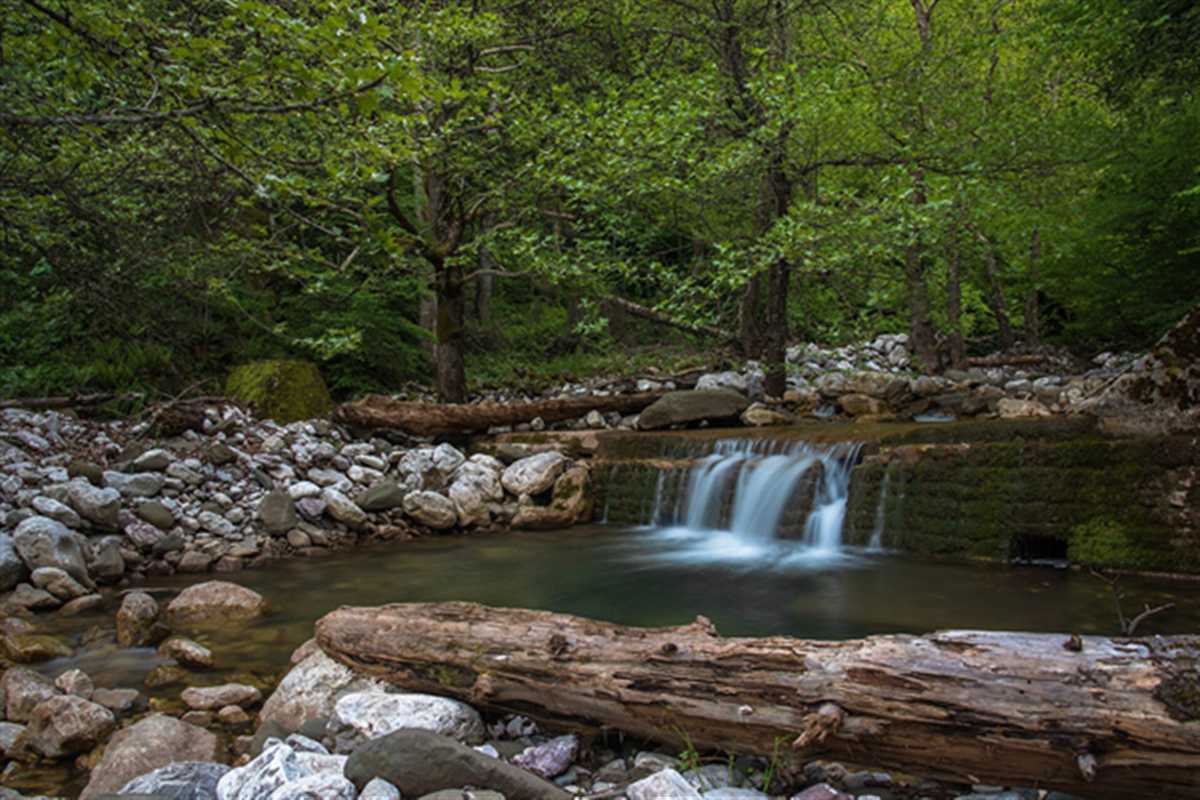
Featured photo: M.Perdiou, CC BY-SA 4.0, via Wikimedia Commons.