
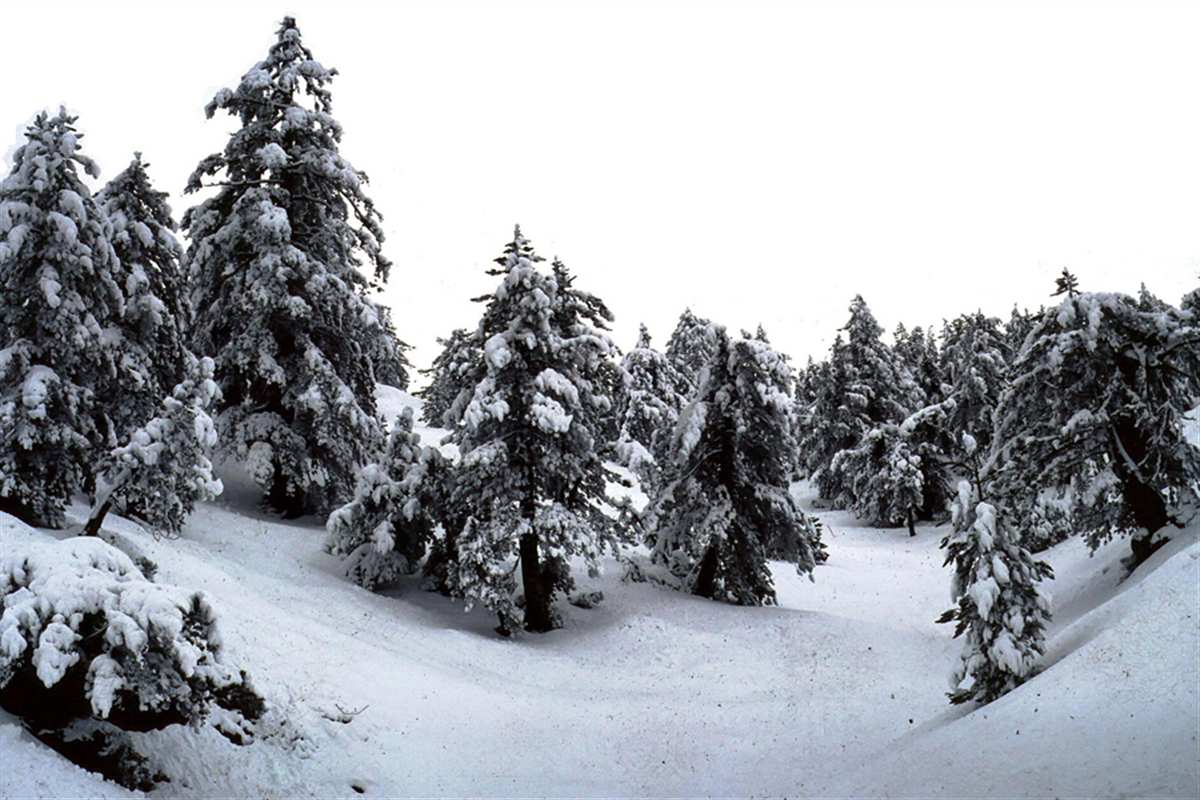
Greece in winter covers snow in the mountains, the ski centres of Parnassus, Falakro and Elatochori, the museums and sites of Athens and Delphi, Meteora, Christmas customs, Epiphany and the carnival of Apokries. The post is one of the Greece Tours on Greece Ville, listed with the other Central Greece tours and Northern Greece tours.
This post covers what the season is, snow and ski centres, museums and sites, Pelion and Zagori under snow, New Year and Epiphany customs, carnival, the islands, storms, birds, the olive harvest and thermal springs. Common questions come last.
What is Greece in winter?
Greece in winter is a season of wet coastal lowlands and snowbound mountains, joined by an Orthodox calendar of festive customs that runs from Christmas to Epiphany. Its landscape, villages, ski centres and ancient sites change with altitude.
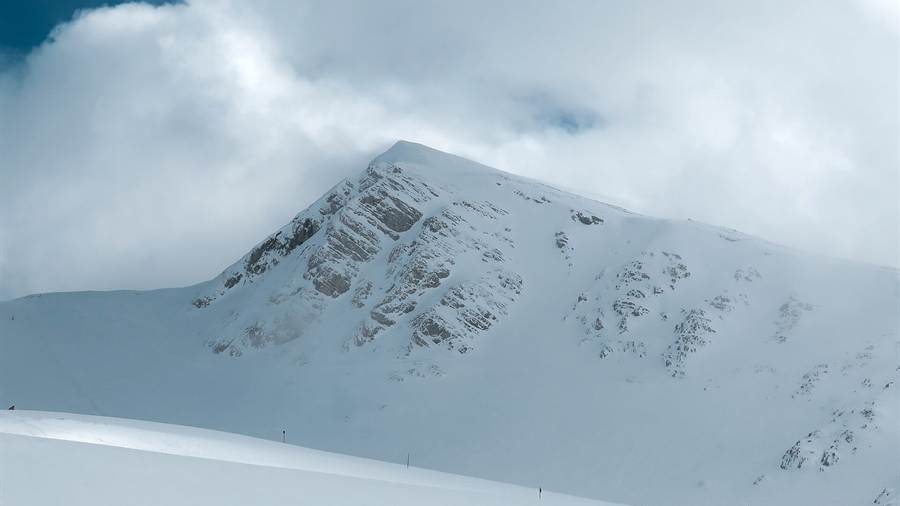
A Mediterranean climate receives nearly all of its precipitation during winter and spring. That pattern explains why the wet months of the Greek year sit in the cold half of the calendar.
The country has named four seasons and winter tourism as a goal for its visitor economy. The idea places mountain villages, ski centres and festive towns beside the summer coasts of the usual picture.
Public holidays set the festive frame. Greek law lists the Nativity on 25 December and the Synaxis of the Theotokos on 26 December among its fixed days, so Christmas fills the calendar before the new year.
Greece in winter also changes with height above the sea. Ranges such as the Pindus and Olympus carry snow while the Aegean coast stays wet, and the sections below follow that gradient from peak to shore.
- Climate: The wet months fall in winter and spring of a Mediterranean year.
- Mountains: The high ranges hold the snow and the ski centres of the cold months.
- Calendar: Christmas, New Year and Epiphany shape the festive weeks of the Orthodox year.
- Policy: The state has named four seasons and winter tourism as a national aim.
This part of the post covers the winter landscape and the festive customs, from snow and ski slopes to carols and the Epiphany blessing of Greece in winter.
Where does snow fall in Greece in winter?
Greece in winter sees snow mainly on the high ranges, such as the Pindus and Olympus, while the coastal lowlands keep rain and mild air. Height above the sea and a northern aspect decide how long the white cover lasts.
Mount Olympus shows the pattern in full. Around its highest zone the winds gather snow into drifts, and in the deep ravines the snow lasts through the whole year without melting away.
A general rule from snow science applies to the Greek ranges. A north-facing slope receives less sunlight, so its snow line sits lower than on the sun-facing side, and the snow there stays longer.
Coasts follow another rule. Areas near the sea can carry a lower snow line than interior land at the same height and latitude, because winter snowfall is heavier close to the water.
On Olympus about half of the yearly precipitation falls as rainfall and hailstorms in summer and the rest as snowfall in winter, so Greece in winter is the snow season of the massif.
Mountain towns live from the snow. Metsovo in the Pindus has an economy of agriculture and tourism, and its tourism flourishes in winter. The Falakro post covers the ski mountain of the Drama regional unit.
- Olympus: Wind gathers the snow into drifts on the highest zone of the massif.
- Ravines: Deep gullies on Olympus keep their snow through the whole year.
- Aspect: North-facing slopes carry a lower snow line than sun-facing ones.
- Metsovo: The Pindus town sees its tourism flourish in winter.
Snow marks Greece in winter by altitude, by aspect and by distance from the sea, not by latitude alone, as the rules above show.
Which mountain ski centres operate in Greece in winter, such as Parnassus, Falakro and Elatochori?
Greece in winter opens ski centres on Parnassus, Falakro and Elatochori, each set on its own mountain with its own base and summit. Parnassos in central Greece is the best known, Falakro serves the north-east and Elatochori the Pierian Mountains.
Mount Parnassus has very cold winters and cool summers, according to the data of the World Meteorological Organization station in the doline of Vathistalos. That cold feeds the slopes of the Parnassos Ski Centre.
The Parnassos centre has two main areas, Kelaria and Fterrolakas. It has no accommodation of its own, so in Greece in winter skiers sleep in nearby villages and hire equipment at the centre.
The Elatochori centre lies on the south-eastern slopes of the Pierian Mountains. A dining room and a chalet at its base cover a total of 450 square metres and hold more than 400 people.
The Elatochori ski resort post covers the Pierian centre in depth. Each ski centre of Greece in winter has its own mountain, its own approach road and its own village base.
- Parnassos: Two main areas, Kelaria and Fterrolakas, form an alpine centre near Delphi.
- Weather: Parnassus has very cold winters and cool summers at its Vathistalos station.
- Elatochori: A base dining room and chalet of 450 square metres holds over 400 people.
- Falakro: A ski resort works on the north-eastern mountain of the Drama unit.
The ski centres show the alpine side of Greece in winter. Each depends on a different range, so snow conditions differ from one mountain to the next.
How do the museums of Athens work in Greece in winter?
Greece in winter turns the museums of Athens into the main shelter from rain, with the National Archaeological Museum and the Acropolis Museum holding the great collections under a roof. Their long histories show how the city built them for permanent display.
The Acropolis Museum was built to house every artifact found on the rock and on its surrounding slopes. It also lies over the ruins of part of Roman and early Byzantine Athens.
The first museum on the Acropolis was completed in 1874, and later digs soon outgrew it. Successive excavations uncovered new artifacts that significantly exceeded the original capacity of the building.
The site finally chosen was the unused Camp Makrygianni gendarmerie barracks, opposite the Theater of Dionysus. The barracks stood on public land, and only a limited number of expropriations of surrounding houses were needed.
The National Archaeological Museum stands in the Exarcheia area of central Athens, with its entrance on Patission Street. Its Mycenaean rooms hold the golden funerary masks that covered the faces of deceased nobles.
- Acropolis Museum: The building holds every artifact found on the rock and its slopes.
- Ruins: The museum lies over part of Roman and early Byzantine Athens.
- Site: The barracks of Camp Makrygianni stand opposite the Theater of Dionysus.
- National museum: Its entrance lies on Patission Street in the Exarcheia area.
For Greece in winter, the museums of Athens offer a reliable route into ancient Greece, with the finds of the open-air sites gathered under one roof for a wet day in the city.
How do the archaeological sites of Delphi and Epidaurus look in Greece in winter?
Greece in winter leaves Delphi and Epidaurus quiet, with no festival performances in the theatre of Epidaurus and a cold mountain wind at Delphi. The stone of the stadium, the tholos and the theatre stands bare against the slopes behind it.
The Stadium of Delphi overlooks the sanctuary of Apollo. It dates to the late fourth century BC or after the Galatian attacks, and held the track and field sports of the Pythian Games.
The Charioteer of Delphi is a bronze statue of about 470 BC that stands 1.8 metres tall. It survived because debris from the great earthquake of 373 BC had buried it.
The statue honoured a victory in the Pythian Games and was dedicated at the Sanctuary of Apollo. Excavators discovered it in 1896, and it ranks today among the finest surviving examples of the Severe style.
Epidaurus lies on the Argolid Peninsula by the Saronic Gulf. The Athens Epidaurus Festival runs in the summer months, so in Greece in winter the theatre of Epidaurus stays empty of crowds and stage sets.
- Stadium: The stadium of Delphi overlooks the sanctuary of Apollo.
- Charioteer: The bronze driver dates from around 470 BC and is 1.8 metres tall.
- Discovery: Excavators found the statue at Delphi in 1896.
- Festival: The Epidaurus festival belongs to the summer months, not to the winter.
Both sites keep their ruins in place through the cold months, which makes Greece in winter a season of bare stone and clear lines. The theatre stands at the southeast end of the sanctuary of Asclepius.
How do Mount Pelion and the Zagori villages look under snow in Greece in winter?
Greece in winter dresses Mount Pelion and the Zagori villages in snow, with stone mansions and forest slopes under white. Pelion keeps winter rooms in its old mansions, while Zagori stands beneath the snow-capped Mount Tymphe and the hills of Epirus.
At Makrinitsa on Pelion the Topali Mansion shows how winter shaped the house. The ground floor held storage rooms, while the family lived on the first floor in winter and on the second floor in summer.
The mansion is strongly fortified, with battlements and a defensive turret on the roof. Its doors are small, wooden and reinforced with iron bars, and its layout follows the Greek capital letter gamma.
The Topali family donated the mansion to the community of Makrinitsa in 1932. Repairs followed in 1957 and 1977, and a long restoration between 1988 and 1994 prepared it for its present use.
Zagori lies in the Pindus beneath the snow-capped Mount Tymphe. In Greece in winter the stone villages sit low under the peaks, and the white summits mark the horizon of the whole region.
- Winter floor: The family of the Topali Mansion lived on the first floor in winter.
- Defence: Battlements and a turret fortify the mansion at Makrinitsa.
- Donation: The Topali family gave the building to the community in 1932.
- Zagori: The villages face the snow-capped Mount Tymphe.
Snow on Pelion and Zagori shows Greece in winter as a local season, with each house and village shaped by stone, shelter and a mountain wall behind it and by the cold of the long season.
How does Meteora look in Greece in winter, in fog and frost?
Greece in winter gives Meteora a stark outline, with sandstone and conglomerate pillars rising over the Thessalian plain and the Pineios valley. Cold air and bare rock around the monasteries make each pillar read as a separate tower, set apart from the next.
The monasteries did not appear at once. By the late eleventh century a rudimentary monastic state called the Skete of Stagoi had formed around the still-standing church of the Theotokos.
The monastery of Varlaam takes its name from a monk who scaled the rocks in 1350 and began construction. It is the second largest monastery of Meteora, and its rock stands out in Greece in winter.
By the end of the 1100s an ascetic community had flocked to Meteora. In Greece in winter that long history of hermits and monks still shapes how visitors read the rock towers.
The Holy Trinity monastery sits 570 metres above sea level. A road runs up the back of the cliff, and the monastery can also be reached through tunnels and 130 steps of stone.
The summit of the Holy Trinity rock holds a garden of 0.8 hectares. The Saint Stephen monastery stands apart from it at 575 metres above sea level, and both rise clear of the plain.
- Rock: Sandstone and conglomerate form the pillars of Meteora.
- Skete: The Skete of Stagoi formed around the church of the Theotokos.
- Holy Trinity: The monastery stands 570 metres above sea level.
- Saint Stephen: The monastery stands 575 metres above sea level.
Bare rock and cold air define the outline, so Meteora shows Greece in winter as a place of height and stone.
Which Christmas customs belong to Greece in winter (kalanda carols, decorated boats)?
Greece in winter brings the kalanda carols, sung by children who go from house to house with triangles, and the decorated Christmas ship of Thessaloniki. Both customs belong to the weeks between Christmas Eve and the feast of Epiphany.
Greek tradition calls for children to walk with triangles on Christmas Eve, New Year’s Eve and Epiphany Eve. They sing the folk carols called the kalanda, a word that comes from the Roman calends.
There are separate carols for each of the three great feasts. They refer to the Nativity, to Saint Basil and the New Year, and to the baptism of Jesus in the River Jordan.
In older times the singers asked for edible gifts such as dried fruit, eggs, nuts or sweets. During the twentieth century money gifts replaced them, and marching bands, choirs and school students now sing as well.
The oldest known carol, the Byzantine Carol, dates to the beginning of the High Middle Ages, around 1000, and each region of Greece in winter sings its own versions.
Thessaloniki decorates a giant Christmas ship beside the Christmas tree in Aristotelous Square. The ship is a Greek variant of the Christmas tree, and both stand over 20 metres tall.
- Triangles: Children carry triangles from house to house with the carols.
- Three carols: Separate songs mark the Nativity, Saint Basil and Epiphany.
- Gifts: Sweets, nuts and eggs gave way to money in the twentieth century.
- Ship: Thessaloniki sets up a giant Christmas ship beside its tree.
The kalanda and the ship show how Greece in winter keeps older sea and street traditions beside the modern Christmas tree, from the doorstep to the harbour front.
What is the vasilopita and the feast of Saint Basil at New Year in Greece in winter?
Greece in winter marks 1 January with the vasilopita, the New Year bread of Saint Basil, and with the feast of the saint himself. Tradition holds that Basil handed money to the poor in baked loaves, the story behind the hidden coin.
Basil of Caesarea lived from about 330 to 379 and served as bishop of Caesarea Mazaca in Cappadocia from 370. The Orthodox churches honour him as one of the Great Hierarchs.
In Greek tradition Basil brings gifts to children on 1 January. His feast day is also a time to visit relatives, sing New Year carols and set an extra place at the table.
The vasilopita name joins the Greek words for king and pie, and it was reinterpreted as Basil’s cake. The scholar Margaret Hasluck, writing in 1927, called the saint link a false etymology.
Tradition tells of a siege of Caesarea. The citizens gave their gold and jewellery as ransom, the enemy withdrew, and Basil baked the jewellery into loaves so that each family received its own share.
- Saint: Basil of Caesarea lived from about 330 to 379 in Cappadocia and is honoured as a Great Hierarch.
- Gifts: Tradition has Basil bring presents to children on 1 January.
- Name: The word joins king and pie but was reread as Basil’s cake.
- Cyprus: The island of Cyprus calls the same cake vasilopoulla.
The vasilopita turns Greece in winter into a season of shared food, with the coin, the loaf and the saint joined in one old story that families retell each year.
What is the Epiphany blessing of the waters in Greece in winter?
Greece in winter closes its festive weeks with the Epiphany blessing of the waters on 6 January, when a priest throws a cross into the sea, a river or a lake and men dive to retrieve it. Tradition holds that the finder gains luck.
Churches in Greece call the feast Theophany or Phota. The Greek Church uses the Revised Julian calendar, which coincides with the Gregorian calendar until 2800, so Epiphany falls on 6 January.
The eve of the feast is called Paramony. It is a strict fast day, and the faithful who are able refrain from food until the first star appears, when a meal with wine and oil is allowed.
The Great Blessing happens twice. It takes place on the eve inside the church, at the font, and then again on the feast day outdoors at a body of living water.
The custom marks the end of the traditional ban on sailing, as the stormy winter seas are cleansed of the mischievous kallikantzaroi. In parts of western Macedonia it is the biggest festival of the year.
- Calendar: The Greek Church uses the Revised Julian calendar, which matches the Gregorian until 2800.
- Eve: Paramony is a strict fast day until the first star.
- Blessing: The rite takes place twice, first indoors and then outdoors.
- Sailing: The feast ends the traditional ban on sailing.
The blessing closes the festive weeks and returns the sea to the sailors, so Greece in winter ends its round of customs at the water’s edge, where the first sailing of the new season begins.
What is Apokries, the Greek carnival, and how do Patras and Xanthi keep it in Greece in winter?
Greece in winter includes Apokries, the carnival season that leads into Lent. Apokreo means leave-taking from meat, and the church marks that change of diet after its first Sunday. Patras holds the largest carnival in the country, while Xanthi keeps a spring one.
The Triodion, the church book for this season, places the change of diet on the eighth Sunday before Easter. The next week is called Tyrine, when milk and dairy products are allowed but meat is not.
The church officially discourages the carnival as a pagan remnant, yet the festivities stay very popular. Clean Monday opens Great Lent, and the Patras events run up to it from Saint Anthony’s feast on 17 January.
The Patras Carnival, a highlight of Greece in winter, first took place in 1829. A town crier opens the event with a satirical message. The mayor then declares the start from the balcony of the Apollon theatre.
Xanthi stages an annual spring carnival that plays a significant role in the city’s economy. Its programme holds concerts, theatre plays, exhibitions, a cycling event and street games. The Xanthi tour post covers the city.
- Treasure hunt: Groups answer questions on history, philosophy and mathematics and follow hidden clues through the town.
- Group size: A carnival group numbers between 50 and 300 people, each with its own name and costume theme.
- Night parade: On Saturday evening, a procession known as the Nihterini Podarati takes place, which means the night parade on foot.
- Farewell: The ritual burning of the carnival king takes place at the Saint Nikolaos Street pier in the harbour.
The Grand Parade on the Sunday before Clean Monday gathers between 35 and 40 thousand participants and reaches viewers by television, so that weekend closes the carnival season of Greece in winter.
How do the islands look in Greece in winter?
Greece in winter changes the islands through rain and cool sea air. Mykonos, Naxos, Chios and Hydra each show a different side of the season, from a pelican mascot and wetter inland hills to a January low of 7 °C and stored rainwater.
Mykonos has a population of nearly 12,500, and the main town of Chora holds the bulk of it. The island sits in the Cyclades, where the Aegean Sea strongly influences the weather in Greece in winter.
Mykonos has had Petros the Pelican as its official mascot for over 60 years. He took up permanent residence after a storm in 1954, and the islanders later elected a successor to carry on his legacy.
Naxos has a Mediterranean climate in places and a hot semi-arid climate elsewhere, depending on location. Inland parts of Naxos have much wetter, cooler winters because of their higher elevation.
Chios has a warm and moderate climate, steadied by the surrounding sea. Average temperatures reach a winter low of 7 °C in January, although readings below freezing can sometimes be encountered on the island.
- Name: The name of Hydra comes from ancient springs, yet the island is now almost dry.
- Supply: Hydra imports its water by boat from the Greek mainland.
- Plant: A desalination plant opened on the island in 2014.
- Cisterns: Local people store winter rainfall in cisterns beneath their houses.
Winter rain fills those cisterns, so the cold months of Greece in winter supply the drinking water that island households use later in the year, long after the rain has ended.
How do winter storms and Mediterranean cyclones shape the sea in Greece in winter?
Greece in winter meets storms from the Mediterranean, including medicanes, the tropical-like cyclones that form over warm water. Their main danger is torrential rain and flash floods rather than destructive wind, and the Hellenic national weather service watches the whole sea.
Medicanes were first identified in the 1980s, when satellite coverage showed tropical-looking low pressures with a cyclonic eye. Rare storms have reached the strength of a Category 1 hurricane.
One survey counted 67 tropical-like cyclones of tropical storm strength or higher between 1947 and 2014. They form mainly over the western and central Mediterranean, and the area east of Crete is almost free of them.
The whole Mediterranean lies within the Greek area of responsibility, with the Hellenic National Meteorological Service as governing agency. It judges a medicane by continuous cloud cover and a symmetric shape around a clearly visible eye.
Medicane Ianos struck Greece on 17 and 18 September 2020 and reached Category 2 intensity. It flooded Karditsa and Mouzaki and caused heavy agricultural damage in rural areas north of Athens.
- Origin: Ianos grew from a low-pressure area over the Gulf of Sidra while moving over warm waters.
- Winds: A survey of 37 medicanes found maximum sustained winds between 47 and 180 km/h.
- Hazard: The main danger of a medicane is torrential rain and flash flooding, not wind damage.
- Naming: No agency is officially responsible for monitoring medicanes or for naming them.
The Hellenic National Meteorological Service uses the phrase Mediterranean tropical-like Hurricane in its annual bulletin, which makes the word medicane quasi-official for Greece in winter and for every other season.
Which wetland birds winter at Lake Kerkini and the lagoons in Greece in winter?
Greece in winter brings waterbirds to Lake Kerkini and the northern lagoons, where pelicans rest along the migratory routes. The Dalmatian pelican moves between breeding and overwintering areas, and the Axios Delta has winters cold and wet, yet its waters almost never freeze.
Lake Kerkini lies in Central Macedonia, and its surroundings hold a herd of buffalo besides the birds. The Lake Kerkini tour post covers the reservoir and its wildlife.
The Dalmatian pelican migrates short-to-medium distances between breeding and overwintering areas. Adults take on a drabber plumage in winter, which makes them resemble the great white pelican, and fish form the bulk of the diet.
Small Prespa Lake is shared between Greece and Albania, and its Greek surface covers 42.5 square kilometres. The lake counts as an important wetland that favours breeding and feeding of rare water bird species.
The Axios Delta National Park lies on the west coast of the Thermaic Gulf and covers 338 square kilometres. It is a Ramsar site, an Important Bird Area and part of the Natura 2000 network.
- Wetlands: The park includes the Kalochori lagoon, the Alyki Kitrous lagoon and the Nea Agathoupoli wetland.
- Regions: It lies within five regional units: Pieria, Imathia, Pella, Kilkis and Thessaloniki.
- Winter: Snowfall is infrequent and the waters almost never freeze, so extreme weather is rarely recorded in winter.
- Rain: Average annual precipitation is 442.5 mm, and the bulk of the rain falls in autumn.
The park lies on one of the main migratory routes for birds in Europe, and its glassworts, reeds and bulrushes shape the wetland that hosts birds in Greece in winter.
How does the olive harvest run through Greece in winter?
Greece in winter follows an olive harvest that opens in autumn, from October onwards. Where the ground is too steep for machines, Greek growers pick by hand, and gales and long rains during the gathering season harm the crop.
In places in Italy, Croatia and Greece, hand picking replaces machines because the terrain is too mountainous. The fruit is not bruised, which leads to a superior finished product.
The method involves sawing off branches, a step that helps future production. The amount of oil in the fruit varies greatly by cultivar, and the pericarp runs at 60 to 70 percent oil.
Olive trees prefer calcareous soils and grow best on limestone slopes and crags and in coastal climates. In rich soils they are predisposed to disease and give poor-quality oil, as Pliny the Elder noted.
Frost limits olive growing at the northern edge of the zone, and gales and long rains in the gathering season cause damage. In the colder Mediterranean hinterland, sweet chestnut replaces the olive as the main fruit.
- Yield: A tree gives 1.5 to 2.2 kg of oil per year in a typical harvest.
- Regrowth: When extreme cold kills the above-ground parts, the rootstock can survive and send up new shoots.
- Triad: The olive forms one part of the basic Mediterranean triad with wheat and the grape.
- Cuisine: Olive oil is the ancient and defining element in Greek cooking.
The Crete olive oil tour post covers olive groves and oil on Crete, while this part follows the harvest across Greece in winter.
Which winter produce and dishes belong to Greece in winter (citrus, chestnuts, pulses)?
Greece in winter draws on citrus, chestnuts and pulses. Crete grows oranges and citrons, the sweet chestnut gives a starchy nut used in cooking since ancient times, the chickpea is an early legume, and diples, fried dough in syrup, belong to New Year.
Crete cultivates oranges and citrons besides its olive groves and vines. Lemons reached Europe in the south of Italy by the second century AD at the latest, and Mediterranean cooks preserve them in jars or barrels of salt.
Lemon juice ranks among the important ingredients of Greek cuisine. Horta, boiled wild greens, arrive dressed with olive oil and fresh lemon juice, a plain dish for Greece in winter.
The sweet chestnut is native to Southern Europe and Anatolia. Pollen data place its first spread by human activity around 2100 to 2050 BC in Anatolia, northeastern Greece and southeastern Bulgaria.
A chestnut grown from seed takes 20 years or more before it bears fruit, but a grafted cultivar can start within five years. The tree is distantly related to the horse chestnut, whose conkers are inedible.
The chickpea is a pulse, with two or three peas in each seedpod. The Kabuli type is the main variety in the Mediterranean, larger than the Desi type, tan in colour and smooth in coat.
- Diples: This Peloponnese dessert is made of thin dough strips, fried in hot oil and dipped in syrup.
- Syrup: The syrup is made of sugar or honey.
- Occasions: Diples are served at weddings and at New Year’s celebrations.
- Shapes: The common shapes are bow ties and spirals.
Together these foods tie the kitchen of Greece in winter to long-cultivated plants: the chestnut since ancient times, the chickpea as an early legume and the lemon since Roman times.
Which thermal springs work in Greece in winter?
Greece in winter offers thermal springs at spa towns across the mainland and islands. The list of Greek spa towns names Aidipsos, Kamena Vourla, Loutraki, Methana and Thermopylae, besides island spas on Milos, Kimolos, Kythnos, Nisyros, Ikaria and Lesbos.
Hot spring water holds large amounts of dissolved minerals. At one end are acid sulfate springs, where the pH value falls as low as 0.8, and at the other end are alkaline chloride springs saturated with silica. Other springs hold abundant dissolved iron.
No universally accepted definition of a hot spring exists. One definition sets the threshold above human body temperature, another above 21 °C, and a third above 50 °C, so the label depends on the source.
Humans have used hot springs for bathing and relaxation for thousands of years. Other springs are hot enough that immersion can be harmful, leading to scalding, so the temperature of a pool matters.
The list also names Agkistro and Sidirokastro in Serres, Krinides in Kavala and Thermi in Thessaloniki. Each place adds a northern Greek spa to the map of Greece in winter.
- Euboea: Aidipsos stands on the island of Euboea and appears first among the spa towns of the list.
- Methana: The town sits on a volcanic peninsula that belongs administratively to the Attica region.
- Islands: Spas are listed on Milos, Kimolos, Kythnos, Nisyros, Ikaria and Lesbos.
- Pella: The Pozar springs appear under Loutrochori, in the Aridaia area of Pella.
The Pozar thermal baths post covers the springs near Aridaia, one stop among the spa towns of the list, while this part keeps to the wider map of Greece in winter.
How do the mountain towns of Epirus and Macedonia live through Greece in winter?
Greece in winter reaches its coldest and wettest in the mountain towns of Epirus and Macedonia. Ioannina has frequent frosts, Florina draws winter tourism from heavy snowfalls, the lake of Kastoria softens the cold, and Grevena has cold winters with frequent snowfalls.
Ioannina has a borderline hot-summer Mediterranean and humid subtropical climate. Its winters are wet and colder than on the coast, with frequent frosts and occasional snowfall, a pattern of Greece in winter inland.
Metsovo stands in the Pindus mountains of Epirus, between Ioannina to the west and Meteora to the east. Greek National Road 6 and the A2 motorway serve the town.
The economy of Florina is boosted by summer and mostly winter tourism, because of the heavy snowfalls and the nearby ski resorts. The town is also the gateway to the Prespa Lakes.
Kastoria has a humid subtropical climate. The lake has a moderating effect, so the city records less extreme temperatures than the rest of Western Macedonia, and limestone mountains surround its valley.
- Grevena: The climate is Mediterranean continental, with a great daily swing in temperature.
- Edessa: Its tourism rests on ancient sights, the waterfalls and winter sports.
- Samarina: This Pindus village stands at one of the highest elevations in Greece.
- Pindus: The traditional economy there rested on sheep raised by Sarakatsani and Aromanian shepherds.
Each of these towns shows a different mountain winter, and the Pindus ties them together as the range that runs through Epirus and Macedonia in Greece in winter.
What do travellers ask about Greece in winter?
Greece in winter raises questions about island birds, mountain snow, the first day of Lent and the winds of the sea. The answers below rest on saved records of Gavdos, Papingo, Clean Monday and the sirocco, and each reply stays with facts.
Which southern islands record birds in Greece in winter?
Gavdos lies south of Crete in the regional unit of Chania, and Gavdos and the islet of Gavdopoula are covered in phrygana, low-lying shrubs. BirdLife International has designated both an Important Bird Area, and both are stops for migrating birds in Greece in winter.
How heavy is the snow at Papingo in Greece in winter?
Papingo stands near the northern end of the Vikos Gorge, inside the Vikos-Aoos National Park. Its climate is Mediterranean turning to continental, with heavy snowfalls in winter, while considerable rain and humidity mark the other seasons, so the snow of Greece in winter is heavy there.
What does Clean Monday mean in Greece in winter?
Clean Monday signifies the first day of the Forty Days of Great Lent. Meals then focus on a vegan type diet that includes fish, with the exclusion of oil on certain days. The carnival season of Greece in winter ends before that day begins.
Which wind brings wet weather to Greece in winter?
The sirocco comes from the Sahara and brings storms to the Mediterranean Sea and warm wet weather to Southern Europe. It picks up moisture over the sea, and winds of up to 100 km/h are common in autumn and spring, peaking in March and November.
Featured photo: Harrygouvas, CC BY-SA 4.0, via Wikimedia Commons.