
Greece shore excursions are the trips cruise passengers take during a port call in Greece, from Piraeus to the Acropolis and from the island harbours to Delos, Lindos, Knossos and Olympia. The page is part of the Greece Tours on Greece Ville.
This page covers what Greece shore excursions are and the ports one by one, from Piraeus and the Aegean islands to the Ionian ports, Crete and the mainland. Tender and docking ports and common questions come last. Each section links to the Greece Ville posts on single tours.
What are Greece shore excursions and how do cruise calls at Greek ports work?
Greece shore excursions are organised land trips that cruise passengers take from a Greek port while the ship waits in harbour or at anchor. They connect ports such as Piraeus, Santorini, Mykonos, Rhodes, Kos and Patmos with nearby sites and towns.
The first vessel built exclusively for luxury cruising was Prinzessin Victoria Luise, designed by Albert Ballin and completed in 1900. Greece shore excursions belong to a trade that grew from voyages like hers.
The SS Ravenna, built in 1880, became the first ship with a total steel superstructure. Larger and more luxurious ships followed as the market for cruise holidays expanded.
From the late 19th century the emphasis of the cruise industry gradually shifted from the Mediterranean to the Caribbean. Greek harbours nevertheless remained calls on Mediterranean itineraries and still receive large ships.
For the 2004 Olympic Games, 13 cruise ships docked in Piraeus as floating hotels. Piraeus was the top cruise destination in Greece for the tenth consecutive year, ahead of Santorini, Mykonos, Rhodes and Crete.
In 2019 MedCruise named Piraeus the Best Cruise Port in the Eastern Mediterranean Region. Greece shore excursions that start there use a harbour with a long record of cruise traffic.
- Television: The series The Love Boat, shown from 1977 to 1986, helped popularise cruising among couples.
- Megaship: The SS France, mothballed in 1974, was relaunched as SS Norway in 1980 and became the first mega-cruise ship.
- Piraeus: The port lies eight kilometres southwest of Athens city centre.
- Mykonos: The island lies in the Cyclades, between Tinos, Syros, Paros and Naxos.
The sections below follow the main ports from Piraeus to the island calls of the Aegean, with the sites that Greece shore excursions reach from each one.


How do Greece shore excursions start at the port of Piraeus?
Greece shore excursions from Piraeus start at the main harbour of Athens, which has served the city since ancient times. The port stands on the Saronic Gulf, grew from three natural harbours in the old city and is the largest port in Greece.
Piraeus has been inhabited since at least the 26th century BC. In prehistoric times it was an island, joined to the mainland only by a low stretch of land that sea water flooded.
Ancient Piraeus had three deep-water harbours: the main port of Cantharus and the smaller basins of Zea and Munichia. Greece shore excursions now begin on the same coast, on the east side of the Saronic Gulf.
The Themistoclean Walls, finished in 471 BC, turned Piraeus into a great military and commercial harbour. After the Peloponnesian War, General Conon rebuilt the walls in 393 BC.
Excavations at Pasalimani revealed the Skeuotheke, an ancient structure where ship rigging equipment was stored. The architect Philon designed it, and its ruins lie at Zea harbour, one of the smaller basins.
A duty of 2 percent was levied on goods passing through the port. In 399 BC, after the Peloponnesian War, the city still collected 1,800 talents in harbour dues.
- Passengers: The port served about 4.37 million passengers in 2020 and ranked as the 24th largest passenger port in the world.
- Ownership: COSCO bought 51% of the port from the Hellenic Republic Asset Development Fund in 2016.
- Shipping: The offices of Greek shipowners centre on the street Akti Miaouli.
- Ruins: Rondini Square is an archaeological site that forms part of the ancient city.
The Piraeus shore excursion post covers a visit built around the port, its harbours and its districts. Greece shore excursions from here then branch inland to Athens and along the coast.
How do Greece shore excursions reach the Acropolis from Piraeus?
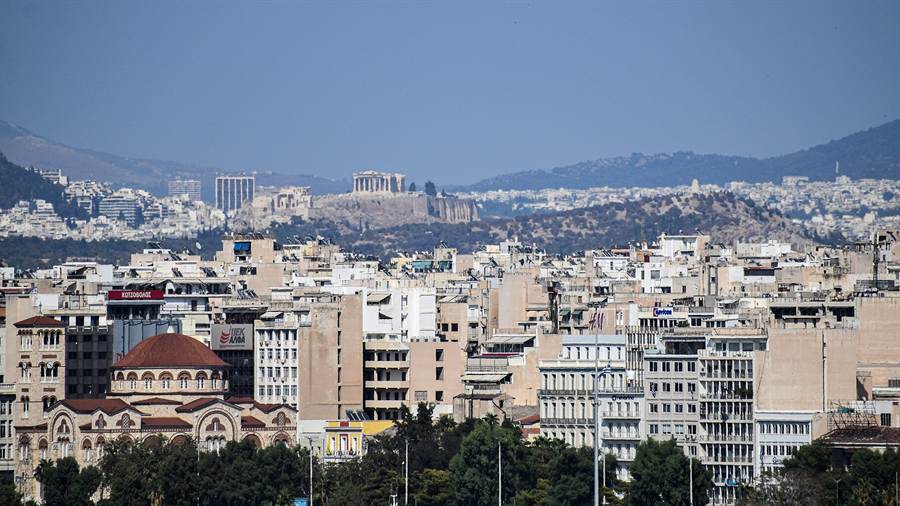
Greece shore excursions to the Acropolis lead from the harbour at Piraeus to an ancient citadel on a rocky outcrop above Athens. The rock holds the Parthenon and the temples and gateway that Pericles had built in the fifth century BC.
Mnesicles began the Propylaea, a monumental gate of Pentelic marble at the western end of the rock, in 437 BC. Its Doric colonnades were almost finished in 432 BC.
Behind the Propylaea stood the bronze Athena Promachos, made between 450 BC and 448 BC. The statue was nine metres tall, and the gilt tip of its lance caught the light for crews rounding Cape Sounion.
Phidias made the gold and ivory statue of Athena Parthenos. It was consecrated in 438 BCE and cost an estimated 704 talents. In its right hand it held a statue of Nike, 2 m high.
The tyrant Lachares allegedly had the gold plates removed between 300 and 295 BCE to pay his troops. Pierre-Charles Simart restored the statue from 1846 to 1855 for the Duke of Luynes.
Greece shore excursions today see the result of the Acropolis Restoration Project, which began in 1975 and restored 2,675 tons of architectural members. Of these, 686 stones were reassembled from original fragments.
- Foundation: To level the summit for the Older Parthenon, builders added about 8,000 two-ton blocks of limestone.
- Name: In ancient times the rock was also known as Cecropia, after the legendary Cecrops, the supposed first Athenian king.
- Erechtheion: Richard Pococke published the first reconstruction of the temple in 1745.
- Theatre: The Theatre of Dionysus has seventy-eight rows of seats, and Rousopoulos began excavating it in 1861.
The Acropolis tour post covers a visit to the rock and its monuments. Greece shore excursions from Piraeus treat it as the main stop of the day in Athens.
Where do Greece shore excursions go along the coast beyond Piraeus?
Greece shore excursions along the Attic coast run south to Cape Sounion, the promontory at the southernmost tip of the Attica peninsula. The Temple of Poseidon stands there on a headland, surrounded on three sides by the Aegean Sea.
The original Archaic temple of Poseidon was built of tufa. It is thought to have been destroyed in 480 BC by Persian troops during the invasion of Xerxes I.
At the centre of the later temple was a windowless hall of worship. It held a colossal bronze statue of Poseidon, about six metres tall, which reached to the ceiling.
In 413 BC the Athenians fortified the cape with a wall and towers to protect their grain route from Euboea. Rebel slaves from the silver mines of Laurium later seized the fortress.
The Scottish poet William Falconer was shipwrecked off the cape in 1750, an event shown in the central scene of his poem The Shipwreck. Greece shore excursions to Sounion follow a long line of travellers.
Martin Heidegger visited Sounion in 1962 and wrote of the gleaming-white ruins of the temple. He described the sea breeze among the standing columns as the strings of an invisible lyre.
- Athena: A temple of Athena Souniados was built in 470 BC on a low hill 300 metres northeast of the Poseidon temple.
- Trophy: After Salamis the Athenians placed a captured enemy trireme at Sounion as a trophy to Poseidon.
- Park: The Sounio national park was established in 1974 with a core area of 750 hectares.
- Venetian name: Venetians called the cape Capo Colonne, meaning Cape of Columns.
The Cape Sounion tour post covers the headland, the ruins and the road along the coast. Greece shore excursions here pair the site with the Athens Riviera.
How do Greece shore excursions work when ships anchor off Santorini?
Greece shore excursions on Santorini begin with a tender landing, because large cruise ships anchor in the caldera rather than at a quay. Passengers then climb to Fira, the modern capital, which stands on the rim of the flooded caldera.
Santorini bore its Venetian name since at least the middle of the twelfth century. The geographer Muhammad al-Idrisi made the first mention, and the ancient name Thera was revived in the nineteenth century.
Venetian rule left a Catholic community on the island, which is still the seat of a Catholic bishopric. Greece shore excursions on Santorini therefore pass both Catholic and Orthodox churches.
The cable car from the old port was built by Doppelmayr. Before it opened, Greece shore excursions began with a climb of about 600 steep steps or a mule ride up the cliff to Fira.
When strong earthquakes struck the island in 1956, half the buildings were completely destroyed and a large number suffered repairable damage. The main shock on 9 July had a magnitude of 7.8.
On Santorini the earthquakes killed 53 people and injured another 100. The greatest damage fell on the western side, along the edge of the caldera, especially at Oia.
- Location: Santorini lies about 200 km southeast of the Greek mainland.
- Basement: The volcano sits on a non-volcanic island that measured about 9 by 6 km.
- Cliffs: The inner coast of the caldera drops more than 300 m at its highest.
- Tephra: A deposit of white tephra from the Minoan eruption is up to 60 m thick on Santorini.
The Santorini shore excursion post covers the landing, the town and the first views of the caldera from the cliff.
What do Greece shore excursions show of Santorini beyond Fira?
Greece shore excursions beyond Fira reach the volcanic islands inside the caldera, the ancient city on Mesa Vouno and the village of Oia. Palea Kameni and Nea Kameni formed over two millennia through repeated eruptions of lava and ash.
Under the da Corogna family, Agios Nikolaos Kastell at Oia was one of five local citadels. Greece shore excursions to the north of the island reach that village.
Palea Kameni is a private island with a small church and a hot spring. Because it lacks a good harbour, recreational watercraft rarely stop there, though tourists can swim to it from nearby Nea Kameni.
Pliny the Elder reported the emergence of a new island on 8 July in 19 CE. Nea Kameni later grew nearly round, with a diameter of about two kilometres.
Excavators at Ancient Thera found 760 coins from the 6th century BCE and damaged Daedalic idols from the second half of the 7th century. One idol shows a woman with raised arms, read as a lament.
- Apollo of Thera: The finest kouros from the site dates to the early 6th century BC and carries that name.
- Marble: Its marble and style came from Naxos, because Santorini had no marble quarries.
- Oia steps: A flight of 300 steps leads down from Oia to the small port below.
- Vegetation: Palea Kameni and the larger island to its east are sparsely vegetated with succulent plants.
The Santorini volcano tour post covers the crater walk and the lava islands, which Greece shore excursions link with a view of the cliffs.
What do Greece shore excursions cover on the island of Mykonos?
Greece shore excursions on Mykonos cover the main town, called Chora, and the island around it. Mykonos lies in the Cyclades and measures 85.5 square kilometres, with no rivers and a rocky granite terrain that strong winds have eroded.
Ionians from Athens seem to have followed the first inhabitants in the early 11th century BC. Up until the end of the 18th century, Mykonos prospered as a trading center.
After the death of Alexander the Great, Mykonos joined the League of the Islanders. In 1204, with the fall of Constantinople in the Fourth Crusade, Andrea Ghisi occupied it.
The Ottoman fleet established itself on the island, which the Turks called Mukene. The Panagia Tourliani monastery in Ano Mera has an iconostasis 10.20 metres long, covering all three aisles.
The Archaeological Museum of Mykonos, near the Old Port, was established in 1902 by the Greek Archaeological Service. Greece shore excursions can end at the museum that holds the finds from Rineia.
- Jet set: Mykonos became popular with international jet set tourists in the 1960s.
- Decline: After the opening of the Corinth Canal in 1904, the island economy weakened.
- Rineia: The island lies just west of Delos and has an area of 14 km2.
- Delos: Tour boats go regularly from Mykonos to the nearby island of Delos.
The Mykonos island tour post covers the town, the coast and the villages. Greece shore excursions here pair them with a second stop.
How do Greece shore excursions reach Delos from a Mykonos call?
Greece shore excursions to Delos cross from Mykonos to a small island that was a holy sanctuary for a millennium before Greek myth made it the birthplace of Apollo and Artemis. Its excavations are among the largest in the Mediterranean.
The Archaeological Museum of Delos was built on site in 1904 by the Archaeological Society of Athens. It holds a 5th-century marble statue of Boreas carrying off the princess Oreitheia.
The museum also keeps marble statues of Dioskourides and his wife Kleopatra, who lived on Delos. The statues were unearthed at their former residence and date from 138 BC.
On Greece shore excursions to Delos, the Stoivadeion, dedicated to Dionysus, shows pillars that carry a colossal phallus, the symbol of the god. The southern pillar was erected around 300 BC to celebrate a theatrical win.
The House of the Dolphins takes its name from an atrium mosaic of erotes riding dolphins. Its Phoenician owner also laid a floor mosaic of Tanit in the vestibule.
- Merchants: The Berytian Poseidoniast merchants kept a clubhouse for shipmasters and warehousemen in the late 2nd century BC.
- Rineia: The southern half of nearby Rineia was the necropolis of Delos.
- Writer: Semos of Delos wrote 8 books about the history of the island.
- Inscriptions: Two marble stelae name Israelites on Delos who made offerings to Mount Gerizim.
The Delos tour post covers the crossing, the sacred way and the houses. Greece shore excursions link it with the Mykonos call.
What do Greece shore excursions show in the city of Rhodes?
Greece shore excursions in Rhodes centre on the walled medieval city, the largest active medieval town in Europe with over 6,000 inhabitants. The Central port serves cruise ships, and the old town lies within a belt of fortifications.
Greece shore excursions in Rhodes recall the Colossus, which stood about 70 cubits, or 33 metres, high on a white marble pedestal. After twelve years it was completed in 280 BC and stood for 54 years.
The remains lay on the ground for over 800 years after the earthquake of 226 BC. Even broken, they were so impressive that travellers journeyed to see them.
Philo of Byzantium, author of a treatise on defensive works, stayed in Rhodes in the 3rd century BC and admired its walls. The earthquake of 226 BC damaged them, but they were soon rebuilt.
The fortifications were frozen at 1522, so Rhodes shows the transition between classical medieval and modern fortification. Tradition holds that so great a number of men fell before one gate that the stones were dyed red.
- Earthquake: In 1481 a destructive earthquake caused about 30,000 casualties.
- Gate: The Gate of St Paul was built in the second half of the 15th century to give access to the Kolona harbour.
- Towers: In 1908 the Ottoman administration demolished the side towers to widen the access road.
- Stadium: The stadium on the Acropolis of Rhodes was 210 metres long.
The Rhodes shore excursion post covers the port, the old town and the palace. Greece shore excursions here start inside the walls.
Why do Greece shore excursions from Rhodes go to Lindos?
Greece shore excursions from Rhodes go to Lindos, an archaeological site and fishing village on the east coast, about 40 kilometres south of the city. Its natural citadel is crowned by the temple of Athena Lindia and by a castle of the Knights.
The temple of Athena Lindia was burned in 342 BC and replaced by a new temple in the late 4th century BC. Inside it lie the table of offerings and the base of the cult statue.
The Hellenistic stoa with lateral projecting wings dates from about 200 BC. The Propylaea of the sanctuary, from the 4th century BC, has a wall with five door openings.
The Hellenistic staircase, from the 2nd century BC, leads to the main archaeological area. The Propylaea of the sanctuary has a monumental staircase leading to a D-shaped stoa.
A pentagonal tower on the south side of the castle commanded the harbour and the road from the south of the island. Greece shore excursions to Lindos climb past its walls.
- Sculptor: Chares of Lindos, born on Rhodes, lived from before 305 BC to about 280 BC.
- Roman wall: A Roman inscription says the priest P Aelius Hagetor paid for repairs to the wall.
- Restoration: Italian work covered large surfaces with concrete and damaged the historic record.
- Area: The municipal unit has an area of 178.9 km2.
The Lindos tour post covers the village, the acropolis and the bay. Greece shore excursions to Lindos run across the island from Rhodes.
What do Greece shore excursions offer on the island of Kos?
Greece shore excursions on Kos cover a Dodecanese island whose principal town and port is also called Kos. Kefalos, the westernmost town, lies 43 km from Kos Town and is home to 2,329 inhabitants at the 2021 census.
The Travels of Sir John Mandeville treats Lango and Kos as two distinct islands. Kefalos and its beach settlements form a local community of 2,713 inhabitants, part of the municipal unit of Irakleides.
Greece shore excursions on Kos touch on older research, which held that the island made transparent dresses called coae vestes. Modern research challenges that view, since the term seems to name a silk garment.
At the southern end of the ancient market stood a round building with a Roman dome. A workshop there produced pigments, including Egyptian Blue, and archaeologists found coins and copper statues.
Captain Behram Bey took the castle in January 1523, and the larger fortress was repaired. In the Massacre of Kos, 100 Italian officers who refused to join the Germans were executed.
- Windmill: The town of Kefalos is dominated by the imposing windmill of Papavasilis.
- Prisoners: After the battle of 1943, 1,388 British and 3,145 Italians were mustered in Neratzia Castle.
- Lettuce: Cos lettuce, or romaine, is named after the island.
- Market: An earthquake destroyed the building of the ancient market place in 469 AD.
The Kos island tour post covers the town, the ancient sites and the castle. Greece shore excursions on Kos start at the harbour.
What do Greece shore excursions to Patmos include?
Greece shore excursions to Patmos reach one of the northernmost islands of the Dodecanese, a volcanic island off the west coast of Turkey that Christian pilgrims visit for its link with the apostle John. The municipality counted 3,047 inhabitants in the 2011 census.
The author names himself as simply John in the text and says in Revelation 1:9 that he is on the island of Patmos. He is conventionally called John of Patmos.
The book spans three literary genres: epistolary, apocalyptic and prophetic. Antonio da Correggio painted John on Patmos in frescos made between 1520 and 1522, a subject that Greece shore excursions to Patmos recall.
In the Gospel of John, the Beloved Disciple is one of seven fishermen who caught 153 fish. John is said to have died at Ephesus after AD 98, the only apostle who died naturally.
During the 3rd century BC the settlement of Patmos acquired the form of an acropolis, with a fortification wall and towers. Greece shore excursions to Patmos still climb to the monastery above the port.
- Ferries: Regular ferry services connect Patmos with Karlovassi on Samos, Syros, Leros and Naxos.
- Combined area: The municipality has a land area of 45.039 square kilometres.
- Chora: The capital stands at the highest point of the island, around the monastery.
- Coast: Patmos is situated off the west coast of Turkey, further west than its nearby neighbours.
The Patmos day trip post covers the monastery, the cave and Chora. Greece shore excursions to Patmos fit the island as a single call.
What do Greece shore excursions cover on Corfu?
Greece shore excursions on Corfu land in a city called Kastropolis, or Castle City, because of its two castles. Writer Will Durant claimed that Venetian defences left Corfu as the only part of Greece the Ottomans never conquered.
The two castles of Kastropolis stood against pirate raids and Ottoman invasions in the Middle Ages. Venice held the city for centuries, and the narrow lanes and tall houses of the old town still show its layout.
Experts from ICOMOS judged the layout of the city, together with its Venetian fortifications, a quintessential example of a fortified maritime city. That verdict explains why Greece shore excursions on the island begin with walls and bastions.
The Corfu shore excursion post covers how a ship’s call at the island turns into a day ashore, from the first landing to the first walk through the old town.
A university opened in the city in 1823, founded by Frederick North, the fifth Earl of Guilford, who also served as its first chancellor. It closed when the British protectorate ended, and its old buildings now hold a library and a museum.
- Oldest church: The suburban church of St Jason and St Sosipater is reputedly the oldest church on the island.
- Temples: Kardaki Temple, the Temple of Artemis and the Temple of Hera lie among the ruins of ancient Palaiopolis.
- Archbishops: The city is the seat of a Greek archbishop and a Roman Catholic archbishop.
- Summit: The 1994 European Union summit was held in Corfu.
Greece shore excursions on Corfu therefore pass from castle to church to temple ruin inside one small area, and each stop adds a different century to the walk.
What do Greece shore excursions see in Corfu town?
Greece shore excursions in Corfu town centre on the Old Fortress, whose twin peaks, called Coryphe in Greek, gave the whole town its Western name. The Venetians called the higher western peak Castel a Terra and the eastern peak Castel a Mare.
Defences stood on the promontory by the 6th century AD, after the Ostrogoths destroyed the ancient city of Corcyra. The Corcyreans sheltered inside the walls at the tip of the peninsula and rebuilt their town there.
In 1716 Kara Mustafa Pasha brought the Ottoman fleet to Corfu and placed artillery on the hills of Avrami and Sarocco. The siege failed, and Venice then built new forts on those same hills to protect the old fortress.
In 1537 the Venetians turned women, children and the elderly away from the fortress gates and called them the inutili, meaning the useless. Those left outside died or were enslaved, and the rejection angered the Corfiots.
The Corfu tour post covers the old town streets beyond the fortress, with the squares, churches and Venetian and British quarters that surround it. Greece shore excursions link the two.
- Governors: The Venetian senate elected the governors of the old and new fortresses, and each served a two-year term.
- Oath: Both captains swore never to communicate with each other, in case one persuaded the other into treason.
- Western peak: The Byzantines fortified the higher western peak around the 12th century AD.
- Music: The Hellenic Music Research Lab of the Ionian University works inside the Old Fortress.
Greece shore excursions to the fortress thus meet Byzantine towers, Venetian bastions and a modern research lab within one set of walls, a short walk from the waterfront.
What do Greece shore excursions offer from Corfu to Albania?
Greece shore excursions from Corfu to Albania reach Butrint, an ancient Greek polis of the Chaonian tribe that later became a Roman colony and a Byzantine bishopric. It was declared a National Park under its first director, Auron Tare.
The Chaonians chose an annual leader called the Prostates. Inscriptions from the third century BC describe how the tribe organised itself, and they place Butrint among the major centres of Epirus.
The theatre carries an impressive number of inscriptions on its stones. The inscriptions concern manumissions, the freeing of slaves, and they give a detailed picture of the city in the Hellenistic era. Almost all the names are Greek.
The outer wall of the acropolis ran for 870 m and included bastions and five gates. Two of the main gates were known as the Scean gate and the Lion gate.
The Corfu to Albania day trip post covers the crossing of the channel from the island and the ancient sites on the Albanian shore beyond it. Greece shore excursions on this route add a second country.
- Raid: The Ostrogoths under Indulf raided the Ionian coast in 550 and possibly attacked the city.
- Survival: Butrint survived the Slavic invasions and kept its status as a bishopric without interruption.
- Abandonment: A major earthquake flooded the greater part of the city, and its people left it during the Middle Ages.
- Second port: Onchesmos, now Sarande, was the other ancient port of lower Chaonia.
Greece shore excursions on this route therefore pair a Greek island with a Greek-founded city across the water, and the stones of the theatre keep the record.
How do Greece shore excursions link Katakolo with Olympia?
Greece shore excursions link Katakolo with Olympia across the plain of Elis, where Pyrgos lies 16 km west of the ancient sanctuary. The sanctuary stood in the independent state of Elis, and the Eleans managed the Games that made it famous.
Pisa and Elis, two other villages in the region, contended with Olympia for the management of the precinct. Ancient history records that Olympia won, which suggests that the village and the precinct were not the same place.
Because the Eleans ran the Games, there was sometimes bias in the judging. The Olympic truce guaranteed only safe passage for visitors and did not stop every war in Greece, or even every war at Olympia.
The first major Games at the stadium were said to have taken place in the 720s BCE. When the stadium is used for modern events, temporary stands go up and come down with ease, and the layout stays unaltered.
The Ancient Olympia tour post covers the sanctuary itself, with the temples, the stadium and the museums that hold the finds. Greece shore excursions to Olympia rely on that route.
- Museums: Movable finds from the site are housed in one of its three museums.
- Throne: The statue of Zeus sat on a painted cedarwood throne ornamented with ebony, ivory, gold and precious stones.
- Finger: Tradition holds that Phidias honoured a boy wrestling winner, Pantarkes, on the little finger of Zeus.
- West side: The palaestra, the gymnasion and the Leonidaion lay to the west of the sanctuary.
Greece shore excursions to Olympia thus cover a sanctuary where rival villages, a sculptor’s workshop and a running track all shaped one site.
What do Greece shore excursions do at Argostoli?
Greece shore excursions at Argostoli begin in a bayside town whose municipal unit counted 13,666 residents in the 2021 census. The coastal road leading west from the town was known in the Venetian period as the Piccolo Gyro.
The main ferry port stands next to the new bus station and connects Argostoli with the mainland through Kyllini and with Zakynthos. The Lixouri ferry docks a little further along the quay.
Buses run from the station to Athens by way of Kyllini, Patras and the Corinth Canal bridge. Taxis wait on Plateia Valianos and along the seafront, so Greece shore excursions have simple onward links.
After the Kapodistrias reform of 1997, communities around the town united into a larger municipality. A later reform in 2019 formed the present municipality of Argostoli, which covers the same bay and its villages.
The Kefalonia island tour post covers the wider island beyond the capital, from the shores of the bay to the villages and the coast further inland.
- Ferries: The Lixouri ferry runs once an hour in winter and twice an hour in summer.
- Twin towns: Argostoli is twinned with a town in Serbia and a town in Romania.
- Notable person: The politician Gerasimos Arsenis, born in 1931, came from Argostoli.
- Transport: A summer bus service links the airport with the town centre.
Greece shore excursions on Kefalonia therefore start from a town that works as the hub of the island, with ferries, buses and taxis within a short distance of the quay.
What do Greece shore excursions find on Zakynthos?
Greece shore excursions on Zakynthos visit the third largest of the Ionian Islands, which has a coastline of 123 km. In 459 AD the Vandals under their king Geiseric plundered it and carried off 500 of its local aristocrats.
Before its name changed to Zakynthos, tradition says the island was called Hyrie. Its capital shares the island’s name and is also called Chora, a common name in Greece when an island and its main town share a name.
In 880 the Aghlabids raided Zakynthos but were defeated by the Byzantine navy under Nasar. The Ottomans captured the island in 1478, and Venice later took it and held it until the republic fell.
Dionysios, a saint of the sixteenth century, is the patron saint of Zakynthos. His church and his feast belong to the story of the capital, and Greece shore excursions pass through the town that honours him.
The Zakynthos island tour post covers the island beyond the port, from the capital to the coast and the countryside inland, so Greece shore excursions can extend beyond the quay.
- Refugees: Leonardo III Tocco agreed with Venice to accept 10,000 refugees from the Peloponnese.
- Allies: The island belonged to the autonomous allies of Athens in the Sicilian expedition.
- Shape: The island has the shape of an arrowhead, with its tip pointing northwest.
- Tourists: The capital is popular with Croatian and British tourists.
Greece shore excursions on Zakynthos thus run from a Homeric name to a modern capital, with Venice, Byzantium and the Ottomans in between.
What do Greece shore excursions do in Heraklion?
Greece shore excursions in Heraklion start in the largest city of Crete, which the Moors under Abu Hafs Umar made their capital in 824. They dug a moat around the town and named it the Castle of the Moat.
After the Byzantine reconquest the city remained under Byzantine control for the next 243 years. In 1204 Venice bought it as part of a political deal tied to the Fourth Crusade.
From 1212 the Venetians settled families from Venice on Crete. The mix of two cultures and the stimulus of the Italian Renaissance produced a flowering of letters and the arts known as the Cretan Renaissance.
The Venetian wall stood up to 40 metres thick in places and had seven bastions, with a fortress in the harbour. Beside Lions Square, a Renaissance loggia was built between 1626 and 1628.
The Heraklion tour post covers the city centre, its squares and its Venetian streets, as a base for Greece shore excursions before any trip to the palace outside the city.
- Capital again: Heraklion became the capital of Crete again in 1971, replacing Chania.
- Metropolitan area: The wider metropolitan area held 211,370 people at the 2011 census.
- British zone: Between 1898 and 1908 the city lay in the British zone, and the ancient name was revived.
- Lost church: The Augustinian church of San Salvatore stood in Kornaros Square until it was demolished in 1970.
The Knossos tickets post covers entry to the palace site, and Greece shore excursions to Heraklion can pair the palace with the city.
What do Greece shore excursions see in Souda and Chania?
Greece shore excursions in Souda and Chania reach a harbour city that the Ottoman armada, with 416 ships, attacked in 1645. The Venetian defenders surrendered and were allowed to leave for Souda unharmed, four days before the Ottomans occupied the city.
Christian fleets from Tuscany, Spain, the Pope and Malta were about to sail to the rescue when news of the fall arrived. Their commander, Niccolo Ludovisi, ordered a retreat towards Souda instead. The Christian attack on Chania on 1 October failed.
The first Ottoman victory came on the island of Agioi Theodoroi. Blasio Zulian held it with 30 men, then blew up the fort with himself and his men inside, so the Ottomans took only ruins.
After the fall the Ottomans converted the Church of Saint Nicholas and two other churches to mosques. They also captured 12 galleys in the arsenal, and Yusuf garrisoned the city with 8,000 men.
The Chania walking tour post covers the old harbour, the lanes behind it and the walls that remain around the Venetian town, which Greece shore excursions can cover on foot.
- Byzantine wall: Parts of the Byzantine wall still stand on Sifaka Street.
- Raiders: Saracens destroyed the ancient city of Cydonia in 828, after the Byzantines had reinforced its walls.
- Bastions: The corner bastions included San Salvatore, also called Gritti, and San Dimitrio, also called Schiavo.
- Cost: The new fortifications and a fortress on Thodorou cost a total of 87,000 ducats.
Greece shore excursions to Chania therefore trace a port that Venice fortified, the Ottomans stormed and the fleets of Christian states failed to relieve.
What do Greece shore excursions find at Nafplio?
Greece shore excursions at Nafplio reach a city that the Argives conquered about the time of the Second Messenian War. The Spartans then gave its expelled citizens the town of Methone in Messenia, where they continued to live.
Pausanias records a fountain named Canathus at Nauplia. Tradition says that by washing in it Hera renewed herself every year, and the spring belongs to the oldest layer of the stories of the city.
The city was originally almost isolated by marshes, and landfill projects since the 1970s have nearly doubled its land area. Greece shore excursions now reach a town far larger than its old peninsula.
Visitors come mainly from Athens and other cities of Greece, followed by Germany, France, Scandinavia, Russia, the Balkans and the United States. The mild climate draws visitors in every season of the year.
The Nafplio day trip post covers the old town, the harbour and the fortified hills above it, a compact route for Greece shore excursions.
- Acronauplia: Its walls date from pre-classical times, and later Byzantines, Franks, Venetians and Turks added to the fortifications.
- Ottoman name: The Ottomans also called the town Anaboli.
- Lordship: After the Fourth Crusade the de la Roche family held the lordship of Argos and Nauplia.
- Excursions: Nafplio ranks first for weekend or one-day excursions.
Greece shore excursions to Nafplio thus join a conquered seaport, a sacred spring and a modern town on reclaimed land.
What do Greece shore excursions cover in Thessaloniki?
Greece shore excursions in Thessaloniki arrive at the second largest container port of Greece, which handled 273,282 TEUs. Its passenger terminal is one of the largest in the Aegean Sea basin, and it handled 162,731 passengers in 2007.
The municipality of Thessaloniki is the second largest by population in Greece, after Athens. It had 317,778 residents in 2021 and an area of 19.307 square kilometres, so the city centre is compact.
An equestrian statue of Constantine I, by the sculptor Georgios Dimitriades, stands in Demokratias Square. Other statues honour Eleftherios Venizelos, by Giannis Pappas, and Pavlos Melas, by Natalia Mela.
Around the old railway station, converted factories house the Railway Museum of Thessaloniki and the Water Supply Museum, along with large entertainment venues such as Fix and Vilka. These converted buildings extend the day beyond the waterfront.
The Thessaloniki walking tour post covers the waterfront, the squares and the monuments of the city centre on foot, which suits Greece shore excursions with a limited stay ashore.
- Cultural centre: Moni Lazariston in Stavroupoli holds the Costakis Collection of the Museum of Modern Art and two theatres.
- Open-air stage: The open-air Theater Manos Katrakis stands in Sykies.
- Refugees: The Museum of Refugee Hellenism lies in Neapolis.
- Tobacco: In 1946, 35% of all tobacco companies in Greece were headquartered in the city.
Greece shore excursions in Thessaloniki therefore start at a working port and move quickly to museums, statues and stages inside a compact city.
What do Greece shore excursions cover at Volos and Pelion?
Greece shore excursions at Volos and Pelion begin at a port whose name comes from the Slavic word golo, meaning barren. The city appears again as Golos in 1333, when the Byzantine general John Monomachos captured it in Thessaly.
The Slavic tribe of the Belegezites settled in the area during the seventh century. In 1348 the region fell under Serbian rule, governed by Gregory Preljub, and the Ottomans took it definitively in 1423.
Volos held a famed local fair twice a week during the Ottoman period. That fair supported the growth of the town outside its walls in the late sixteenth and early seventeenth centuries.
The University of Thessaly is based in the city. The rebels of Pelion tried to take the fortress in 1821 but failed, and a Greek fleet captured five Ottoman ships in the harbour in 1827.
The Pelion tour post covers the villages on the mountain, with the stone mansions, the orchards and the paths between them, a route that Greece shore excursions can follow by road.
- Houses: Traditional Pelion houses have three levels, with work on the ground floor and bedrooms on the top floor.
- Fruit: The orchards also grow plums, especially mirabelles and greengages.
- Heat: Fireplaces with chimneys inside the walls heat the upper levels.
- Timber: Interior construction uses chestnut timber, stained dark brown and elaborately carved.
Greece shore excursions to Volos and Pelion thus link a port of the Pagasetic Gulf with a mountain of stone villages built on terraces above the sea.
How do tender ports and docking ports shape Greece shore excursions?
Greece shore excursions depend on whether a ship ties up at a quay or anchors off the port and sends passengers ashore by tender. Weather, sea state and the size of the ship decide which method applies at each call.
A cruise ship tender is carried on davits above the promenade deck. It resembles a lifeboat but is larger and better equipped, and it carries 100 to 150 passengers with two to three crew.
Before large ships were mass-produced, passengers boarded ocean liners from passenger tenders. The tenders Nomadic and Traffic served the liners at Cherbourg, and Nomadic survives as a museum ship.
Piraeus has 11 vessel berths with a total quay length of 2,800 meters, and the port runs three cruise terminals. Terminal B was built in 2013 and has space for 120 tour buses.
The cruise season for Greece shore excursions follows the Mediterranean climate, with hot dry summers and mild wet winters. Pyrgos, near Katakolo, receives nearly 900 mm of rain a year, and the rain peaks in late autumn.
- Dock: At a dock, passengers walk straight from the gangway to the waterfront.
- Tender: At an anchorage, passengers wait for a tender and queue at the landing.
- Shift: Cruising moved from the Mediterranean to the Caribbean from the late nineteenth century onward.
- Revival: The television series The Love Boat helped to popularise cruising between 1977 and 1986.
Greece shore excursions therefore differ by port type, and tender ports and docking ports each set their own pace for the day ashore.
What do travellers ask about Greece shore excursions?
Greece shore excursions raise questions about myth, coast, houses and fleets. Corfu has a nymph called Korkyra, a coastline of 217 km and two ranges, Pelion has three-level houses, and Chania once faced an armada of 416 ships.
Why do Greece shore excursions on Corfu mention the Phaeacians?
In myth, Poseidon carried the nymph Korkyra to the island and gave it her name. Their child Phaiax gave his name to the inhabitants, called Phaiakes, so Corfu is known as the island of the Phaeacians.
How long is the coast on Greece shore excursions to Corfu?
The coastline of Corfu spans 217 km including capes. The main range stretches from Cape Falacro to Cape Psaromita, and the second range ends in Santa Decca, a name that comes from the Ten Saints.
What do Greece shore excursions show of Pelion houses?
Pelion tradition calls for three-level houses. The ground floor serves for work, including tools, kitchen, storage, washing and weaving, the middle floor serves for socialising, and the top floor holds the private rooms, which are well ventilated for summer cooling.
Why do Greece shore excursions to Chania mention an armada?
The Ottoman armada that sailed from Istanbul against Chania had 416 ships, including ships rented from Dutch and English owners. It stopped at Tinos for water and supplies and then stayed three weeks at Navarino before the attack.